Welcome to Vbond
How to Set Up a Blister-Prevention Protocol for Large-Scale Alucobond Projects
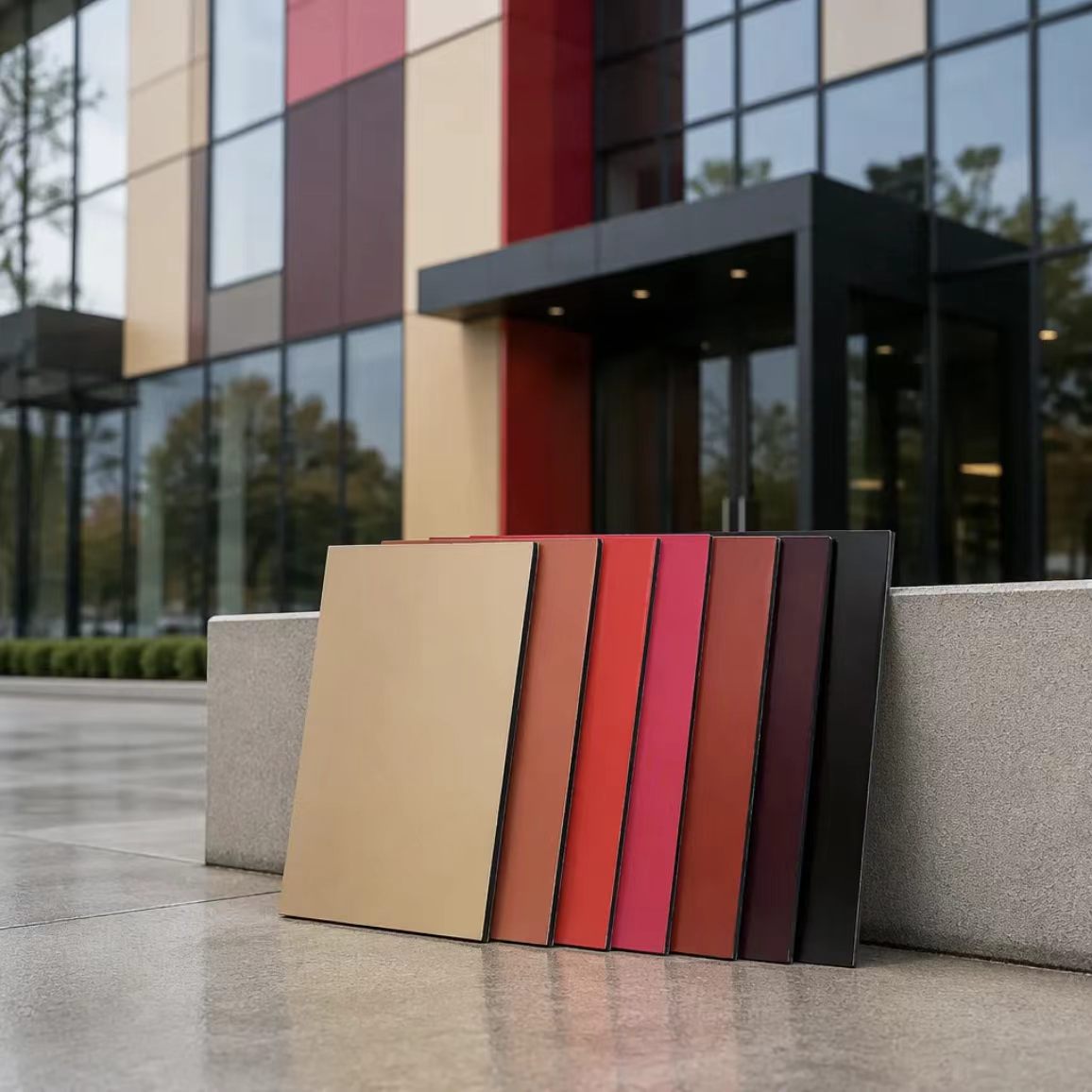
You have a $2 million facade project. 10,000 square meters of Alucobond aluminum composite panels. A 15-story building. A client expecting perfection.
One blistering problem can turn that $2 million project into a $4 million nightmare. The replacement costs alone can range from $600 to $900 per square meter. On a 10-story building, access costs (scaffolding, swing stages, rigging) can account for 40-60% of the total project budget.
Large-scale projects demand a systematic approach. You cannot inspect every panel by hand. You cannot rely on luck. You need a protocol. A repeatable, documented, enforceable system that prevents blisters before they appear.
This guide provides a complete blister-prevention protocol for large-scale Alucobond aluminum composite panel projects. You will learn the six critical control points. You will understand the documentation requirements. And you will know exactly how to implement this protocol on your next project.
Part 1: Material Selection — The Foundation of Prevention
Blistering starts with the material. A low-quality core is a ticking chemical time bomb. Cheap LDPE cores contain unregulated chemical additives that react with moisture and aluminum to create gas bubbles from the inside out.
Specify the right core:
Core Type | Application | Blister Risk |
PE (Polyethylene) | Low-rise, non-critical | High — volatile, moisture-absorbing, UV-degrading |
FR (Fire-Retardant, 70%+ mineral) | Commercial buildings | Moderate — better than PE, but check filler quality |
A2 Mineral (90%+ mineral) | High-rise, strict fire codes | Very low — chemically inert, dimensionally stable |
If the building is over 3 stories or in a humid climate, delete LDPE from the spec entirely. FR cores and A2 mineral cores have lower thermal expansion, higher melting points, and are chemically inert.
Demand documentation:
- Mill certificates with batch numbers
- Peel strength test results (≥4 N/mm minimum, premium panels achieve 7.0–9.0 N/mm)
- Fire test certification (EN 13501-1, ASTM E84, or NFPA 285)
- Independent third-party verification of coating thickness (≥25μm for two-coat systems)
A professional Alucobond aluminum composite panel manufacturer provides precise, verifiable data. A supplier that cannot provide documentation is not a supplier—they are a liability.
Part 2: Pre-Delivery — The Project-Specific Blister-Prevention Plan
Before the first panel arrives, write the plan. This is your project's quality bible.
The plan must include:
1. Material specifications
- Core type (A2 mineral for high-rise, FR for commercial)
- Coating type (70% PVDF minimum)
- Thickness tolerance (±0.15 mm)
- Aluminum alloy (marine-grade 5005 or equivalent)
2. Storage and handling protocols
- Horizontal storage only—never vertical
- Maximum 6 pallets stacked
- Protection from rain, moisture, and condensation
- Maximum storage: 6 months
- Nothing placed between stacked panels
3. Inspection checkpoints
- Delivery inspection (packaging, moisture damage)
- Pre-fabrication edge inspection (core quality, unmelted particles)
- Post-fabrication inspection (groove depth, residual thickness)
- Pre-installation inspection (flatness, surface defects)
- Post-installation monitoring (raking light inspection)
4. Installation specifications
- Expansion gaps (minimum 8–12 mm)
- Slotted fastener holes (allow 2.4 mm/m/100°C thermal expansion)
- One fixed point per panel, all others sliding
- Edge sealing of every cut edge
- Protective film removal immediately after installation
5. Documentation requirements
- Daily inspection logs
- Photographic documentation of every panel
- Non-conformance reports
- Sign-off at each control point
Part 3: Receiving and Storage — The Critical Window
The first 48 hours after delivery determine whether your Alucobond aluminum composite panels arrive in factory condition or begin their degradation journey.
Receiving checklist:
Step | Action | Critical Check |
1 | Inspect packaging | Crushed corners, torn shrink wrap, water stains |
2 | Document condition | Photograph any damage with container number visible |
3 | Verify batch numbers | Match to mill certificates |
4 | Check quantity | Confirm against shipping manifest |
5 | Report damage | Immediately to forwarding agent |
Storage area preparation:
The storage area must be clean, dry, level, and free of debris. The floor must be covered with a wooden skid or polythene sheet. Wooden pallets create an air gap that allows moisture to evaporate rather than become trapped against the aluminum. For long-term storage, raise pallets at least 10–15 cm above the floor.
Stacking rules:
- Only pallets of identical size
- Maximum 6 pallets
- Horizontal only—never vertical
- Nothing between panels
N Storage exceeding 6 months should be avoided, as it may become difficult to remove the protective foil.
Part 4: Pre-Fabrication Inspection — The Gatekeeper
Before any Alucobond aluminum composite panel is cut or routed, it must pass a core quality inspection. This is your last chance to reject defective panels before they become part of the building.
The four tests:
Test | Method | Pass Criteria | Fail Action |
Visual edge inspection | Examine exposed core | Uniform color, dense texture, no voids | Reject or investigate further |
Finger rub test | Rub edge vigorously | No particles or powder shed | Reject |
10x loupe inspection | Magnify cut edge | Smooth, uniform surface | Reject |
Tap test | Tap panel surface | Sharp, consistent sound | Mark hollow areas |
Part 5: Fabrication — The Quality Control Points
Fabrication introduces new risks: grooves, folds, and cut edges. Each creates a potential path for moisture ingress and blister formation.
Grooving quality control:
Parameter | Specification | Measurement Method |
Residual thickness | 0.3 mm minimum | Micrometer at groove bottom |
Groove consistency | ±0.1 mm across panel | Visual inspection + measurement |
Router bit | ACM-specific, carbide-tipped | Visual inspection |
Bit condition | Sharp, no wear | Replace every 50,000 bends |
Folding quality control:
Parameter | Specification | Measurement Method |
Bend radius | 60 mm minimum for 4mm | Radius gauge |
Bending motion | One smooth pass | Visual observation |
Panel temperature | 65°F+ minimum | Infrared thermometer |
Protective film | Keep on during bending | Visual inspection |
Edge sealing:
Every cut edge must be sealed immediately after cutting. Moisture wicks into unsealed cut edges through capillary action. Once moisture enters the core, it cannot escape. The core swells. The adhesive degrades. The aluminum skin separates. Blisters form.
Sealing protocol:
1. Clean the cut edge (remove dirt, oil, moisture)
2. Apply weatherproof silicone or polyurethane sealant
3. Cover the entire exposed core
4. Tool the sealant for full contact
5. Allow proper cure time
Part 6: Installation — The Execution Phase
Installation is where prevention protocols succeed or fail. The thermal expansion of an Alucobond aluminum composite panel is 2.4 mm per meter for every 100°C temperature change.
Fastener requirements:
- Use oversized holes to avoid jamming
- With the shaft of the rivet fitting closely to the edge of the hole, the attachment head must cover over 1 mm of the area surrounding the hole
- Multi-step drills or sleeves for centring holes
- Rivet attachment jigs for fitting without jamming (0.3 mm tolerance)
Expansion gaps:
- Minimum 8–12 mm between panels
- For runs exceeding 6 meters, physical expansion joints required
One fixed point, all others sliding:
Each panel must have one "dead fix" (fixed point), usually positioned centrally. All other fixings must feature oversized or slotted holes, allowing the panel to expand and contract freely.
Over-tightening is the enemy:
Do not over-tighten fasteners. If the sealing washer deforms or the rubber seal protrudes beyond the washer, the panel can no longer expand. The panel is locked in place. It will buckle or blister.
Part 7: Post-Installation Inspection — The Final Verification
Installation is complete. The facade looks perfect. You are not done.
The 15-degree rule:
The official ALUCOBOND specification requires that the cladding surface "shall not have any irregularities such as oil canning, waves, buckles, and other imperfections when viewed at any position but not less than an angle of 15 degrees to the true plane of the panel".
Post-installation inspection protocol:
Check | Method | Pass/Fail |
Oil canning | 15-degree viewing angle | No visible irregularities |
Panel flatness | 2m straightedge + feeler gauges | ≤2.0 mm over 2m |
Joint consistency | Visual + feeler gauge | Uniform gaps |
Hollow sounds | Tap test | Sharp, consistent sound |
Protective film | Removed immediately after installation | No film remaining |
Protective film removal:
To avoid glue sticking to the surface of the panels due to UV radiation, remove the protective foil as soon as possible after installation. Weathering for a longer period could make the foil difficult to remove.
Do not mark the protective foils or panel surfaces with ink, adhesive tapes, or stickers, as the lacquered surfaces could be damaged by solvents or plasticizers.
The Complete Blister-Prevention Protocol Flowchart
START
│
▼
PHASE 1: MATERIAL SELECTION
├─── Specify A2 mineral or FR core (delete PE)
├─── Demand mill certificates and test reports
└─── Require independent third-party verification
│
▼
PHASE 2: PRE-DELIVERY PLANNING
├─── Write project-specific blister-prevention plan
├─── Define inspection checkpoints
└─── Establish documentation requirements
│
▼
PHASE 3: RECEIVING AND STORAGE
├─── Inspect packaging for damage/moisture
├─── Store horizontally, maximum 6 pallets
├─── Protect from rain, moisture, condensation
└─── Avoid storage exceeding 6 months
│
▼
PHASE 4: PRE-FABRICATION INSPECTION
├─── Visual edge inspection (uniform, dense)
├─── Finger rub test (no particles)
├─── 10x loupe inspection (smooth surface)
└─── Tap test (sharp, consistent sound)
│
▼
PHASE 5: FABRICATION
├─── Grooving: residual thickness 0.3mm minimum
├─── Folding: one smooth pass, 60mm radius minimum
└─── Edge sealing: seal every cut edge immediately
│
▼
PHASE 6: INSTALLATION
├─── Oversized holes (1mm head coverage minimum)
├─── One fixed point, all others sliding
├─── Expansion gaps 8- 12 mm minimum
└─── Do not over-tighten fasteners
│
▼
PHASE 7: POST-INSTALLATION INSPECTION
├─── 15-degree viewing angle (no oil canning)
├─── 2m straightedge test (≤2.0mm over 2m)
├─── Tap test (no hollow sounds)
└─── Protective film removed immediately
│
▼
DONE ───► Blister-free Alucobond installation
The Blister-Prevention Checklist for Large-Scale Projects
Phase | Check | Pass/Fail | Date | Inspector |
Material | Core type specified (A2/FR) | ☐ | - | - |
Material | Mill certificates received | ☐ | - | - |
Material | Peel strength ≥4 N/mm | ☐ | - | - |
Storage | Horizontal stacking | ☐ | - | - |
Storage | Maximum 6 pallets | ☐ | - | - |
Storage | Protected from moisture | ☐ | - | - |
Pre-fab | Visual edge inspection passed | ☐ | - | - |
Pre-fab | Finger rub test passed | ☐ | - | - |
Pre-fab | Tap test passed | ☐ | - | - |
Fabrication | Residual thickness ≥0.3mm | ☐ | - | - |
Fabrication | Cut edges sealed | ☐ | - | - |
Installation | Oversized holes (1mm coverage) | ☐ | - | - |
Installation | Expansion gaps 8- 12 mm | ☐ | - | - |
Installation | Fasteners not over-tightened | ☐ | - | - |
Post-install | 15-degree viewing angle passed | ☐ | - | - |
Post-install | 2m straightedge test passed | ☐ | - | - |
Post-install | Protective film removed | ☐ | - | - |
What to Ask Your Supplier
When you purchase an Alucobond aluminum composite panel for a large-scale project, ask these questions:
1. What is your core material? PE, FR, or A2 mineral? If they say PE for a high-rise project, find another supplier.
2. Can you provide mill certificates with batch numbers? Every panel must be traceable to a production batch.
3. What is your peel strength in N/mm? Exterior grade should be ≥4 N/mm. Premium panels achieve 7.0–9.0 N/mm.
4. What is your thickness tolerance? ALUCOBOND specifications call for a tolerance of ±0.15 mm.
5. Can you provide independent test reports? Third-party verification of coating thickness, peel strength, and fire performance.
6. Do you provide storage and handling guidelines? A professional supplier will have documented procedures.
The Bottom Line
A large-scale Alucobond aluminum composite panel project is not the place to cut corners. The cost of failure is staggering: $600–$900 per square meter for replacement panels, $20,000+ for removal labor alone, and 40–60% of the total budget for high-rise access.
The protocol is systematic. It covers every phase: material selection, pre-delivery planning, receiving and storage, pre-fabrication inspection, fabrication, installation, and post-installation inspection.
The tools are simple: mill certificates, storage rules, residual thickness measurements, edge sealing, oversized holes, expansion gaps, and the 15-degree viewing angle.
The documentation is essential. Every inspection must be recorded. Every non-conformance must be reported. Every sign-off must be documented.
When you walk that building two years from now, standing 15 stories up, looking at a flat, flawless Alucobond aluminum composite panel facade with no blisters in sight, you will know—not hope, not guess, but know—that the protocol worked. Because you planned it. Because you enforced it. Because you refused to accept anything less than a defect-free installation.
That is the difference between a project that lasts and one that bankrupts you. That is the difference between a supplier you trust and one you will never call again. That is the difference between looking at a facade and knowing—truly knowing—that it will stay flat for decades.