Welcome to Vbond
Proper Panel Sizing: How Oversized Alucobond Panels Cause Oil Canning
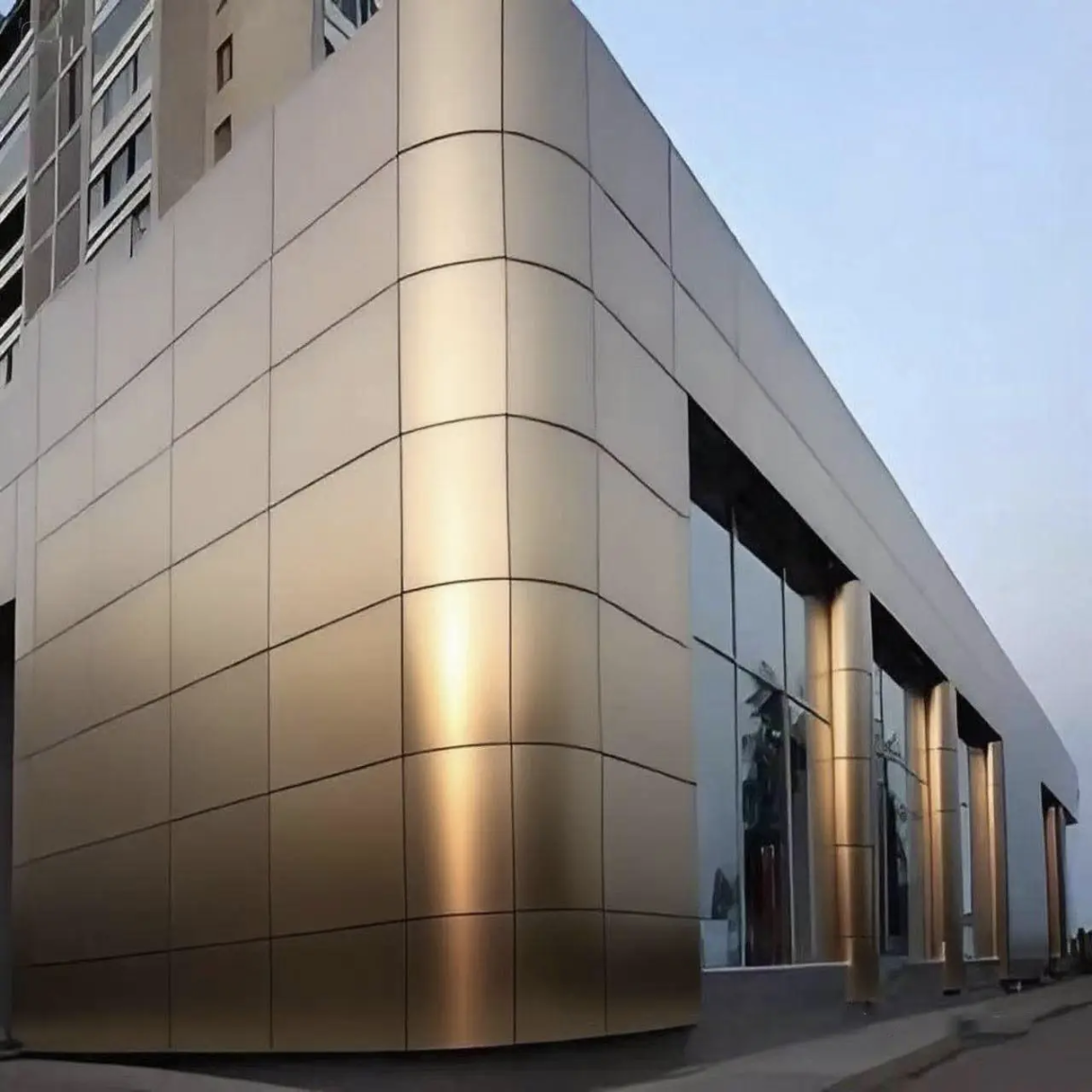
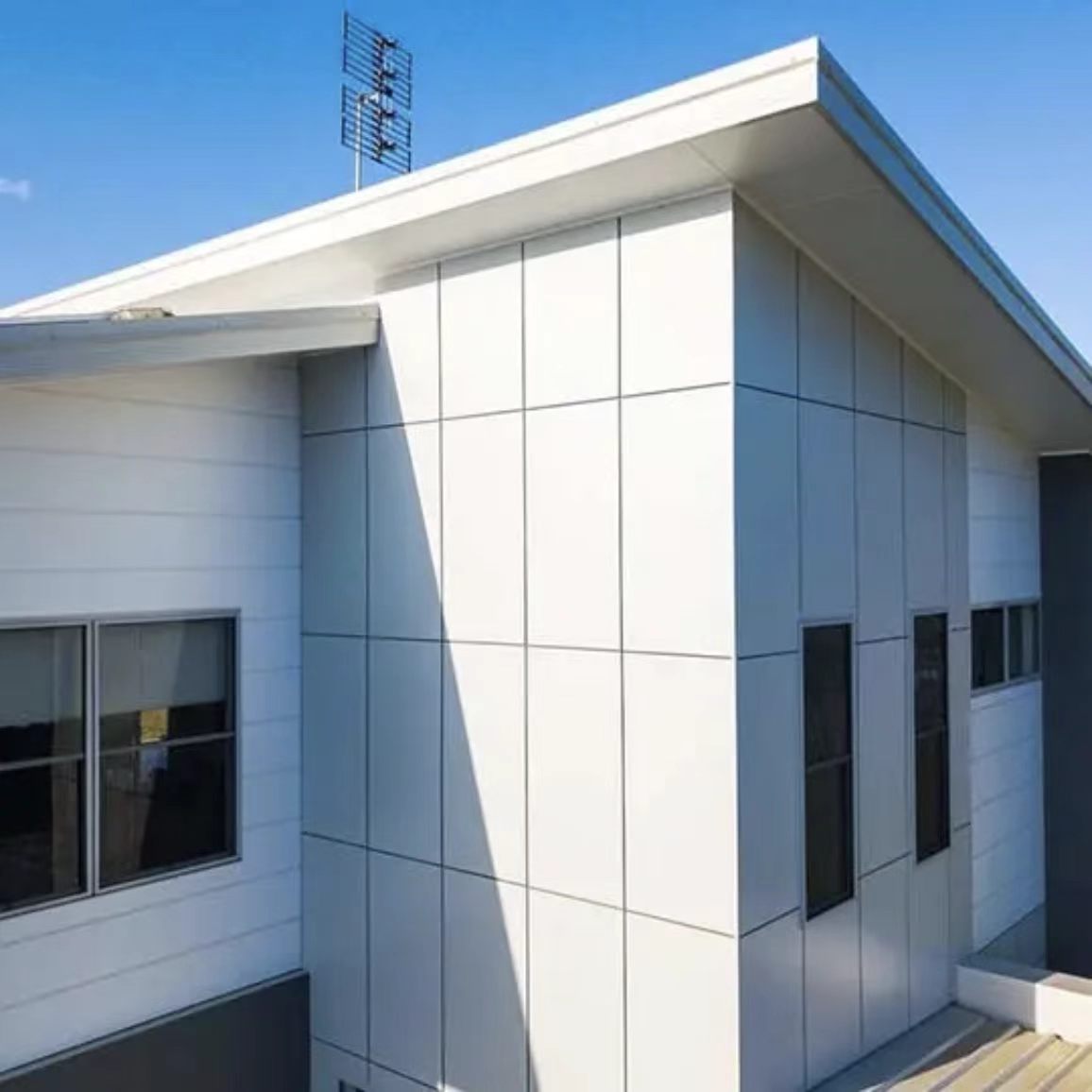
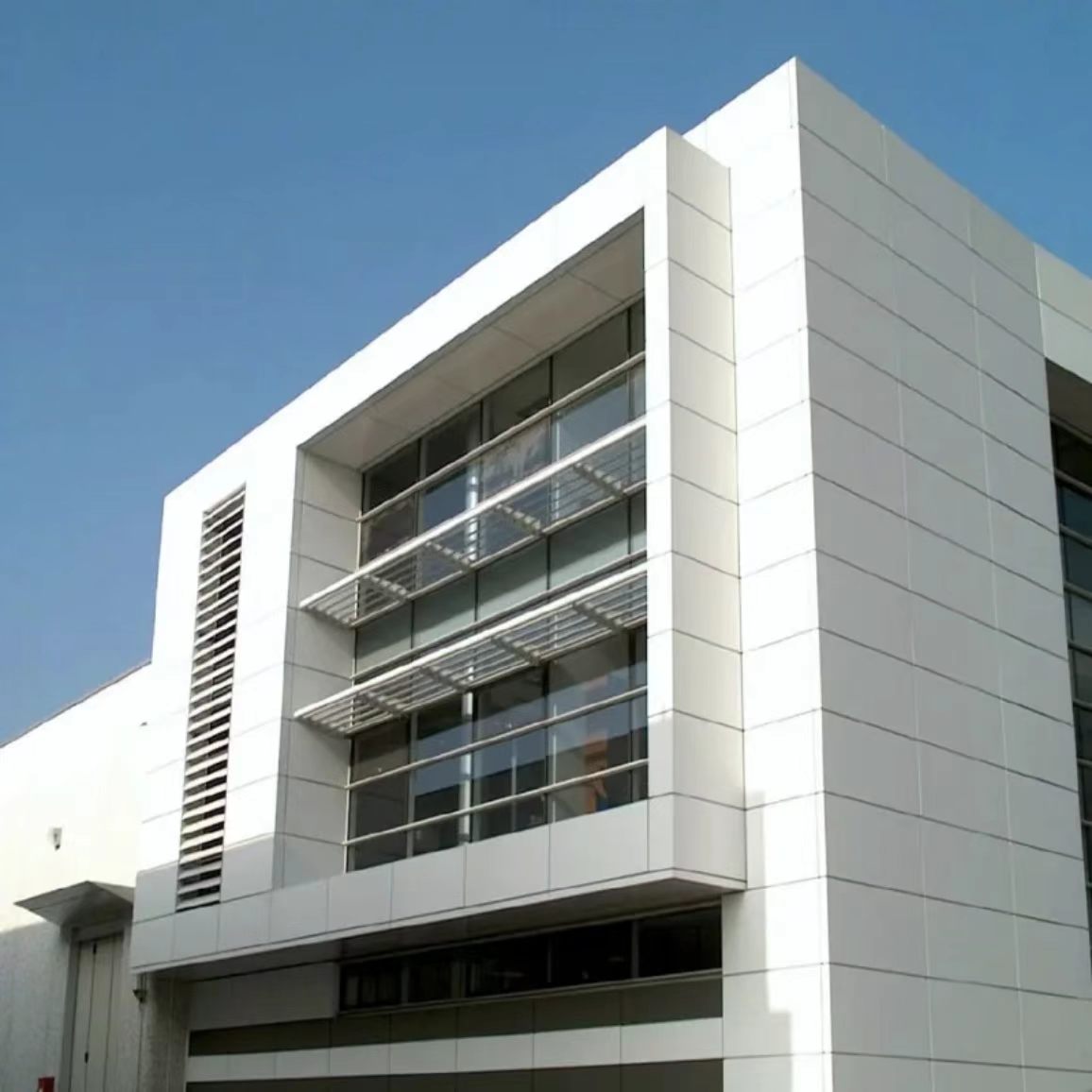
You specify a beautiful Alucobond facade. The design calls for large, uninterrupted panels. The renderings look stunning—clean lines, seamless surfaces, perfect flatness.
Then the sun hits the building at a certain angle. You see them. Waves. Ripples. Distortions. The flawless flat surface you expected looks uneven and wavy.
This is oil canning. It does not compromise structural integrity, but it destroys visual perfection. On large, flat facades where aesthetics are paramount, visible ripples can turn a landmark building into an eyesore.
The culprit is often the panel size itself. You chose panels that were too large for the application.
This guide explains why oversized Alucobond boards cause oil canning. You will learn the physics behind the failure. You will understand the sizing thresholds. And you will know exactly how to specify the right panel dimensions for a flat, ripple-free facade.
What Is Oil Canning?
Oil canning, also known as elastic buckling or stress wrinkling, refers to the visible waviness or rippling that can occur on the surface of flat metal panels. The term comes from the visual similarity to the bottom of an old-fashioned oil can, which pops in and out.
Key characteristics:
- Subtle waves, shadows, or ripples across flat panel surfaces
- More noticeable at certain viewing angles and under specific lighting conditions
- Cosmetic only—does not compromise panel strength or weather resistance
- Generally not reversible after installation
The official ALUCOBOND specification states that the cladding surface "shall not have any irregularities such as oil canning, waves, buckles, and other imperfections when viewed at any position but not less than at an angle of 15 degrees to the true plane of the panel". This standard acknowledges that some degree of visual imperfection is inevitable in metal cladding—but that acceptable limits can be defined and enforced.
The Physics: Why Larger Panels Are More Susceptible
Oil canning is a mechanical problem of unbalanced tension. Metal has a "memory." During the manufacturing process—from coil production to panel fabrication—stresses are induced into the material. The metal naturally wants to revert to its original, unstressed shape. When these internal stresses are not perfectly balanced, the panel buckles outward into visible waves.
Why panel width matters:
Wider, flatter panels are more susceptible to oil canning because they lack the structural rigidity provided by ribs, striations, or other stiffening features. A wide panel has a longer unsupported span. The deflection under load increases with the square of the span length. A small increase in width creates a large increase in deflection.
The rigidity factor:
Premium Alucobond boards utilize a mineral-filled core that provides enhanced stability and flexural rigidity. A study comparing a bonded aluminum panel against a 3mm solid aluminum panel demonstrated that the engineered composite panel was more than 4 times more resistant to buckling forces that cause oil canning. The rigid core structure distributes stress evenly, preventing localized deformation.
But even the best Alucobond board has limits. Go beyond those limits, and the panel will buckle.
The Sizing Threshold: How Big Is Too Big?
Standard Alucobond board dimensions:
Alucobond boards are typically available in widths of 1000mm, 1220mm, 1250mm, and 1500mm. Maximum panel length without decor repetition is 1500mm x 5000mm, with up to 6800mm possible with vector graphics. For panel lengths exceeding 3500mm, the panels have contact lines (about 2–3mm width) on their long sides. The maximum panel length is 6999mm.
The practical rule for oil canning prevention:
Panel size should be selected according to project design, wind exposure, fixing method, subframe layout, panel thickness, location on the building, visual expectations, and fabrication method. A large smooth panel on a sunny external facade may show surface irregularities more clearly than a smaller panel with well-planned joints.
The warning sign: Very large panels may increase the risk of visible waviness. The larger the panel, the more important the fixing method, subframe accuracy, and movement allowance become.
A note about Alucobond's inherent flatness:
Alucobond is engineered for exceptional flatness, resisting the rippling and oil-canning effect that can sometimes occur with solid aluminum. Premium boards like ALUCOBOND® use a mineral-filled core that provides enhanced stability and flexural rigidity. But even the best board has limits. When a panel is too wide for its thickness and support system, oil canning follows.
Why Oversized Alucobond Boards Cause Oil Canning: The Mechanism
1. Insufficient structural rigidity
A wide, flat Alucobond board lacks the stiffening features that would prevent buckling. Without ribs, striations, or other structural reinforcements, the panel cannot resist the bending forces from thermal expansion, wind load, or its own weight.
2. Unbalanced internal stress
During manufacturing, stresses are induced into the aluminum skins. In a high-quality Alucobond board, the skins are bonded to the core under precisely controlled tension, creating a "balanced panel" where internal forces cancel each other out. But when the panel is oversized, the distribution of these forces becomes uneven. The panel buckles.
3. Thermal expansion stress
Alucobond expands at 2.4 mm per meter for every 100°C temperature change. A wide panel has more material to expand. That expansion creates force. Without adequate support or movement allowance, that force causes the panel to buckle outward.
4. Restrictive fastening systems
When a panel is pinned down at too many points, thermal expansion has nowhere to go. The result is oil canning (visible waviness) or complete bulging and delamination. Oversized panels are more susceptible to this because they have more surface area and more attachment points.
The Prevention Checklist for Proper Panel Sizing
1. Calculate the maximum panel width for your application
Wider panels require more support. For large, flat areas with smooth finishes, consider reducing panel width or adding stiffeners.
2. Use stiffeners on large panels
Aluminum extrusions (stiffeners) should be installed along the backside of large panels at regular intervals, commonly 610mm (24 in.) on center. Proper stiffening helps minimize the risk of visual distortion (oil-canning). A panel stiffener reinforces the panel to prevent the popping or oil canning effect.
3. Choose the right core material
Premium Alucobond boards with mineral-filled cores provide higher rigidity and better resistance to oil canning than standard PE cores.
4. Use a sliding fastener system
Create fixed points (usually in the dead center of the panel) and slotted or oversized holes at the perimeter attachment points. This allows the panel to expand and contract without stress buildup.
5. Start with a straight subframe
A flat facade starts with a straight subframe. The Alucobond board follows the surface behind it. If the subframe is uneven, twisted, or poorly aligned, the panel may show visual distortion after installation.
6. Do not over-tighten fasteners
Over-tightening is a common installation mistake. Alucobond boards need to be fixed securely, but they should not be forced into position. If screws or rivets are too tight, they can create stress around fixing points.
The Sizing Flowchart
Start
│
▼
Determine panel width for your project
│
├─── Width ≤ 1250mm ───► Standard size, proceed with caution
│
└─── Width > 1250mm ───► Increased oil canning risk
│
▼
Assess panel thickness (3mm, 4mm, or 6mm)
│
├─── Thinner panels need more support
│
▼
Consider core material (PE vs. mineral-filled)
│
├─── Mineral-filled = higher rigidity
│
▼
Design stiffener spacing (610mm on center maximum)
│
▼
Use sliding fastener system (fixed point + slotted holes)
│
▼
Verify subframe is straight and stable
│
▼
Do not over-tighten fasteners
│
▼
Inspect for oil canning after installation
│
▼
Done ───► Flat, ripple-free Alucobond facade
What to Ask Your Supplier
When you purchase an Alucobond board for your project, ask these questions:
1. What is the recommended maximum panel width for my application? A knowledgeable supplier will provide sizing guidance based on your project's wind load, panel thickness, and support system.
2. What core material do you recommend for large panels? Mineral-filled cores provide better rigidity than standard PE cores.
3. What stiffener spacing do you recommend? The answer should be 610mm (24 in.) on center or less.
4. What fastener system do you recommend for large panels? The answer should include fixed points and slotted or oversized holes for sliding movement.
5. Do you provide oil canning prevention guidelines? A reliable manufacturer will have technical documentation on panel sizing and installation.
A Final Word on Panel Sizing
A successful Alucobond facade is not just about the panel you choose. It is about the size you specify, the support you provide, and the movement you allow.
The oil canning you see on a hot afternoon is the visual result of decisions made months earlier—decisions about width, thickness, stiffening, and fastening. A panel that is too wide for its support system will buckle. A panel that is locked down too tightly will ripple. A panel that lacks adequate stiffeners will wave.
Every facade tells a story. Make sure yours tells the right one.