Welcome to Vbond
Roll-Formed ACP Products: Coating Flexibility vs Weather Life for PE and PVDF
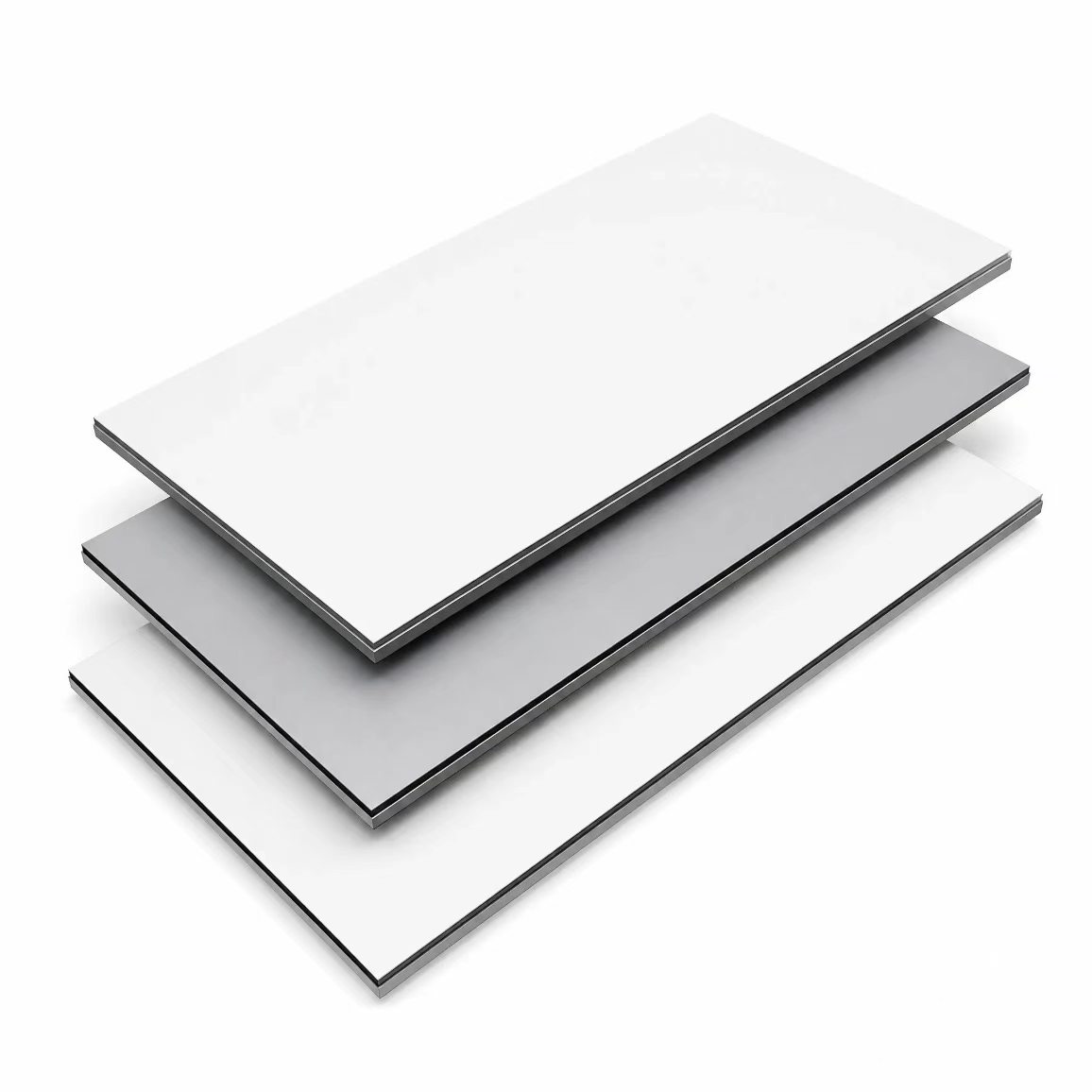
A roll-formed ACP panel passes through a continuous line of rollers that bend the metal into ribs, cassettes, and profiles. The coating must stretch with the aluminum at every roller without cracking. After forming, the same coating must survive decades of sun and rain on the finished wall.
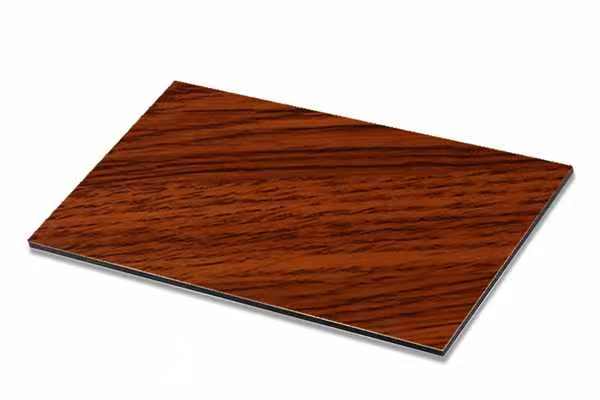
PE coating handles the first demand. PVDF coating handles the second. Few coatings handle both at the highest level, and the gap between them widens on decorative finishes such as an Alucobond wood grain finish, where a hairline crack at a formed rib disrupts a print the eye reads as continuous.
This guide explains how roll forming stresses a coil-applied coating, where PE flexibility helps and where it stops helping, and how procurement teams should split interior roll-formed profiles from exterior facade panels on the same project.
What Roll-Formed ACP Actually Is
Roll-formed ACP starts as a factory coil. The coil coater applies primer and color to an aluminum strip on a continuous line. The strip then bonds to a core, and the finished panel feeds through a roll former that shapes the profile.
The coating is applied before forming. That sequence matters. A coil coating must survive every bend, every roller, and every profile change without losing adhesion or cracking. The coater tests this with a T-bend, which bends a coated strip around a radius measured in multiples of sheet thickness. A 0T result means the coating survives a fold onto itself. A 2T result means it survives a bend at twice the sheet thickness.
Coil-coated ACP carries a spec limit. Alucobond PLUS requires a factory-applied fluoropolymer (PVDF or FEVE) coil coating in accordance with AAMA 2605. Spray coatings do not qualify because the coil line delivers a cured film with controlled thickness and adhesion that a field spray cannot match.
Where Roll Forming Demands Flexibility
A roll former imposes strain at every pass. The outer surface of each bend stretches. The coating on that surface must elongate with the metal or crack.
The strain demand rises as the profile tightens. A gentle rib spreads the stretch over a long arc. A sharp return or a deep cassette edge concentrates it in a narrow band. A fabricator who sets the rollers too tight, or runs a brittle coating, produces micro-cracks the operator cannot see at the line.
Industry data sets the practical window. High-quality PVDF-coated aluminum coil reaches 0–1.5T bend performance under ASTM D4145, and a conservative 2T radius is the routine production target. PE and other flexible systems reach similar T-bend results, and a coating rated ≤ 2T keeps the surface intact through roll forming and folding.
The difference between PE and PVDF sits at the tight end of that window. PE resin is softer and stretches further before it fractures. PVDF is more rigid, and standard formulations tolerate less strain at a sub-2T radius. On a deep rib or a tight return, PE gives the fabricator more room before the film cracks.
Where the PE Advantage Ends
PE flexibility solves a forming problem. It does not solve a weathering problem.
PE coating breaks down under UV. The resin chalks and fades, and the wood grain print fades with the resin that holds it. Exterior PE finishes in hot, sunny service show visible chalk and color loss within 5 to 8 years, and some supplier data puts exterior PE color retention at 5 to 8 years against 10 to 15 years for PVDF in the same comparison.
PVDF holds the opposite profile. A 70% PVDF coating meets AAMA 2605, the highest exterior finish standard, and carries warranties in the 20-year range on color and chalk. Coil-coated PVDF wood grain products on the market carry 20–30-year outdoor warranties on the finish.
The trade-off is geometry. Standard PVDF tolerates less strain at a tight roll-formed profile. A fabricator who forces a rigid PVDF through a deep rib creates a crack that the coating warranty may not cover, because the failure comes from forming geometry, not coating chemistry. The same panel in PE forms cleanly and then fades in service.
Property | PE (Polyester) coil coating | 70% PVDF coil coating |
T-bend flexibility | Good; suits tight profiles | Good to 0–1.5T; tighter limits on deep ribs |
Roll-formability on complex profiles | Better | Requires radius control |
Exterior color and chalk life | 5–8 years | 20+ years |
AAMA 2605 compliance | Not typically certified | Yes, standard for exterior |
Typical finish warranty | 5-year panel; paint warranty optional | 20 years on color and chalk |
Table 1. Coating trade-off for roll-formed ACP. T-bend data from ASTM D4145 testing; service life and warranty ranges from coil coating supplier data and Alucobond warranty documentation.
The Alucobond Wood Grain Finish Case
A wood grain finish adds a visual demand to the mechanical one. The grain print runs across the panel. A crack at a formed rib breaks the pattern, and a faded print loses the tone that made the design work.
Alucobond offers wood grain finishes within its coil-coated ranges. The ALUCOBOND PLUS specification lists “Wood Design Finishes” among its factory finishes, and the Natural Collection includes a Woodgrain Series alongside the Element and Terra series. These finishes come from the coil line, not a field application.
The product carries a documented durability claim. Alucobond Legno wood-look panels resist fungus, rot, and moss growth and are marketed as outperforming natural wood in weather resistance. Alucobond PLUS finishes coated to AAMA 2605 carry 20-year warranties on chalk, humidity, and color performance.
That durability assumes the coating survives fabrication. A wood grain print on a roll-formed profile needs two properties at once: enough flexibility to form without cracking, and enough UV stability to hold the print outdoors. Standard PE delivers the first and not the second. Standard PVDF delivers the second and, on deep profiles, may not deliver the first.
How to Specify Roll-Formed Wood Grain ACP
The specification splits by location, then by profile.
Interior roll-formed profiles. Reception desks, ceiling features, column wraps, and wall linings face no UV load. A PE wood grain panel forms tight profiles without cracking and holds its appearance indoors. The weathering gap does not apply.
Exterior flat or gently curved panels. A PVDF wood grain panel meets AAMA 2605 and carries a 20-year finish warranty. Forming strain is low, so the flexibility gap does not matter.
Exterior roll-formed profiles with tight returns. This is the hard case. Two routes work:
1. Specify a flexible PVDF formulation. Some coating systems raise elongation without dropping AAMA 2605 performance. Ask the coater for T-bend data on the specific color and print.
2. Design the profile inside the coating’s rated radius. Leave enough residual core at the groove or set the rollers so the bend radius stays above the coating limit. A deeper groove tightens the radius and stresses the film.
A buyer who specifies exterior wood grain on a deep roll-formed rib without addressing either route has left the outcome to the fabricator. The panel arrives, the line runs, and the crack appears after installation.
A Roll-Formed ACP Procurement Checklist
Use this list before releasing a wood grain or decorative coil-coated panel to a roll former.
Coating and finish
- For exterior use, confirm AAMA 2605 on the specific wood grain or print finish.
- Ask the coil supplier for T-bend data (ASTM D4145) on the supplied color and print.
- For tight exterior profiles, request a flexible PVDF formulation or written confirmation of the rated bend radius.
Coil and panel
- Confirm the alloy and temper. 3003, 3004, and 5052 in H14 or H24 tempers offer the elongation needed for forming.
- Confirm coating thickness. PE typically runs ≥18 µm and PVDF ≥25 µm on architectural coil.
- Confirm the protective strippable film stays on through forming. Alucobond specifies UV-stabilized strippable PE foil on coated faces.
Roll forming
- Set the minimum bend radius at or above the coating’s rated limit. For 0.3–0.5 mm skins, a 0.8–1.0 mm minimum radius prevents strain beyond the elastic limit.
- Run a first-article T-bend or bend test on a sample from the production coil before the full run.
- Control forming temperature and line speed. Cold ambient air and high line speed raise coating brittleness and micro-crack risk.
Bottom Line for Buyers
PE flexibility helps a roll former. PVDF durability protects a facade. The two properties do not fully overlap on deep profiles. A wood grain finish in PE forms tight roll-formed shapes cleanly and serves interior features. A wood grain finish in PVDF holds its print and color outdoors for decades, but standard formulations require radius control on deep ribs.
Match the coating to the location first. Match the roll-formed profile to the coating’s rated bend radius second. On exterior wood grain profiles, specify AAMA 2605 PVDF and confirm the T-bend data before the coil releases to the line. The grain pattern depends on both decisions.