Welcome to Vbond
Structural Rib Placement: Where and How to Add Mid-Ribs for Flat Alucobond Panels
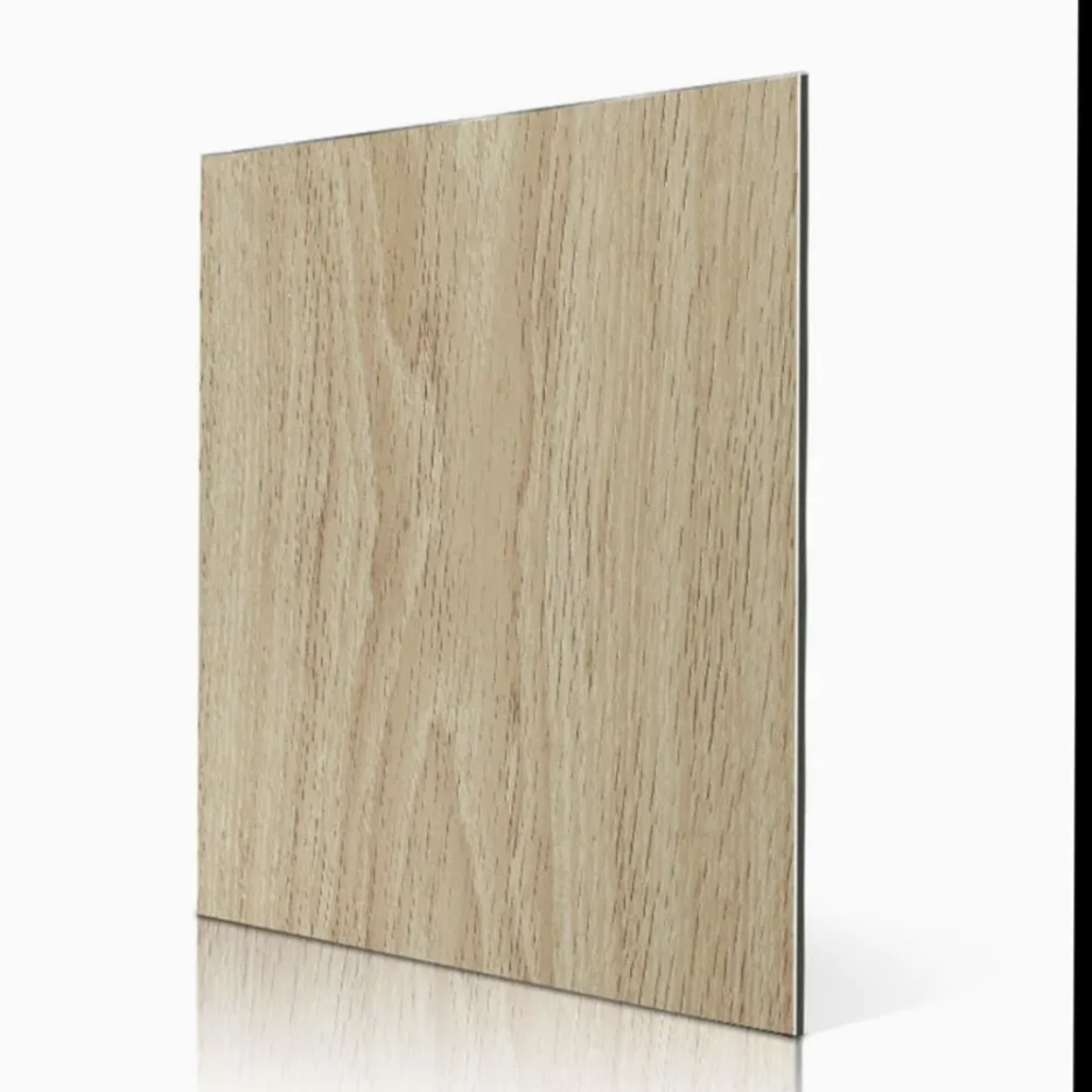
You specify a beautiful Alucobond facade. The panels are large. The design is clean. The renderings look stunning.
Months after installation, you see the problem. Waves across the panel surface. Visible distortion under sunlight. The sleek facade now looks uneven and damaged.
What happened? The panels were too large without enough support. You skipped the mid-ribs.
This guide explains where and how to add mid-ribs to keep Alucobond panels flat. You will learn the physics behind panel deflection. You will understand the spacing requirements. You'll also learn exactly how to specify and install mid-ribs correctly.
What Are Mid-Ribs and Why Do You Need Them?
Mid-ribs are stiffening members attached to the back of Alucobond panels. They run across the panel width, providing structural support between the folded edge ribs.
An Alucobond panel is a sandwich structure—two thin aluminum skins (typically 0.3- 0.5 mm each) bonded to a core. This creates a strong "I-beam" effect. But the flat panel alone has limits. Without mid-ribs, large panels deflect under wind load. The deflection creates stress in the adhesive bond. The bond fails. Voids form between the aluminum skin and the core. Those voids become visible as blisters and distortion.
Chinese technical standard JGJ 255-2012 specifies that "when necessary, stiffening ribs should be added to increase their stiffness and maintain the flatness of the board". The standard also requires that "aluminum-plastic composite panels should have edge ribs at the folded edges".
The three types of reinforcement:
Type | Location | Purpose |
Edge ribs | Folded edges around the panel perimeter | Basic panel stiffness, moisture barrier |
Mid-ribs | Across the panel width, between edges | Prevent panel deflection and blistering |
Cross-ribs | Intersecting mid-ribs | Additional support for extra-large panels |
Caption: Types of Alucobond panel reinforcement. Source: JGJ 255-2012 and industry practice.
Alt text: Table showing edge ribs, mid-ribs, and cross-ribs with locations and purposes.
When Do You Need Mid-Ribs?
Industry standard: Panels larger than 900mm in width typically require mid-ribs.
The rule from ALUCOBOND guidelines:
Stiffeners should be fixed to the back of the panel based on the size of each panel and wind load calculations for the project site.
Additional factors that affect mid-rib requirements:
Factor | Impact |
Panel width | Wider panels deflect more—mid-ribs required above 900mm |
Wind load | Higher wind loads require more reinforcement |
Building height | High-rise buildings face higher wind loads |
Panel thickness | Thinner panels (3mm) need more reinforcement than 4mm |
Location on facade | Corner zones and parapet edges face higher suction forces |
Caption: Factors affecting Alucobond mid-rib requirements. Source: Industry practice.
Alt text: Table showing factors that impact mid-rib requirements for Alucobond panels.
What the standards require:
- "Metal panels should have edge ribs and middle ribs as needed"
- "Aluminum-plastic composite panels should have edge ribs at the folded edges"
- "The middle ribs that serve as the supporting edge of the panel should be securely connected to the edge ribs or folded edges"
Where to Place Mid-Ribs
Rule 1: Maximum spacing of 600mm
The distance between stiffeners should not be more than 600mm. Panel stiffeners must be installed at 24 inches (610 mm) on center on the backside of the panels.
Panel Width | Number of Mid-Ribs | Spacing |
Up to 900mm | 0 | N/A (edge ribs only) |
900mm – 1500mm | 1 | Centered across panel width |
1500mm – 2100mm | 2 | Evenly distributed (≤600mm apart) |
Over 2100mm | 3+ | Evenly distributed (< 600 mm apart) |
Caption: Mid-rib spacing requirements for Alucobond panels. Source: ALUCOBOND guidelines and industry standards.
Alt text: Table showing number of mid-ribs and spacing for different panel widths.
Rule 2: Even distribution
The stiffening profiles within are evenly distributed based on the maximum spacing. The distances between adjacent stiffening members should be substantially equal so that the stiffening members evenly distribute the forces to the panel.
Rule 3: Position relative to folded edges
Position the stiffener rib and keep a 2mm gap between the folded edges. This gap prevents the rib from interfering with the edge fold and allows for thermal movement.
Rule 4: 300- 500 mm range for high-wind areas
For projects in high-wind locations, some specifications recommend mid-rib spacing of 300- 500 mm. Consult your engineer for project-specific requirements.
What Material to Use for Mid-Ribs
Mid-ribs can be made from:
- Aluminum alloy square tube
- Channel section
- Angle profile
Material requirements from JGJ 255-2012:
Requirement | Specification |
Cross-section thickness | Not less than 1.5mm |
Material | Aluminum alloy |
Corrosion protection | Required—anti-corrosion measures must be applied |
Connection | Must be reliably linked to the panel |
Caption: Mid-rib material requirements. Source: JGJ 255-2012.
Alt text: Table showing mid-rib material requirements including cross-section thickness, material type, corrosion protection, and connection requirements.
Deflection limit:
The "middle ribs should have sufficient stiffness, and their deflection should not exceed 1/300 of the rib span". This means a mid-rib spanning 1200mm can deflect no more than 4mm under load.
How to Install Mid-Ribs
Method 1: Stud Welding
Stiffeners can be stud-welded to the back of the panel.
Step-by-step:
1. Clean or polish the spots that need welding on the rear of the panel
2. Position the stiffener rib and keep a 2 mm gap between the folded edges
3. Weld the aluminum screw stud in the center of the slot hole on the stiffener
4. Tighten the nuts
5. Rivet the fixing brackets to the folded edges
Recommended welding depth: Between 1.5 mm and 2.3 mm on a 3mm panel.
Method 2: VHB Tape
Stiffeners can also be stuck using VHB tapes at the back of the panel. This method requires no welding and is suitable for many applications.
Method 3: Riveting
Mid-ribs can be riveted to the panel edge ribs or folded edges. Use aluminum blind rivets that have been approved for construction.
Connection requirements:
"The middle ribs that serve as the supporting edge of the panel should be securely connected to the edge ribs or folded edges". "The middle ribs that serve as the supporting edge of the panel should be securely connected to the edge ribs or folded edges".
The Mid-Rib Installation Flowchart
Start
│
▼
Determine panel width
│
├─── Width ≤ 900mm ───► Edge ribs only ───► Proceed
│
└─── Width > 900mm ───► Mid-ribs required
│
▼
Calculate number of mid-ribs (spacing ≤600mm)
│
▼
Select mid-rib material (square tube, channel, or angle)
│
├─── Section thickness ≥1.5mm
├─── Aluminum alloy
├─── Corrosion protection
│
▼
Position mid-ribs evenly across panel width
│
├─── Keep a 2 mm gap between folded edges
├─── Evenly distribute forces
│
▼
Install mid-ribs using one of three methods:
│
├─── Stud welding (1.5- 2.3 mm depth)
├─── VHB tape (no welding)
└─── Riveting to edge ribs
│
▼
Ensure deflection ≤ L/300 of rib span
│
▼
Verify secure connection to edge ribs
│
▼
Inspect installation
│
▼
Done ───► Flat Alucobond panel with no distortion
Common Mistakes to Avoid
Mistake 1: Skipping mid-ribs to save cost
Some fabricators omit mid-ribs to reduce material cost. The panel costs less upfront. The distortion costs more later. Standard JGJ 255-2012 explicitly requires mid-ribs when needed.
Fix: Specify mid-ribs in your procurement documents. Do not accept panels without them for widths exceeding 900mm.
Mistake 2: Using undersized mid-ribs
Thin or weak mid-ribs do not provide enough support. They deflect under load. The panel deflects. Distortion follows.
Fix: Verify rib section thickness. Require 1.5mm minimum.
Mistake 3: Uneven mid-rib spacing
Mid-ribs placed unevenly create weak spots. The panel deflects more in some areas than others.
Fix: Distribute mid-ribs evenly across the panel width. Keep spacing at 600mm maximum.
Mistake 4: Poor connection to edge ribs
The mid-rib must transfer load to the edge ribs. If the connection is weak, the mid-rib cannot do its job.
Fix: Ensure secure connection between mid-ribs and edge ribs.
Mistake 5: No corrosion protection
Mid-ribs exposed to moisture will corrode. Corrosion weakens the rib. The rib deflects. The panel distorts.
Fix: Require corrosion protection on all ribs.
What to Ask Your Supplier
When you purchase an Alucobond panel for your project, ask these questions:
1. Do you include mid-ribs for panels over 900mm width? A knowledgeable supplier will confirm mid-rib requirements based on your panel size and wind load.
2. What is your mid-rib spacing? The answer should be 600mm maximum.
3. What is your mid-rib section thickness? The answer should be 1.5mm minimum.
4. How do you connect mid-ribs to edge ribs? Connections must meet force transmission requirements.
5. What is your mid-rib deflection limit? The answer should be L/300 of the rib span.
6. Do you provide corrosion protection on ribs? The answer should be yes.
The Bottom Line
Mid-ribs are not optional for large Alucobond panels. The physics is clear: without mid-ribs, wide panels deflect under wind load. The deflection stresses the adhesive bond. The bond fails. Voids form. Blisters and distortion appear.
The standards are clear: JGJ 255-2012 requires mid-ribs with sufficient stiffness. Mid-rib spacing must not exceed 600mm. Rib section thickness must not be less than 1.5mm. Mid-rib deflection must not exceed 1/300 of the rib span.
Prevention is straightforward:
- Add mid-ribs for panels exceeding 900mm width
- Space mid-ribs at 600mm maximum, evenly distributed
- Use aluminum alloy square tube, channel, or angle profiles
- Require section thickness of 1.5mm minimum
- Ensure secure connection to edge ribs
- Apply corrosion protection
A reliable Alucobond panel supplier provides panels with proper mid-ribs. Your specification determines the quality. Get the mid-ribs right, and your facade stays flat for decades. Get them wrong, and the distortion appears within months.