Welcome to Vbond
The Cost of Alucobond Blisters: Rework, Liability, and Client Dissatisfaction
The Cost of Alucobond Blisters: Rework, Liability, and Client Dissatisfaction
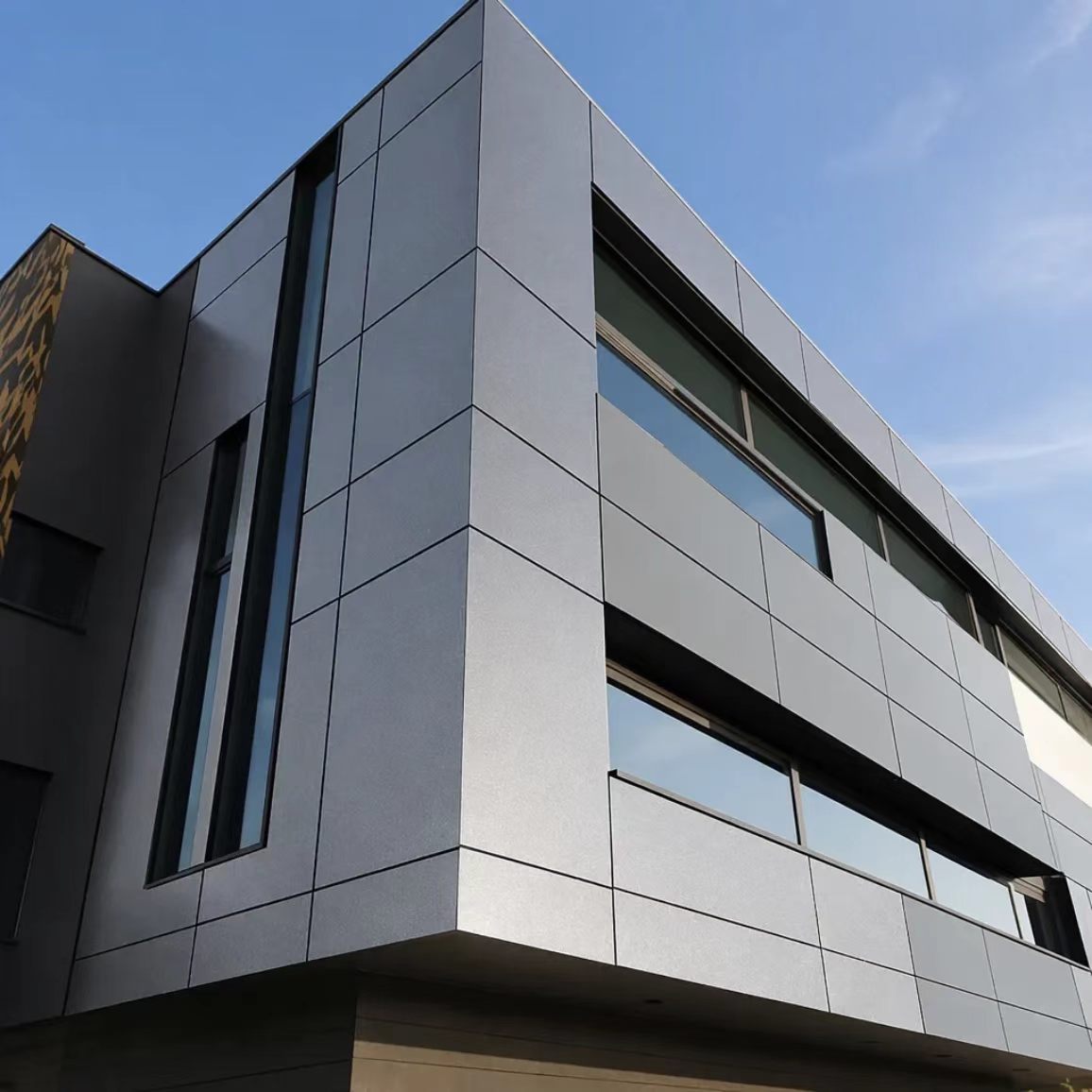
You stand back and admire the finished facade—the panels gleam. The lines are crisp. The client shakes your hand and says, "Beautiful work."
Six months later, the phone rings. "There are bumps on the facade. They're spreading. We need you to come look at this."
You drive to the site. You look up. And there they are—raised blisters dotting the once-pristine surface. The sleek facade now looks damaged. The client is furious. The architect is demanding answers. The contractor is pointing fingers.
This is not a quality issue. This is a financial disaster unfolding in slow motion.
This guide breaks down the true cost of Alucobond blisters. You will learn the direct costs of rework. You will understand the legal liability you inherit. And you will see how client dissatisfaction destroys more than just your relationship—it destroys your reputation.
Part 1: The Direct Cost of Rework — The Bill You Cannot Avoid**
When blisters appear, you have two options: repair or replace. Neither is cheap.
The Repair Scenario: Fixing 100 Square Meters of Blisters
Once the aluminum skin separates from the core, there is no quick fix. Surface patch painting does not work because the blister is a physical gap. To repair 100 square meters of blistered panels, you must follow a destructive process:
Step | Labor Required | What Happens |
Diagnosis and marking | 1-2 days | Skilled labor inspects the facade, marking every blister |
Cut-out and core scraping | Intensive | Workers cut an "X" or "H" into each blister, scrape out rotten core material |
Injection and clamping | 24-48 hours cure | Epoxy injected into each void; each blister clamped individually |
Surface finishing | Per blister | Injection site sanded flush, primed, and repainted |
The numbers:
- Labor: 100 sqm × 4.5 hours = 450 man-hours
- Labor cost: 450 hours × $35/hr = $15,750
- Materials and equipment: Epoxy, solvents, sandpaper, matching paint = $2,500
- Scaffolding and access: $3,000
- Total estimated repair cost for 100sqm: $21,250
And here is the kicker: matching the original PVDF color exactly is nearly impossible, resulting in a "patchwork" aesthetic. The repair costs you $21,000, and the facade still looks damaged.
The Replacement Scenario
If delamination is widespread—more than 30% of the panel surface—repairs are futile. The panel has lost its structural rigidity. You must replace the entire facade.
Replacement costs are dramatically higher than the original installation. In real-world institutional projects, the cost to dismantle damaged ACPs is often listed as a separate line item exceeding $20,000 for labor alone. On buildings above 10 stories, access costs (swing stages, boom lifts, certified riggers) can account for 40-60% of the total project budget.
Cost Component | Typical Cost |
Replacement panels (high-quality, 70% PVDF) | $600 – $900 per sqm |
Removal and demolition | $20,000+ labor |
Scaffolding and access | 40-60% of total budget |
Sub-frame repairs | Structural rebuild costs |
Engineering and compliance | 10-15% of total budget |
Real-world examples:
Project | Scope | Cost |
LeMarchant Place, Halifax | Removal of existing ACP, full replacement of structure/insulation | $500,000+ |
Manningham MC Square | 10-year-old building, combustible cladding replacement | $3.4 Million |
Centenary Hospital | Replacement of PE core panels identified as a fire risk | $770,000 (GST Excl) |
A $200,000 order of off-specification panels that fails after 5 years could cost $500,000 to $1,000,000 to replace—not including the original $200,000, which is already a sunk loss.
Part 2: Project Delay Costs — When Time Becomes Money
Rework does not happen in a vacuum. It stops the project. And stopped projects cost money.
The delay cascade:
Delay Scenario | Typical Cost |
Stop-work order from building inspector | $5,000 – $50,000 per day in idle labor, equipment, and general conditions |
Waiting for replacement panels (4–8 weeks) | $100,000 – $500,000+ in extended project overhead |
Rush shipping for replacement panels | 2x – 5x normal freight cost |
Liquidated damages for late completion | $1,000 – $10,000+ per day (contract-dependent) |
A 6-week project delay caused by rejected off-specification panels can cost $100,000 to $500,000+ in extended overhead alone.
For distributors, the math is even worse:
One container of defective Alucobond composite panels can destroy your margin on the next three containers.
Cost Item | Typical Amount (per container) |
Replacement panel cost (new shipment) | $8,000 – $15,000 |
Outbound freight for replacements | $2,500 – $5,000 |
Return freight for defective panels | $2,500 – $5,000 |
Storage fees for defective inventory | $500 – $2,000 |
Labor for inspection and sorting | $1,000 – $3,000 |
Disposal or recycling fees | $500 – $1,500 |
Legal or claims administration | $1,000 – $5,000 |
Grand Total | $17,000 – $40,500 per defective container |
If you made $10,000 in gross profit on that container, a blistering claim does not just erase it—it puts you $7,000 to $30,500 in the red.
Part 3: Legal Liability — When Blisters Become Lawsuits
This is where the cost escalates from painful to catastrophic.
The Alucobond Class Action Precedent
In Australia, a Federal Court class action sought damages in excess of $1.5 billion on behalf of those with an interest in Alucobond-clad buildings across Australia. The lawsuits against the makers of Alucobond PE and Vitrabond core cladding products sought damages for alleged product liability, false or misleading representations, and misleading conduct. The estimated total amount of the claims for compensation was expected to exceed $500 million.
Who is liable?
Delamination blisters are manufacturing defects. The manufacturer is liable. If the panel is within the warranty period and installed according to specifications, the manufacturer is responsible for replacement.
But here is the trap: moisture expansion blisters are field failures caused by improper installation or environmental exposure. The installer is liable. If you cannot prove that you followed proper installation procedures, the liability defaults to you.
The legal reality:
If a panel falls from a building due to corrosion or delamination, or if a fire spreads due to a PE core that was misrepresented, the liability falls on the specifier and owner. Legal defense costs alone can be staggering.
What the courts have found:
The Court found the builder to have breached its warranty, entitling the plaintiff to damages in the amount of $285,662. In another case, the court found that installation (and subsequent removal) of non-compliant cladding can constitute "property damage" for the purpose of insurance policies.
The procurement implication:
You cannot rely on manufacturer liability to protect you. If you accept panels without independent testing and they fail, liability defaults to the specifier—you.
Part 4: Client Dissatisfaction — The Cost You Cannot Measure
This is the hardest cost to quantify. It is also the most damaging.
Loss of trust
A client who watches their beautiful facade bubble and blister will never trust you again. They will not recommend you. They will not use you on their next project. They will tell others about their experience.
Portfolio damage
You cannot use the project in your portfolio. That gleaming architectural statement is now a liability. The photos show blisters. The case study is a cautionary tale.
Lost future revenue
One bad project costs you multiple future projects. The client tells others. Architects hear about it. General contractors take you off their bid lists.
The warranty trap
Most ACP warranties require claims to be filed within a specific window—often 12-24 months from delivery. If you miss that window, you pay for replacement out of pocket.
The class action reality:
Building owners who purchased substandard panels that delaminate, fade, or fail fire-safety requirements face costly replacements and legal exposure. They are not happy. And they remember who supplied the panels.
Part 5: The Total Cost — A Real-World Example
Let us put it all together.
Project: A 1,000 sqm Alucobond composite panel facade on a 15-story building.
Problem: Within 18 months, blistering appears across 30% of the panels.
Cost Category | Amount |
Direct Rework | - |
Repair of 300 sqm blistered panels | $63,750 |
Or full replacement of 1,000 sqm | $600,000 – $900,000 |
Delay Costs | - |
6-week project delay (extended overhead) | $100,000 – $500,000 |
Liquidated damages (6 weeks × $5,000/day) | $210,000 |
Legal and Liability | - |
Legal defense | $50,000 – $200,000 |
Settlement or damages | $285,000+ |
Client Dissatisfaction | - |
Lost future projects | $100,000+ |
Total | $1.3 Million – $2.1 Million+ |
All from blisters. All preventable.
What to Ask Your Supplier
When you purchase an Alucobond composite panel for your project, ask these questions:
1. What is your blister warranty coverage? The answer should include specific definitions, size limits, and claim windows.
2. Do you provide independent test reports? A reputable supplier will have third-party verification of peel strength, fire performance, and coating adhesion.
3. What is your peel strength in N/mm? Exterior grade should be ≥4 N/mm. Premium panels achieve significantly higher values.
4. Can you provide batch traceability? Every panel must be traceable to a production batch.
5. What is your warranty claim process? The answer should include clear timelines and documentation requirements.
The Bottom Line
Alucobond blisters are not a cosmetic nuisance. They are a financial catastrophe waiting to happen.
The direct costs are staggering: $21,000 to repair 100 square meters. $500,000 to $3.4 million to replace a failed facade. $17,000 to $40,000 per defective container for distributors.
The liability is real: $1.5 billion in class actions. $285,000 court judgments. Legal defense costs that drain your resources.
The client dissatisfaction is permanent: lost trust, lost referrals, lost future revenue.
All of this is preventable. Choose the right Alucobond composite panel. Inspect every shipment. Seal every cut edge. Store panels correctly. Train your team to spot early signs. Document everything.
Because when you are standing in front of that building two years from now, looking at a flat, flawless facade with no blisters in sight, you will know—not hope, not guess, but know—that you made the right decisions. That you did not cut corners. That you protected your client, your reputation, and your bottom line.
That is the difference between a project that lasts and one that bankrupts you. That is the difference between a supplier you trust and one you will never call again.
Choose the right Alucobond composite panel. Inspect relentlessly. Protect your reputation. Your future depends on it.