Welcome to Vbond
The Risk of Mixed Batches in Large Aluminum Composite Panel Container Shipments
The Risk of Mixed Batches in Large Aluminum Composite Panel Container Shipments
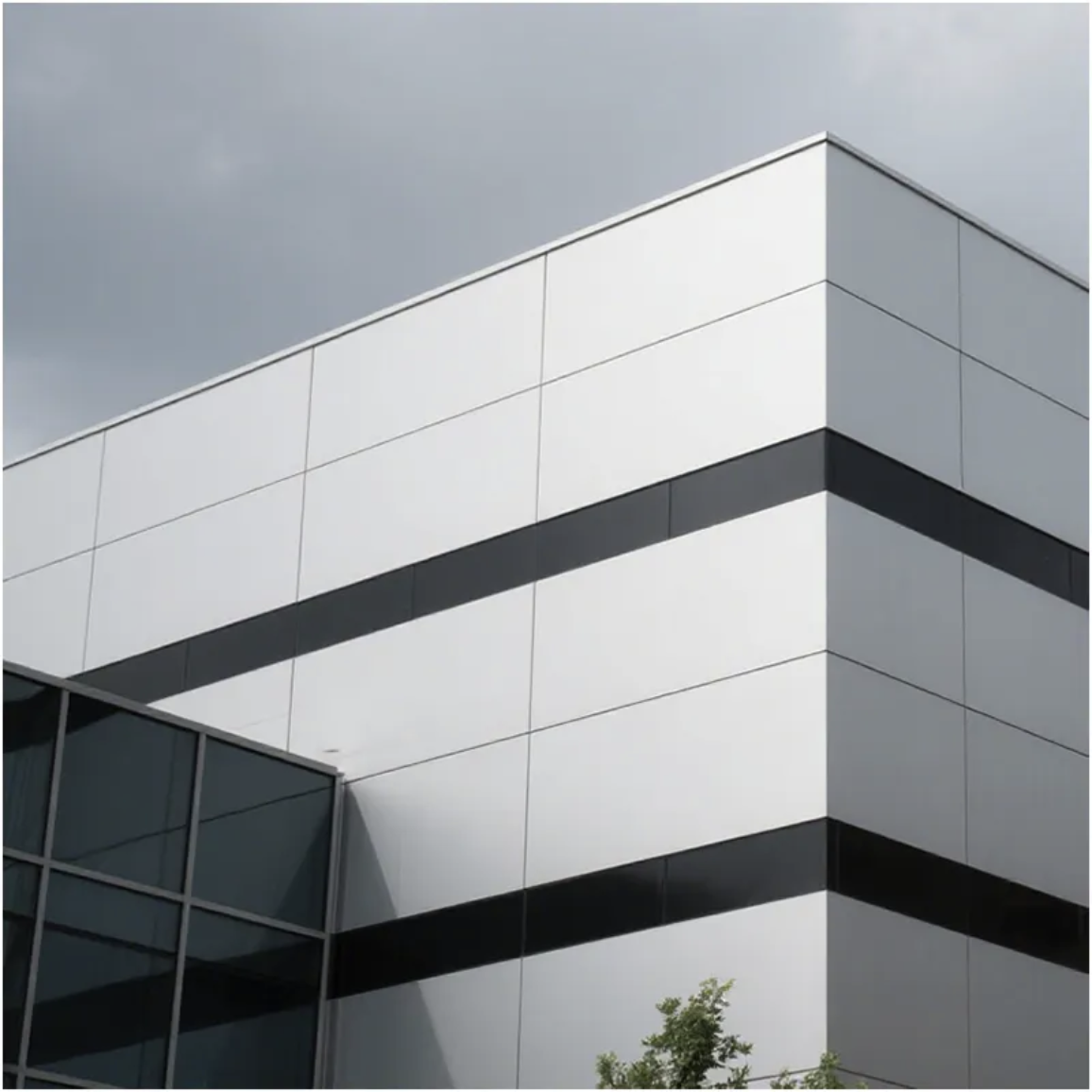
You have ordered a large quantity of aluminum composite panels for a flagship building project. The price was right, the delivery date was confirmed, and the sample looked perfect. But when the container arrives, and installation begins, you notice something disturbing: panels from different bundles do not match. The color is off. The gloss is inconsistent. The facade looks patchy.
This is the hidden risk of mixed batches—a common but frequently overlooked quality issue in large aluminum composite panel shipments. When a reputable **aluminum composite panel manufacturer** implements proper production controls, batch consistency is maintained. However, when quality management falters, panels from different production runs, different coating batches, or even different coil lots can be commingled in a single shipment, creating visible and unacceptable variation.
This guide explains why mixed batches occur, how to detect them, and what procurement professionals can do to prevent this costly problem.
1. What Is a "Batch" in Aluminum Composite Panel Production?
According to the Chinese national standard GB/T 17748-2016 for aluminum composite panels, a production batch is defined as: products of the same type, same specification, and same color continuously produced shall be grouped as one batch per 3000m².
This definition establishes three critical criteria for a legitimate batch:
Criteria | Requirement |
Same product type | Identical core material (PE, FR, or A2 mineral) |
Same specification | Identical thickness, aluminum alloy, and coating system |
Same color | Produced from the same coating batch without interruption |
2. Why Mixed Batches Occur
2.1 Production Interruptions
Manufacturing aluminum composite panels is a continuous process. When production is interrupted—whether for line cleaning, color changeover, shift changes, or material replenishment—the conditions can change subtly. Even if the same specifications are used, panels produced before and after an interruption may show slight variations.
2.2 Multiple Coil Sources
A single large order may require aluminum coil from multiple master coils. Even when these coils come from the same supplier and nominally meet the same specifications, variations in alloy composition, surface finish, or residual stress can affect how the coating adheres and appears.
2.3 Coating Batch Variation
The coating itself is manufactured in batches. Different production runs of the same color paint may have slight differences in pigment concentration, resin viscosity, or curing characteristics. When panels coated with different coating batches are installed side by side, the variation becomes visible.
2.4 Poor Batch Segregation
Some aluminum composite panel manufacturer facilities do not maintain clear physical separation between production batches. Panels from different batches may be stored on the same pallets or in adjacent stacks, leading to unintentional mixing during packing.
2.5 Inadequate Quality Documentation
Suppliers without robust quality management systems may not maintain clear batch records. Without traceability, they cannot guarantee that all panels in a shipment come from the same production batch.
3. The Consequences of Mixed Batches
Visible Color Variation
The most obvious consequence is the visible color difference between panels. Color difference is measured using the ΔE (Delta E) metric in the CIE L*a*b* color space.
ΔE Value | Visible Difference | Acceptability |
≤ 1.0 | Not visible to the human eye | Excellent |
1.0 – 2.0 | Slightly visible to trained observers | Acceptable for standard projects |
2.0 – 3.0 | Clearly visible to most observers | Poor – likely rejection |
> 3.0 | Obvious color mismatch | Unacceptable – reject shipment |
Industry best practice for maintaining consistency requires keeping ΔL, Δa, and Δb within ±0.5, resulting in ΔE ≈ 1.0, which is typically perceptually invisible. When process variation exceeds these limits, ΔE may rise above 2.0 or 3.0, where adjacent panels begin to show a visible difference.
Inconsistent Gloss Levels
Even when color matches, gloss variation between batches can create a patchy appearance. Panels from different batches may have different surface reflectivity, visible when light hits the facade at certain angles.
Fabrication Problems
Different batches may have subtle differences in thickness, flatness, or core density that affect fabrication. Panels that cut, bend, or route differently than the sample can cause installation delays and rework.
Installation Segregation
When mixed batches are discovered during installation, crews must stop work to sort panels—separating them by batch and ensuring that only panels from the same batch are installed in continuous visible areas. This sorting process adds labor time and increases the risk of installation errors.
4. How to Detect Mixed Batches Before Installation
4.1 Panel Markings Inspection
Reputable manufacturers print batch information on each panel or on the protective film. Upon delivery, inspect multiple panels from different bundles and compare:
- Batch numbers should be consistent
- Date of manufacture should be the same or within a narrow range
- Production line identification if printed
If you find different batch numbers across the shipment, mixed batches are confirmed.
4.2 Side-by-Side Visual Comparison
Before unloading the entire container:
1. Select panels from different bundles (front, middle, back of container)
2. Place them side by side on a flat surface under consistent lighting
3. View from multiple angles
4. Look for any visible color or gloss differences
4.3 Spectrophotometer Measurement
For objective verification, use a spectrophotometer to measure L*a*b* values of sample panels from different bundles. Calculate ΔE between samples.
Acceptance criteria:
- ΔE ≤ 1.5 between any two panels in the shipment (per GB/T 17748-2016)
- Variation in gloss at 60° ≤ 5 units
4.4 Review Documentation
Request and review:
- Batch production records showing the date and production run for your order
- Coating batch certificates confirming a single coating batch was used
- Mill certificates for aluminum coil with consistent lot numbers
- Quality control test reports per GB/T 17748-2016 requirements, which include appearance, dimensional tolerances, coating thickness, and adhesion testing
5. How to Prevent Mixed Batches: Procurement Best Practices
5.1 Specify Batch Requirements in Your Purchase Order
Include explicit language:
"All panels supplied under this order shall be from a single production batch as defined by GB/T 17748-2016: same product type, same specification, same color produced continuously without interruption. Supplier shall provide batch traceability documentation for all panels. Panels from different batches shall not be commingled in the same shipment without written approval and a batch mixing plan."
5.2 Request Batch Traceability Documentation
Ask your aluminum composite panel manufacturer to provide:
- Batch number for your order
- Production date range for your order
- Coating batch certificate confirming a single batch
- Material test reports (MTRs) linked to your batch number
5.3 Conduct Pre-Shipment Inspection
Engage a third-party inspector to:
- Verify that all panels destined for your order carry the same batch number
- Measure color consistency (ΔE) across randomly selected panels
- Inspect coating thickness and gloss consistency
- Witness that panels are properly segregated during packing
5.4 Require Batch Mixing Protocol for Large Orders
For very large orders that legitimately require multiple production batches, the supplier must provide a batch mixing protocol:
- How many batches will be used
- How panels from different batches will be blended during packing
- How to ensure even distribution across the shipment
Without a mixing protocol, different batches may arrive in distinct blocks, creating visible color bands when installed in sequence.
5.5 Perform Incoming Inspection
Before signing the delivery receipt:
1. Inspect batch numbers on 10% of panels (minimum 10 panels)
2. Perform side-by-side visual comparison across bundles
3. If any variation is suspected, use a spectrophotometer for objective measurement
4. Reject the shipment if batch numbers are inconsistent or if ΔE exceeds the specification
5.6 GB/T 17748-2016 Rectification Rights
Under GB/T 17748-2016, if inspection reveals non-conformities, you have the right to request a re-test on double the original sample size. If the re-test fails, the entire batch is (unqualified) and can be rejected.
6. What to Do If Mixed Batches Are Discovered
At Delivery (Best Case)
1. Stop unloading – Do not accept mixed batches into your warehouse
2. Document – Photograph batch numbers, side-by-side color differences, and shipping labels
3. Notify the supplier immediately in writing
4. Request remedy – Full replacement with single-batch panels at supplier's expense, or return for refund
After Installation (Worst Case)
If mixed batches are discovered only after installation:
1. Document – Photograph the color variation under consistent lighting with a color reference card
2. Isolate affected areas – Determine which batches were installed where
3. Quantify – Use a spectrophotometer to measure ΔE
4. Notify the supplier with documented evidence
5. Claim damages – Cost of removal, replacement panels, reinstallation, and associated project delays
Legal Recourse
Under quality control standards, material test reports (MTRs) and batch records should be compiled into a shipment dossier for client review and warranty activation. If your supplier cannot provide traceable documentation linking your shipment to a single production batch, you have grounds for rejection.
7. How Reputable Manufacturers Ensure Batch Consistency
A professional aluminum composite panel manufacturer implements multiple controls to prevent mixed batch issues:
Control Point | Quality Measure |
Raw material verification | Mill certificates, alloy codes, and batch numbers logged with photos and digital records; each piece traceable through production |
Continuous mixing technology | Advanced continuous mixers with loss-in-weight feeders ensure uniform mixture and consistent extrusion for core material |
Coating line controls | Tight control of pretreatment chemistry, conveyor speed, and oven temperatures; bake cycle data captured to digital logs tied to panel serial numbers |
Batch definition | GB/T 17748-2016 compliance: same product type, specification, color, continuous production per 3000m² batch |
Digital traceability | ERP/MES systems with unique traceability codes for each production lot |
Pre-shipment testing | Random sampling and testing of finish product appearance, dimensions, coating thickness, and adhesion |
Documentation | MTRs, coating batch reports, QC test records, and non-conformance reports compiled into the shipment dossier |
When selecting a supplier, verify that they have these quality control systems in place. An aluminum composite panel manufacturer that cannot provide batch traceability or maintain consistent production records is likely to ship mixed batches.
8. Conclusion
Mixed batches in large aluminum composite panel shipments are a preventable quality problem. They occur when an aluminum composite panel manufacturer fails to maintain proper production continuity, batch segregation, or quality documentation. The consequences—visible color variation, inconsistent gloss, and installation delays—are costly and avoidable.
For procurement professionals, the protection against mixed batches is systematic verification:
1. Specify batch requirements in your purchase order
2. Request traceability documentation, including batch numbers and coating certificates
3. Conduct pre-shipment inspection at the factory
4. Inspect upon delivery before signing acceptance
5. Reject mixed batches immediately
The Chinese national standard GB/T 17748-2016 gives buyers the right to reject a non-conforming product and request re-testing. Use these rights. Verify batch consistency before installation—not after.
Your facade deserves panels that match. Do not accept less.