Welcome to Vbond
Why Custom Color Matching for Aluminum Composite Panels Requires Patience
In the world of architectural cladding, color is a powerful tool for expressing identity, reinforcing brand presence, or achieving a unique design vision. For many projects, the standard RAL palette offers ample choice. But for signature buildings, flagship retail locations, or projects with strict corporate branding requirements, standard colors are not enough. The solution is custom color matching.
Custom color matching allows architects and building owners to translate a specific hue—whether from a brand guide, a material sample, or a design concept—onto aluminum composite panel (ACP) facades. However, what appears to be a straightforward process often encounters significant challenges. For procurement professionals, understanding why custom color matching demands time, expertise, and patience is essential to setting realistic expectations and ensuring a successful outcome.
This article explores the technical complexities of custom color matching for ACPs, the reasons it cannot be rushed, and how proper planning leads to superior results.
The Complexity Behind a Single Color
To the untrained eye, a color is simply a color. To a coatings engineer, a color is a complex formulation of pigments, resins, solvents, and additives that must be precisely balanced to achieve the desired hue, saturation, gloss level, and—most critically—durability under environmental exposure.
When matching a custom color for an exterior ACP facade, manufacturers must consider:
- Pigment Selection: Not all pigments are suitable for exterior use. Some vibrant colors achieved with organic pigments may fade rapidly under UV exposure. The manufacturer must select pigments that can achieve the target color while meeting longevity requirements.
- Coating Chemistry: The color formulation must be compatible with the chosen coating system—typically high-performance PVDF (polyvinylidene fluoride) for exterior applications. PVDF coatings have specific formulation requirements that limit pigment options and affect color development.
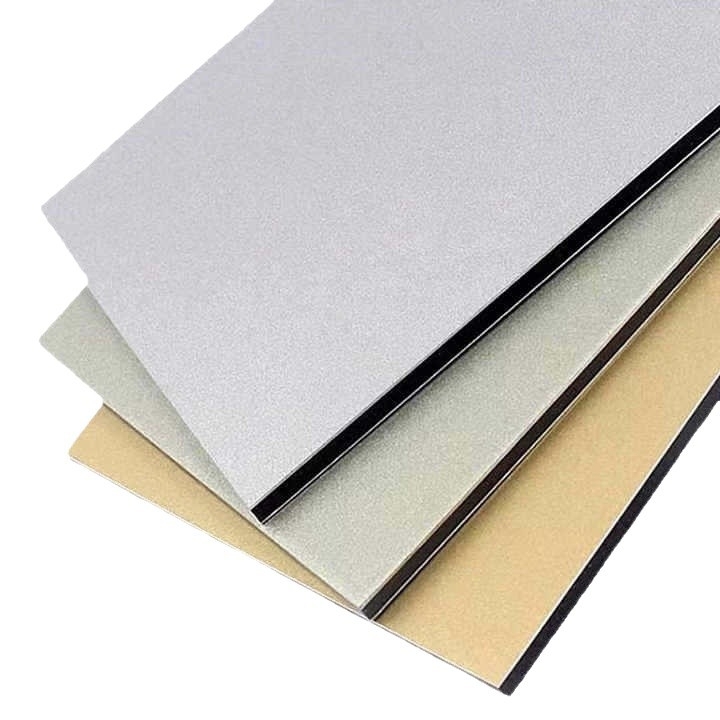
- Metallic or Solid: Custom metallic finishes introduce additional complexity due to the behavior of metallic pigments (aluminum flakes, mica) that affect both color appearance and batch consistency.
- Gloss Level: The same color formula can appear significantly different at varying gloss levels. Gloss must be specified and controlled alongside color.
The Custom Color Matching Process: Step by Step
Patience is required because custom color matching is not a simple matter of mixing paint to match a swatch. It is a multi-stage process that typically unfolds over several weeks:
Step 1: Sample Submission and Analysis
The process begins when the client submits a physical color standard—a paint chip, a brand guide, a material sample, or an approved architectural sample. Digital images or printed fan decks are never sufficient for precise matching due to variations in screen calibration and printing processes.
The manufacturer’s coatings laboratory analyzes the sample using a spectrophotometer, which measures the color’s spectral reflectance curve. This provides objective numeric data (L, a, b values) that serve as the baseline for matching.
Step 2: Formulation Development
Coatings engineers develop an initial formulation designed to achieve the target color within the constraints of the specified coating system (PVDF, polyester, etc.). This involves selecting appropriate pigments, calculating ratios, and accounting for the interaction between pigments and the coating’s resin system.
This stage alone can require multiple iterations. A formulation that looks correct in the lab may shift when applied to an aluminum substrate or when cured at production temperatures.
Step 3: Lab Spray-Outs and Iteration
The initial formulation is applied to test panels (lab spray-outs) and cured under controlled conditions. These panels are evaluated under standardized lighting conditions and measured against the original sample using the spectrophotometer.
Color tolerance is typically expressed as ΔE (Delta E) —a numerical value representing the difference between the target color and the produced color. For high-quality custom matches, manufacturers aim for ΔE < 1.0, which represents a difference imperceptible to the human eye under normal lighting.
If the ΔE exceeds the tolerance, the formulation is adjusted, and new spray-outs are created. This iterative process continues until the match meets the required standard. Each iteration takes time—often several days per cycle.
Step 4: Weathering Validation
A color that matches perfectly in the laboratory is not yet ready for exterior application. The formulation must undergo accelerated weathering testing (per ASTM D2244 or ISO 16474) to ensure that the color will not fade, chalk, or change unacceptably over time.
If the weathering test reveals excessive color shift, the formulation must be revised—potentially requiring a different pigment combination that offers better UV stability. This testing phase typically adds several weeks to the development timeline.
Step 5: Production Scale-Up
Once the laboratory formulation is approved, it must be scaled up to production volumes. This transition is not always seamless. Factors such as mixing time, application parameters, and curing conditions can affect color development at scale. The first production run (often called the “first article”) is evaluated, and further adjustments may be required before full production proceeds.
Step 6: Final Approval and Production
Only after all testing and scale-up validation is complete does full production begin. Even then, the manufacturer must ensure batch-to-batch consistency throughout the production run, maintaining color within the specified tolerance for every panel delivered.
Why the Process Cannot Be Rushed
Procurement professionals accustomed to standard product lead times may find the custom color matching timeline—typically 4 to 8 weeks from sample submission to production—frustrating. However, accelerating this process introduces unacceptable risks:
1. Compromised Durability
Rushing formulation development may lead to the selection of pigments that achieve the target color quickly but lack long-term UV stability. The result: a facade that looks perfect at installation but fades unevenly within a few years.
2. Inconsistent Results
Skipping proper scale-up validation increases the risk of batch-to-batch variation. Panels delivered at different times may show visible color differences, creating a patchwork appearance on the finished facade.
3. Failed Weathering Performance
Without proper accelerated weathering testing, the formulation’s long-term performance is unknown. The cost of premature coating failure—replacement, scaffolding, business interruption—far exceeds any time saved during development.
4. Installation Delays
If production panels do not match the approved sample, the entire shipment may be rejected. The resulting delays to construction schedules are far more costly than allowing adequate time for proper development upfront.
Common Challenges in Custom Color Matching
Even with a methodical process, certain colors and finishes present inherent challenges:
Challenge | Description |
Vibrant Organic Pigments | Bright reds, oranges, blues, and yellows often require organic pigments that have lower UV resistance than inorganic pigments. Achieving both vibrancy and longevity may require compromises. |
Metallic Finishes | Metallic pigments create directional reflectivity. Matching a metallic custom color requires controlling not only the base color but also the size, orientation, and concentration of metallic flakes—a complex technical challenge. |
Low-Gloss Matte Finishes | Matte finishes scatter light differently than gloss finishes, making color perception dependent on viewing angle. Matching matte custom colors requires precise control of both color and sheen. |
Small Quantities | Custom color formulations are typically produced in minimum batch sizes (often 1,000–2,000 square meters or more). For small projects, the cost and complexity may be prohibitive. |
Multiple Substrates | If the same custom color is needed on different materials (e.g., ACP, extruded aluminum trim, windows), matching across substrates with different coating systems adds significant complexity. |
Best Practices for Procurement Professionals
To ensure a successful custom color matching outcome, incorporate these practices into your project planning:
1. Start Early
Engage with potential manufacturers early in the design phase, not after construction documents are issued. Custom color development should be factored into the project schedule from the outset.
2. Provide Physical Standards
Submit a physical color standard—not a digital file or printed sample. If the standard is from an existing material (e.g., a tile, a fabric, a brand guide), provide multiple copies in case one is consumed during testing.
3. Define Tolerances Clearly
Specify acceptable color tolerances in the procurement documents. Industry standard for exterior architectural coatings is ΔE < 1.0 for solid colors, though some projects may accept ΔE < 1.5. For metallic finishes, tolerances may be slightly wider.
4. Plan for Spare Panels
For custom colors, future matching is exceptionally difficult. Include in your procurement a quantity of spare panels (typically 5–10% of the total) to be stored for future repairs or replacements.
5. Budget for Development Costs
Custom color matching involves laboratory work, testing, and production setup. Expect a one-time development fee in addition to the per-panel material cost. This fee reflects the engineering effort required, not just the pigment cost.
6. Require Documentation
Request the manufacturer to provide:
- Spectrophotometric reports showing ΔE values between production panels and the approved standard
- Accelerated weathering test results validating long-term color stability
- Batch records confirming consistency across the production run
The Value of Patience
Patience in the custom color matching process is not merely about tolerating delays—it is an investment in quality. A properly developed custom color delivers:
- Architectural Integrity: The building’s color matches the design intent precisely
- Long-Term Performance: The facade maintains its appearance for decades, not years
- Risk Mitigation: No unexpected color variation, fading, or rejection of materials
- Brand Consistency: For corporate projects, the brand color is faithfully reproduced
Conclusion
Custom color matching for aluminum composite panels is a technical process that demands expertise, rigorous testing, and—above all—time. It cannot be reduced to a simple mixing task or accelerated without compromising quality.
For procurement professionals, understanding this reality is essential to setting realistic schedules, managing stakeholder expectations, and ultimately delivering a facade that meets both aesthetic and performance goals. By planning, engaging manufacturers early, and allowing adequate time for development, you ensure that the custom color you envision becomes a lasting reality—not a rushed compromise.