Welcome to Vbond
Why Solvent-Based Adhesives Are a Disaster for Alucobond — And What to Use Instead
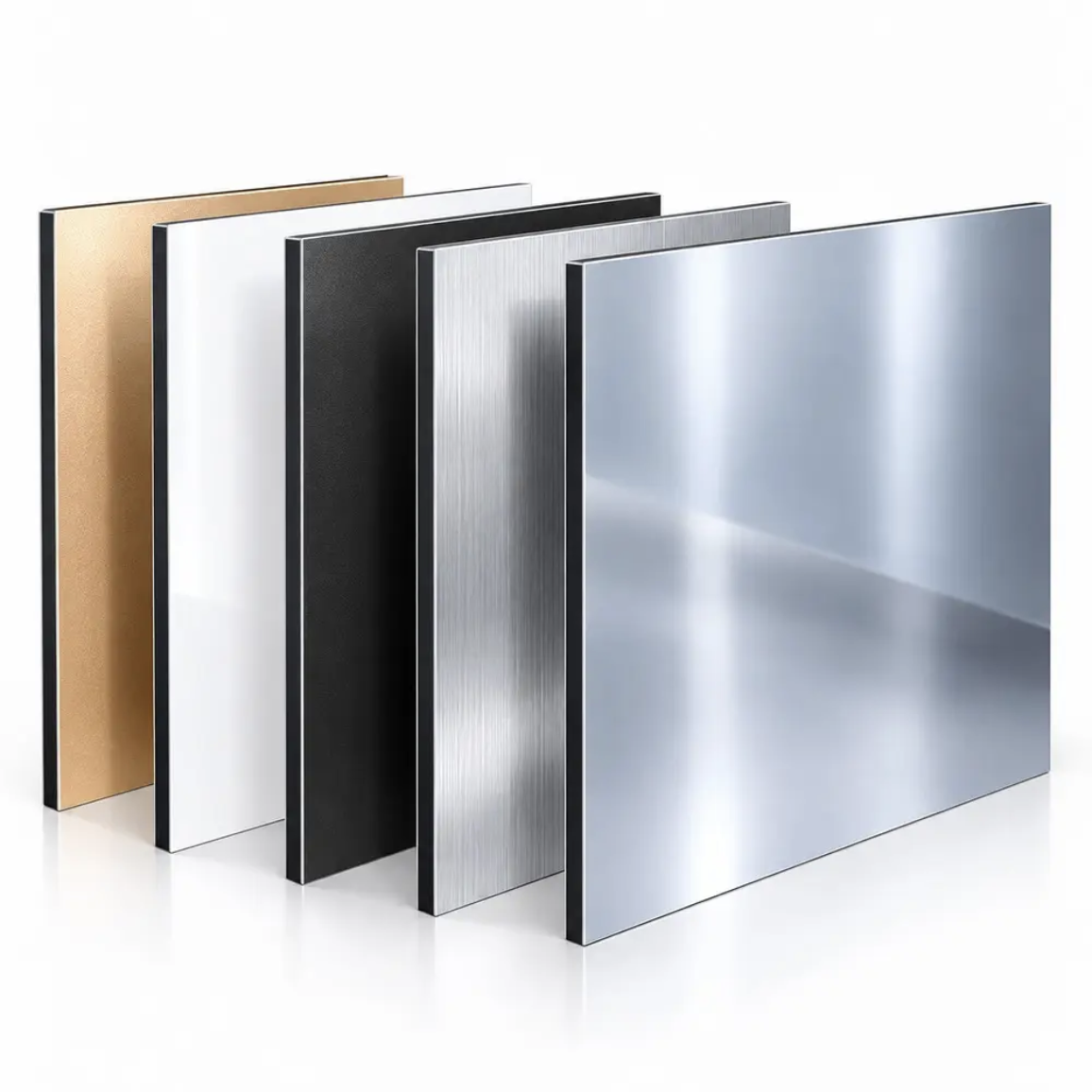
You order a shipment of Alucobond sheets. They arrive on site. The panels look flawless. The finish is perfect.
You install them using a solvent-based adhesive. The bond seems strong. The panels hold.
Months later, you see the damage. Bubbles under the surface. The aluminum skin is pulling away from the core. The panel is delaminating. The adhesive failed.
The problem is not the installation. The problem is the adhesive. Solvent-based adhesives destroy Alucobond from the inside out.
This guide explains why solvent-based adhesives are a disaster for Alucobond sheets. You will learn the chemistry behind the failure. You will understand the three specific ways solvents attack the panel. And you will know exactly which adhesives to use instead.
The Fundamental Problem: Solvents Attack the Core
Alucobond is a sandwich panel. Two aluminum skins bond to a polyethylene or mineral-filled core. The core is the structural heart of the panel. Damage it, and the panel fails.
Solvent-based adhesives contain organic solvents. These solvents are designed to dissolve or soften materials to create a bond. On Alucobond, they do exactly that—but in the wrong place.
The official warning from ALUCOBOND processing guidelines:
"Organic solvents should not remain in contact with ALUCOBOND cut edges for a longer period, as they could damage the composite."
This is not a recommendation. It is a warning. Organic solvents attack the bond between the aluminum skin and the core. They weaken the composite structure from the edge inward.
Three Ways Solvent-Based Adhesives Destroy Alucobond
1. Solvent Attack on the Polyethylene Core
The polyethylene core is vulnerable to organic solvents. When solvent-based adhesive contacts the cut edge of an Alucobond sheet, the solvent penetrates the exposed core. It softens and degrades the polyethylene. The core loses its structural integrity.
What happens next: The degraded core can no longer support the aluminum skins. The panel warps. Bubbles form. The skin separates from the core.
2. Solvent Attack on the Adhesive Bond
ALUCOBOND processing guidelines state that "glues or sealing compounds do not adhere to the plastic core of ALUCOBOND". Standard adhesives bond only to the aluminum skin—not to the core.
When a solvent-based adhesive is applied, the solvent can migrate through the adhesive layer and attack the bond interface. The result is a weakened bond that fails under thermal stress or wind load.
3. Solvent Damage to the PVDF Coating
The PVDF coating on Alucobond sheets is designed for durability, but it is not immune to solvents. As ALUCOBOND guidelines warn, the lacquered surfaces "could be damaged by solvents or plasticizers".
Solvent-based adhesives can soften or dissolve the coating. The damage may not be visible immediately. Over time, the coating cracks, discolors, or loses adhesion.
The result: A facade that looks perfect at installation but develops cosmetic defects within months.
Why Solvent-Based Adhesives Fail in the Field
Thermal expansion makes it worse.
Alucobond expands at 2.4 mm per meter for every 100°C temperature change. The adhesive must move with the panel. Solvent-based adhesives tend to be rigid. They do not flex. Under thermal stress, they crack. Moisture enters. The panel delaminates.
Solvent evaporation creates voids.
As the solvent evaporates from the adhesive, it creates volume shrinkage. This shrinkage leaves voids and air pockets in the bond line. These voids become failure points. Under load, the adhesive tears.
High temperatures accelerate failure.
High temperatures accelerate solvent evaporation, resulting in defects such as bubbles and hollows in the adhesive layer. On a hot summer facade, the adhesive can fail within weeks.
The Adhesives That Actually Work on Alucobond
MS Polymer Adhesives (Modified Silane Polymers)
MS polymer adhesives are the industry standard for Alucobond bonding. They are solvent-free, permanently elastic, and bond to both aluminum and the core material.
Product | Key Features |
Bostik Sticks Like Sh*t Instant Grab | MS polymer technology, extremely high initial tack, bonds aluminium including ALUCOBOND, moisture/weather/UV resistant, contains no solvents or isocyanates |
Bostik Paneltack HM | Solvent-free and isocyanate-free, moisture-curing elastic adhesive based on Hybrid technology |
SikaTack-Panel System | One-component PUR sealant adhesive, approved for facade applications |
MBE Panel-loc | MS polymer sealant adhesive |
Structural Acrylic Adhesives
For high-strength structural bonding, two-component acrylic adhesives offer excellent performance.
Product | Key Features |
Permabond TA4522 | Ideal for bonding composite materials like Alucobond, especially for applications with no visible fasteners |
Permabond TA4230 | Fire-retardant, 2-part toughened acrylic, bonds metals, plastics, and composites |
Acrylic Foam Tapes
For panel-to-frame bonding and stiffener attachment, acrylic foam tapes provide high-strength, permanent bonds.
Product | Key Features |
3M VHB Structural Cladding Tape W20F | European Technical Approval ETA-10/0149 |
tesa ACX 70200 | 2mm thick, approved for Alucobond panel bonding |
Surface Preparation: The Make-or-Break Step
Even the best adhesive will fail without proper surface preparation. The bonding surfaces must be clean, dry, and free from contaminants.
Step 1: Clean the surface
Use isopropyl alcohol or a dedicated panel cleaner. Apply to a soft cloth and wipe the surface. Do not pour solvent directly onto the panel.
Step 2: Apply primer (if required)
Some adhesive systems require a primer:
System | Primer |
SikaTack-Panel | SikaTack-Panel Primer |
tesa ACX | tesa 60150 Adhesion Promoter |
3M VHB | 3M Primer 94 |
MBE Panel-loc | No primer required |
Step 3: Apply adhesive
Follow the manufacturer's application instructions. For spot gluing, ensure the diameter of the glue dots is at least 30 mm, and the spacing is no more than 200mm.
Step 4: Allow proper cure time
MS polymer adhesives cure by reacting with atmospheric moisture. Full cure typically takes 24-72 hours depending on temperature and humidity. Do not stress the bond during curing.
The Adhesive Selection Flowchart
Start
│
▼
Identify application (facade bonding, stiffener attachment, etc.)
│
▼
Rule out solvent-based adhesives immediately
│
├─── Contains organic solvents? ─── Yes ───► REJECT
│
No
│
▼
Select adhesive type:
│
├─── MS Polymer (Bostik, Sika, MBE) ───► Best for most applications
├─── Structural Acrylic (Permabond) ───► High-strength structural
└─── Acrylic Foam Tape (3M VHB, Tesa) ───► Panel-to-frame bonding
│
▼
Verify with supplier: "Is this approved for Alucobond?"
│
▼
Prepare surfaces (clean with isopropyl alcohol, primer if required)
│
▼
Apply adhesive per manufacturer's instructions
│
▼
Allow full cure time (24-72 hours)
│
▼
Done ───► Delamination-free installation
What to Ask Your Supplier
When you purchase an Alucobond sheet for your project, ask these questions:
1. Is your adhesive solvent-free? The answer must be yes. Organic solvents damage the composite.
2. Is your adhesive approved for Alucobond? Look for products that specifically mention Alucobond compatibility.
3. What is your adhesive's elasticity? It must accommodate thermal expansion (2.4 mm/m/100°C).
4. Do you provide surface preparation guidelines? A reliable supplier will have documented procedures.
5. What is your adhesive's cure time? MS polymer adhesives typically cure in 24-72 hours.
Common Mistakes to Avoid
Mistake 1: Using solvent-based contact adhesive
Some installers use solvent-based contact adhesives because they "work on everything." They do not work on Alucobond. The solvents attack the core. The bond fails.
Fix: Use solvent-free MS polymer or structural acrylic adhesives.
Mistake 2: Skipping surface preparation
Dirt, oil, or dust on the bonding surface prevents adhesion. The bond fails.
Fix: Clean every surface thoroughly with isopropyl alcohol. Apply primer if required.
Mistake 3: Using adhesive on unsealed cut edges
Solvent-based adhesives applied to unsealed cut edges penetrate the exposed core. The damage starts immediately.
Fix: Seal all cut edges before applying any adhesive. Or better—use solvent-free adhesives.
Mistake 4: Not allowing proper cure time
MS polymer adhesives need moisture to cure. Rushing the cure compromises the bond.
Fix: Follow the manufacturer's cure time recommendations. Allow 24-72 hours.
The Bottom Line
Solvent-based adhesives are a disaster for Alucobond. They attack the polyethylene core. They weaken the bond between the aluminum skin and the core. They damage the PVDF coating. They fail under thermal stress. They create voids as solvents evaporate.
The official ALUCOBOND guidelines are clear: organic solvents should not remain in contact with cut edges for a long period, as they could damage the composite.
The solution is straightforward:
- Use solvent-free MS polymer adhesives (Bostik Sticks Like Sh*t Instant Grab, Paneltack HM, SikaTack-Panel)
- Use structural acrylic adhesives for high-strength applications (Permabond TA4522)
- Use acrylic foam tapes for panel-to-frame bonding (3M VHB, tesa ACX)
- Prepare surfaces properly—clean with isopropyl alcohol, apply primer if required
- Allow full cure time—24-72 hours for MS polymer adhesives
A reliable supplier of Alucobond sheets will recommend solvent-free adhesives. They will provide surface preparation guidelines. They will stand behind their recommendations. Get the adhesive right, and your Alucobond facade stays flat for decades. Get it wrong, and delamination appears within months.
The choice is yours—but the chemistry is not.