Welcome to Vbond
Why Your Aluminum Composite Panel Container Might Contain Multiple Unidentified Grades

Why Your Aluminum Composite Panel Container Might Contain Multiple Unidentified Grades
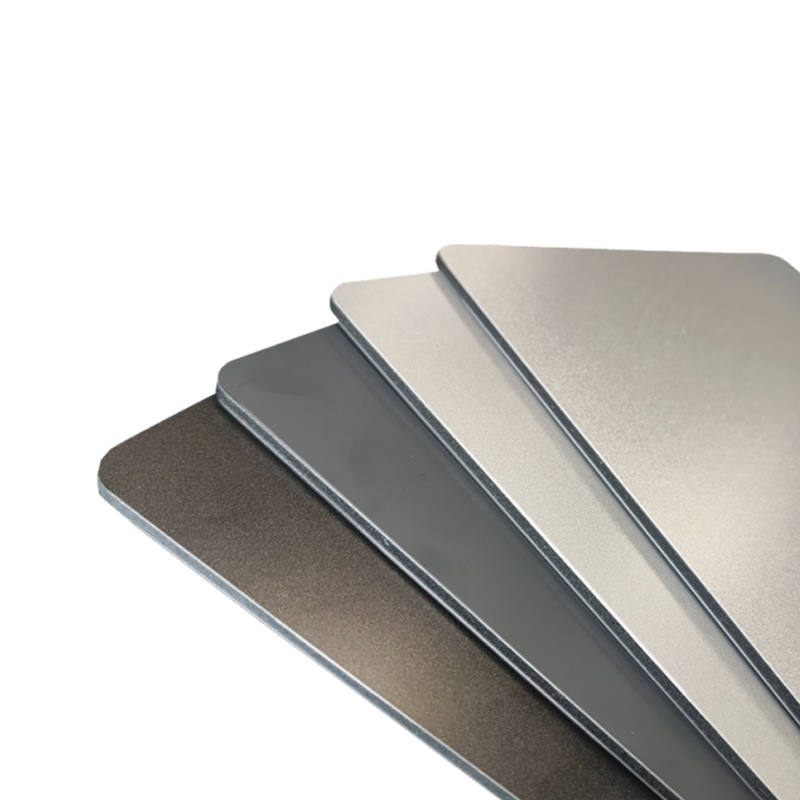
You have ordered a specific grade of aluminum composite panels. The price reflects that grade. The documentation claims that grade. The sample matched that grade. But when the container arrives, you find panels with different core colors, different densities, and inconsistent markings. Your shipment contains multiple unidentified grades.
This problem is more common than many procurement professionals realize. When a reputable aluminum composite panel manufacturer maintains strict production segregation, each shipment contains a single, traceable grade. However, when quality control falters—or when unscrupulous suppliers mix materials to fulfill orders—containers arrive with a patchwork of grades: some PE, some FR, some perhaps even A2 mineral core, all mixed.
This guide explains why multiple grades end up in single containers, how to detect mixed grades, and how to protect your project from this hidden risk.
1. What Does "Multiple Unidentified Grades" Mean?
Aluminum composite panels are manufactured in distinct grades based on core composition and fire performance.
Grade | Core Composition | Density | Fire Behavior |
PE (Polyethylene) | 100% polyethylene | 0.91-0.94 g/cm³ | | Ignites readily; melts; flaming droplets |
FR (Fire-Retardant) | 30-70% polyethylene + mineral filler | 1.2-1.6 g/cm³ | Self-extinguishing; foams when heated |
A2 Mineral Core | <10% polyethylene; >90% mineral filler | >1.6 g/cm³ | Does not ignite; no flaming droplets |
When multiple grades are commingled in a single shipment, panels that look identical externally may have completely different fire performance characteristics. A building inspector who tests a sample panel from one bundle may find compliant A2 material—but the next bundle, installed on a different facade elevation, may contain combustible PE.
The CSIRO (Commonwealth Scientific and Industrial Research Organisation) has developed rapid identification methods specifically to address this problem, grading ACP core materials into categories based on polyethylene content: 100-70% (high risk), 29-8% (moderate risk), and <7% (low risk).
2. Why Multiple Grades End Up in One Container
2.1 Production Scrap Blending
During manufacturing, panels that fail quality inspection (factory seconds) are supposed to be segregated and sold separately with disclosure. Some manufacturers blend these rejects with prime panels to fulfill orders without losing material.
The Chinese national standard GB/T 17748-2016 requires that products be grouped into batches of the same type, specification, and color continuously produced, typically 3000m² per batch. When manufacturers ignore this requirement, multiple batches—and multiple grades—can be commingled.
2.2 Core Material Shortages
When a specific core material (e.g., A2 mineral) is in short supply, some suppliers substitute FR or PE core panels to complete orders. Rather than delaying shipment, they mix whatever material is available, assuming the exterior appearance will mask the substitution.
The Guangzhou Market Supervision Administration's quality Spot-check details specify that sampling must include an inspection sample and a backup sample from the same production batch to ensure consistency. Suppliers who cannot provide batch consistency are likely mixing grades.
2.3 Inadequate Batch Segregation
An aluminum composite panel manufacturer without proper quality management systems may not maintain clear physical separation between production runs. Panels from different batches—with different core compositions—may be stored on the same pallets or in adjacent stacks, leading to unintentional mixing during packing.
ISO 9001 certification requires documented processes for batch identification and traceability. Suppliers without this certification are at higher risk of grade mixing.
2.4 Cost-Driven Substitution
Some suppliers deliberately mix lower-cost PE core panels with higher-cost FR or A2 panels to increase profit margins. The shipment may contain just enough compliant panels to pass a superficial inspection, while the majority are non-compliant.
The economic incentive is substantial. A supplier who substitutes PE for A2 on 30% of an order increases profit margin significantly while hoping the buyer will not test enough samples to detect the mix.
3. How to Detect Multiple Grades in Your Shipment
3.1 Visual Edge Inspection
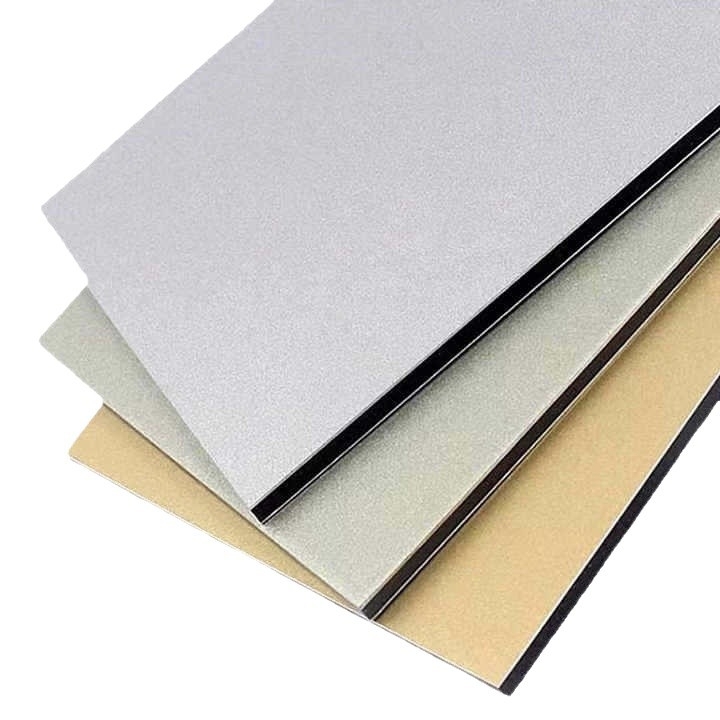
The cut edge of a panel provides immediate clues about core composition.
Visual Indicator | Likely Grade | Reliability |
Black core | PE (carbon black filled) | Moderate |
White to dark grey core | FR or A2 | Low (needs confirmation) |
Three-layer structure visible | All ACPs | Diagnostic only |
However, visual inspection alone is not sufficient. The SFPE (Society of Fire Protection Engineers) notes that while black cores are "very often carbon black-filled polyethylene," white to dark grey cores are often fire-retardant ACP," but this relationship is "not dependable enough to rely upon it as a sole means of identification".
3.2 Density Check (Float Test)
The simplest field test for grade identification uses density.
Procedure:
1. Cut small samples (10mm x 10mm) from panels in different bundles
2. Place samples in water
Result | Grade |
Floats | PE core (density 0.91-0.94 g/cm³) |
Sinks slowly or has neutral buoyancy | FR core (1.2-1.6 g/cm³) | |
Sinks rapidly | A2 mineral core (>1.6 g/cm³) |
A professional Alucobond factory or quality manufacturer maintains consistent density across all panels in a shipment. Variation indicates mixed grades.
3.3 Burn Test (Field Screening)
The most reliable field test uses a small flame.
Procedure:
1. Cut 10mm x 50mm samples from multiple bundles
2. Apply a lighter flame to the exposed core edge for 5-10 seconds
3. Remove flame and observe
Observation | Grade |
Does not ignite; no sustained flame | Does not ignite; no sustained flame |
Ignites with difficulty; self-extinguishes; foams | FR Core |
Ignites quickly; melts; continues burning with flaming droplets | PE Core |
This test is "highly sensitive to combustible material" and serves as an excellent screening tool.
3.4 Laboratory Analysis (Definitive)
For definitive identification, engage an accredited laboratory.
Method | What It Measures | Standard |
FTIR spectroscopy | Identifies polymer type and mineral filler | N/A |
Ash content (ASTM D5630) | Measures inorganic (non-combustible) percentage | ASTM D5630 |
TGA (Thermogravimetric Analysis) | Measures decomposition temperatures | N/A |
XRF (X-ray fluorescence) | Identifies mineral filler composition | N/A |
The SFPE recommends "FTIR + Gravimetry + XRF" as the combination offering "the highest sensitivity and specificity for aluminium composite panel core characterisation".
4. The Consequences of Mixed Grades
4.1 Fire Safety Risk
The most severe consequence is fire safety failure. Panels that should be A2 mineral core (non-combustible) may be mixed with PE core (highly combustible). A facade that appears uniform may have hidden vulnerabilities.
The Insurance Council of Australia's risk protocol explicitly categorizes panels based on polyethylene content, with higher PE content indicating higher fire risk. Mixed grades make risk assessment impossible.
4.2 Building Code Violation
Installing panels with mixed grades violates building codes because the installed assembly does not match certified documentation. Consequences include:
- Stop-work orders
- Mandatory facade replacement
- Loss of occupancy permits
4.3 Legal Liability
Under the chain of responsibility legislation, specifiers cannot delegate their duty of care to suppliers. If mixed grades are discovered after a fire, liability falls on the procurement professional who accepted the shipment without adequate testing.
5. How to Prevent Mixed Grades: Procurement Best Practices
5.1 Supplier Qualification
Before ordering, verify that your aluminum composite panel manufacturer has:
- ISO 9001 certification for quality management
- Documented batch segregation procedures
- Traceability systems linking panels to production records
- Third-party audit reports
A supplier's reorder rate and on-time delivery metrics are indicators of operational consistency.
5.2 Contractual Protection
Include explicit language in your purchase order:
"All panels supplied under this order shall be from a single production batch of the same core type (PE, FR, or A2 mineral) as specified. Supplier shall provide batch traceability documentation, including core composition reports. Panels of different core types shall not be commingled in the same shipment. Buyer reserves the right to perform destructive testing on randomly selected panels. If any panel fails to match the specified core type, Buyer may reject the entire shipment at Supplier's expense."
5.3 Pre-Shipment Third-Party Inspection
Engage an independent inspector at the factory to:
- Randomly select panels from across the production run
- Perform density checks on samples
- Witness burn testing
- Verify that all panels loaded share the same core type
- Photograph and document batch numbers
The sampling methodology should follow GB/T 17748-2016, which requires random sampling from qualified batches .
5.4 Incoming Inspection Protocol
Upon delivery, before accepting:
Step | Action | Pass/Fail Criteria |
1 | Select panels from a minimum 10% of bundles | Random distribution |
2 | Perform density check (float test) on each sample | All samples same behavior |
3 | Perform a burn test on one sample per pallet | Consistent results across pallets |
4 | Compare core colors across samples | Consistent appearance |
5 | Check batch numbers on protective film | All match |
If any sample shows different behavior, the shipment likely contains mixed grades and should be rejected.
5.5 Batch Number Verification
Chinese national standard GB/T 17748-2016 requires that each product be marked with "batch number or production date" to ensure traceability. Inspect panel markings across multiple bundles. If batch numbers are inconsistent or missing, reject the shipment.
Guangzhou's quality Spot-check details also specify that sampling must include backup samples for verification. Require your supplier to maintain retained samples for each batch.
6. What to Do When Multiple Grades Are Discovered
If you discover mixed grades in a shipment:
1. Stop installation immediately – Do not install any panels
2. Isolate panels by apparent grade – Separate based on density or burn test results
3. Document everything – Photograph burn tests, density checks, batch numbers
4. Quantify the mix – Determine what percentage of each grade is present
5. Notify the supplier in writing with documented evidence
6. Engage an accredited laboratory for definitive testing (FTIR + ashing)
7. Reject the entire shipment – Mixed grades constitute a fundamental breach
8. Demand replacement with single-grade, traceable panels at the supplier's expense
Do not accept partial remedies. Mixed-grade shipments cannot be reliably sorted in the field.
7. The Role of Reputable Manufacturers
A professional aluminum composite panel manufacturer or Alucobond factory prevents mixed grades through:
- Dedicated production lines for different core types
- Clear physical segregation of materials in storage
- Batch numbering systems that track every panel
- Quality control testing at multiple production stages
- Third-party certification of fire performance
The GB/T 17748-2016 standard requires that products be grouped into batches of the same type, specification, and color continuously produced. Manufacturers who adhere to this standard can provide traceable, single-grade shipments.
In contrast, suppliers who cannot maintain batch integrity—or who refuse to provide batch-specific documentation—are likely mixing grades and should be avoided.
8. Conclusion
Multiple unidentified grades in a single aluminum composite panel container represent a serious quality and safety risk. The problem arises from production scrap blending, material shortages, inadequate segregation, or deliberate substitution. The consequences—fire safety failures, building code violations, and legal liability—are severe.
For procurement professionals, the defense against mixed grades is systematic verification:
1. Qualify suppliers** with ISO 9001 certification and documented batch control
2. Specify single-batch requirements in every purchase order
3. Conduct pre-shipment inspection with density and burn testing
4. Perform incoming inspection before accepting delivery
5. Test multiple samples from different bundles
6. Reject mixed shipments immediately
The CSIRO's rapid identification method—grading core materials based on polyethylene content—provides a practical framework for field testing. Density checks (float test) and burn tests are simple, effective screening tools that every procurement professional can use.
Do not assume that panels that look identical perform identically. Test before you install. Your building's fire safety depends on it.