Welcome to Vbond
Floating Connection vs. Rigid Fixing: Which Causes More Alucobond Blistering?
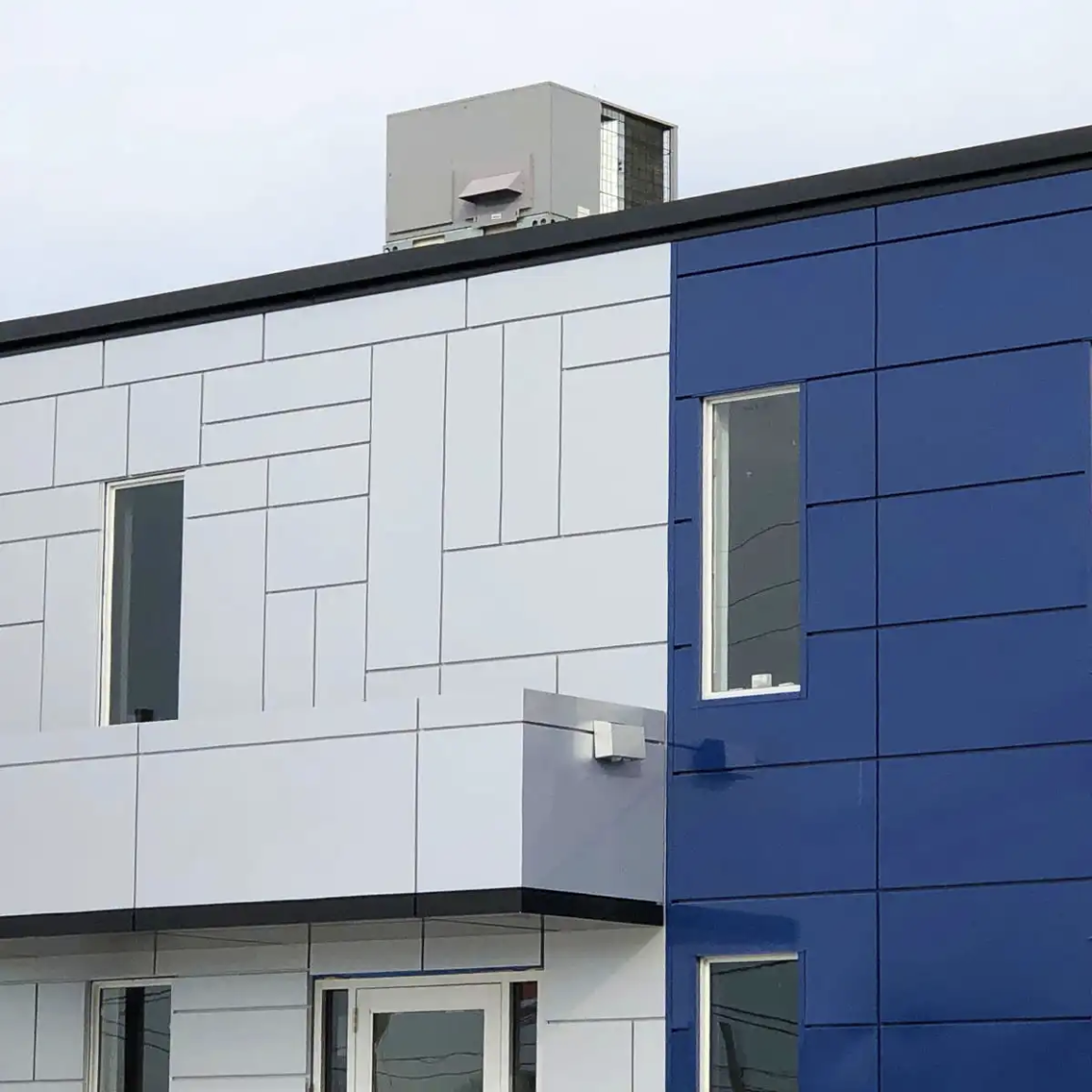
You install a beautiful Alucobond facade. The panels line up perfectly. The joints are tight. The client approves the work.
Six months later, you see blisters. Raised bumps on the panel surface. The facade looks damaged. The client demands answers.
The problem is not the material. The problem is how you attached it.
This guide compares floating connection and rigid fixing. You will learn how each method affects panel performance. You will understand which one causes more blistering. And you will know exactly how to attach your panels for long-term durability.
What Are the Two Fixing Methods?
There are two principal approaches for fixing aluminum fabrications: floating fix and dead fix (rigid fixing).
Rigid fixing (dead fix) means every fastener is a fixed point. Every screw or rivet locks the panel in place. There are no oversized holes or slots. The panel cannot move.
Floating connection means each panel has one dead fix (fixed point)—usually at the center—and all other fixings are floating. These feature oversized or slotted holes, or sliding clips. The panel can expand and contract freely.
The difference is simple: rigid fixing locks the panel down. A floating connection lets it move.
Why Aluminum Moves
Alucobond has a linear thermal expansion coefficient of 2.4 mm per meter for every 100°C temperature change. A 4-meter panel in a 60°C temperature swing expands by nearly 6 mm.
Without room to move, that force transfers directly to fasteners, substructure, and adjacent panels. The panel cannot absorb the stress. Something has to give.
Aluminum has a high coefficient of thermal expansion. If you ignore this, panels can warp or buckle. The metal will repeatedly bend and may begin to show surface wrinkles—often called the "oil can" effect.
How Rigid Fixing Causes Blistering
When you lock a panel down at every attachment point, you create a problem. The panel wants to expand. The fasteners say no. The stress has nowhere to go.
The mechanism:
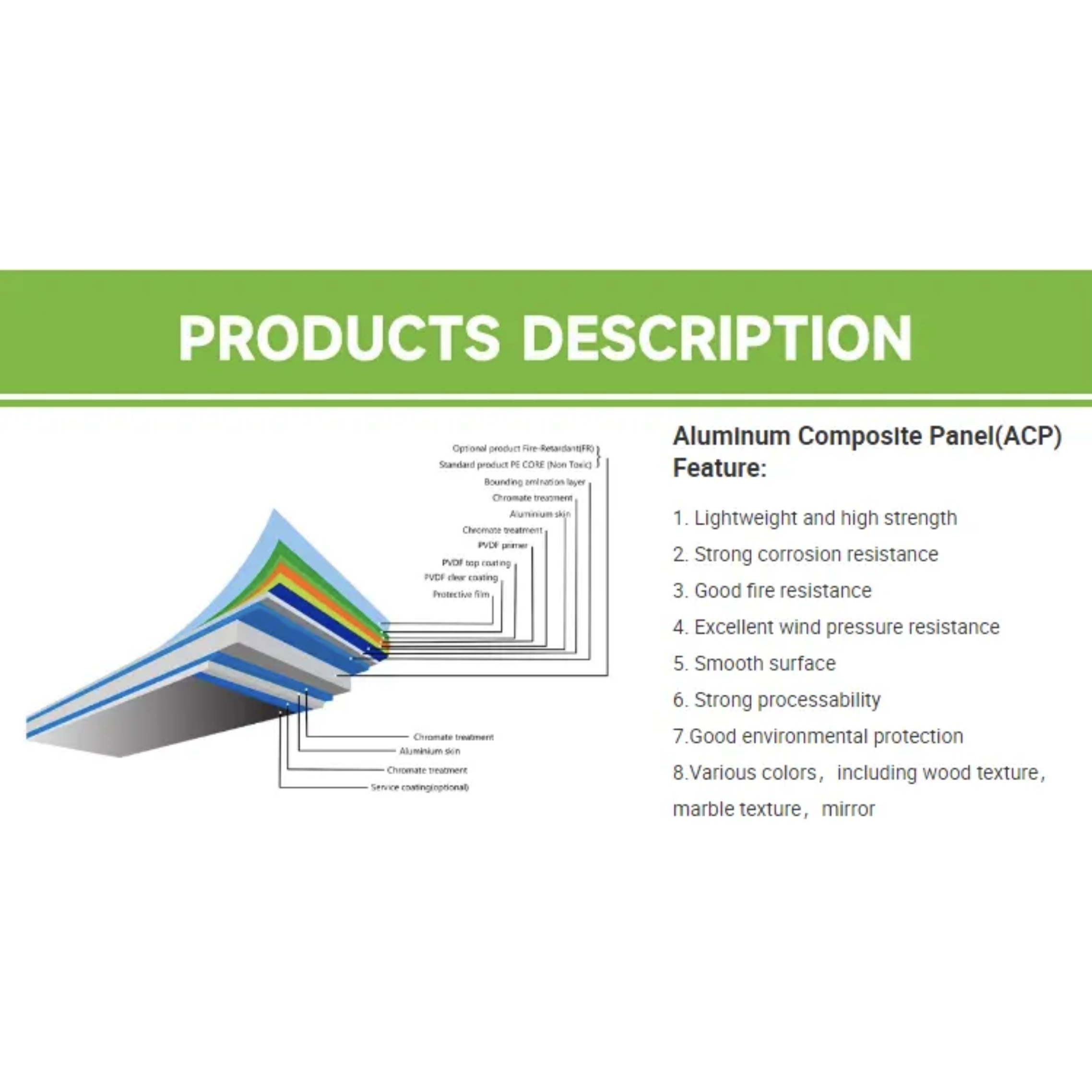
1. The sun heats the panel. The aluminum skins expand. The PE core expands even faster—approximately six times more than the aluminum.
2. The rigid fasteners prevent the panel from expanding outward. Stress builds inside the panel.
3. The adhesive bond between the aluminum skins and the core is stressed beyond its limit.
4. The bond fails. The aluminum separates from the core. A void forms.
5. That void becomes a visible blister.
If panels are "locked down" rigidly at all attachment points, the metal will warp—pillow or oil-can—as it heats up and expands. The adhesive bond fails. Blisters form.
The evidence:
In one documented case, a 1,600 m² aluminum composite panel installation suffered collective bulging because no expansion joints were reserved and panels were force-installed during the high-temperature period at noon. The entire facade buckled.
How Floating Connection Prevents Blistering
A floating connection gives the panel room to move. One fixed point anchors the panel. All other attachments slide.
The mechanism:
1. The panel expands with heat. The sliding fasteners allow movement.
2. Stress does not build up in the panel. The expansion force dissipates through the floating attachments.
3. The adhesive bond between the aluminum skins and the core is not overloaded.
4. No bond failure. No blisters.
Floating connection uses floating clips and rails that allow exterior aluminum cladding panels and aluminum composite material to expand and contract. Flexible mounting systems help you avoid long-term damage.
The principle:
A floating fix secures each length of aluminum fabrication with one dead fix (fixed point), usually positioned centrally. All other fixings feature oversized or slotted holes or a sliding clip to create a sliding or floating fix, which allows the aluminum to expand and contract freely.
Thermal expansion will occur in every direction from the dead fix. The holes should increase in size as they move further from the fixed point.
Direct Comparison: Floating vs. Rigid
Factor | Floating Connection | Rigid Fixing |
Thermal movement | Allowed freely | Restricted completely |
Stress on adhesive bond | Low—stress dissipates | High—stress concentrates |
Blister risk | Low | High |
Oil canning risk | Low—panel stays flat | High—panel buckles between fixings |
Fastener failure | Rare—fasteners slide | Common—fasteners back out or fail |
Design complexity | Moderate | Simple |
Long-term performance | Excellent | Poor |
Caption: Comparison of floating connection and rigid fixing for Alucobond panels. Source: Industry installation standards.
Alt text: Table comparing floating connection and rigid fixing across seven factors, including thermal movement, blister risk, and long-term performance.
The Numbers: How Much Movement to Allow
Alucobond expands by 2.4 mm per meter for every 100°C temperature change.
For a 4-meter panel with a 50°C temperature swing:
- Total expansion: 4.8 mm
- Required gap per edge: 2.4 mm
For a 6-meter panel with a 60°C temperature swing:
- Total expansion: 8.64 mm
- Required gap per edge: 4.32 mm
Expansion gaps should be 3–5 mm per panel edge. Larger gaps are needed for darker colors—darker colors absorb more heat and expand more.
The Blistering Mechanism Flowchart
Start
│
▼
Panel installed on facade
│
▼
┌─────────────────────────────────────────────────────┐
│ Two Fixing Methods │
├─────────────────────────────────────────────────────┤
│ Rigid Fixing Floating Connection │
│ Every point locked One fixed point │
│ No room to move Sliding attachments │
└─────────────────────────────────────────────────────┘
│ │
▼ ▼
Sun heats panel Sun heats panel
│ │
▼ ▼
Panel wants to expand Panel expands freely
│ │
▼ ▼
Fasteners prevent movement Sliding fasteners allow movement
│ │
▼ ▼
Stress builds in panel No stress build-up
│ │
▼ ▼
Adhesive bond overloaded Adhesive bond protected
│ │
▼ ▼
Bond fails Bond holds
│ │
▼ ▼
Void forms between layers Panel stays flat
│ │
▼ ▼
Blister appears on surface No blisters
│ │
▼ ▼
Facade damaged Facade remains flawless
Common Installation Mistakes
Mistake 1: Using rigid fixing on large panels
Large panels expand more. Rigid fixing traps that expansion. Blisters follow.
Fix: Always use a floating connection on panels longer than 2 meters.
Mistake 2: Over-tightening fasteners
Over-tightened screws or rivets lock the panel in place. Even with oversized holes, over-tightening prevents movement.
Fix: Tighten fasteners enough to hold the panel—not enough to lock it.
Mistake 3: Not using oversized holes
Standard holes do not allow movement. The fastener shaft fills the hole. The panel cannot slide.
Fix: Use oversized or slotted holes. The fastener head must cover **1 mm of the surrounding area.
Mistake 4: Ignoring expansion gaps
Panels pushed tight against each other cannot expand. They buckle.
Fix: Leave **3–5 mm** gaps between panels.
Mistake 5: Installing on hot days
Panels installed at high temperatures will contract in winter. The gaps will open. Panels installed at low temperatures will expand in summer. They may buckle.
Fix: Consider the temperature during installation. Allow for both expansion and contraction.
What to Ask Your Alucobond Supplier for Exterior Wall
When you work with an Alucobond supplier for exterior walls, ask these questions:
1. What fixing system do you recommend? A knowledgeable manufacturer of Alucobond will specify a floating connection for exterior applications.
2. What expansion gap do you recommend? The answer should be 3–5 mm per panel edge.
3. What fastener hole size do you recommend? The hole must allow for expansion—the attachment head must cover 1 mm of the surrounding area.
4. Do you provide fixing system documentation? A reliable wholesale supplier of Alucobond will have installation guidelines.
5. What is your thermal expansion coefficient? The answer should be 2.4 mm/m/100°C.
The Bottom Line
Rigid fixing causes more Alucobond blistering. It locks the panel in place. The panel cannot expand. Stress builds. The adhesive bond fails. Blisters form.
Floating connection prevents blistering. It allows the panel to expand and contract freely. Stress does not build. The bond holds. The panel stays flat.
The evidence is clear:
- Rigid fixing restricts movement and causes warping and blistering.
- Floating connection allows thermal movement and prevents long-term damage.
- A floating connection ensures the facade can recover from deformation and avoids surface bulging or concavity.
Choose a floating connection for every exterior Alucobond installation. Leave expansion gaps. Use oversized holes. Do not over-tighten fasteners.
Your facade will stay flat. Your client will stay happy. Your reputation will stay intact.