Welcome to Vbond
Protective Film Residue: An Overlooked Cause of Alucobond Surface Defects
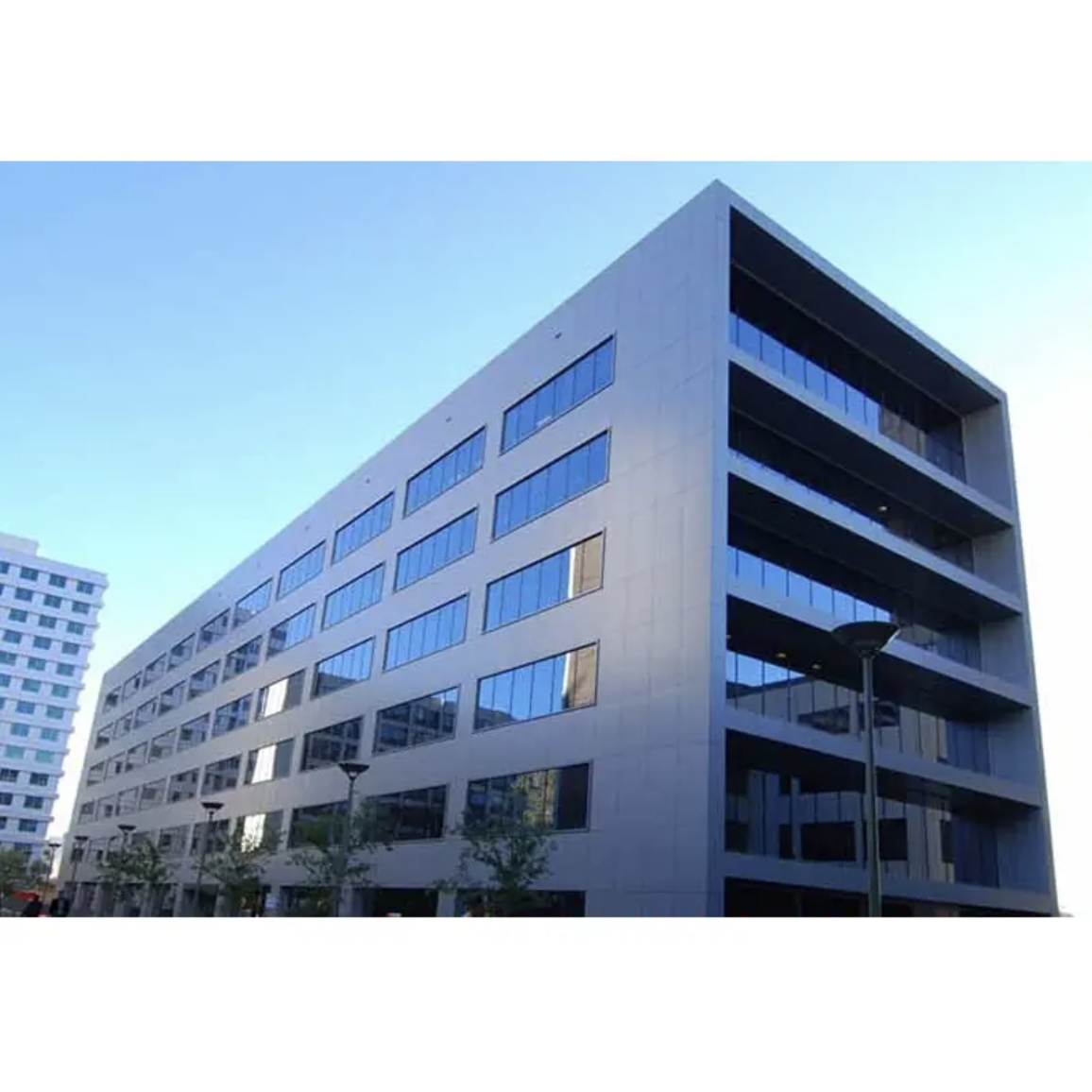
You order Alucobond panels. They arrive on site. The protective film is intact. The panels look flawless.
You install them. You peel off the film. Sticky patches remain. Cloudy streaks cover the surface. The pristine finish is ruined.
The problem is protective film residue. It is one of the most frustrating and costly quality issues in aluminum composite panel procurement. It turns a simple unpacking task into a labor-intensive remediation project.
This guide explains why protective film residue occurs. You will learn how UV radiation turns removable glue into a baked-on layer. You will understand the consequences for your project. And you will know exactly how to prevent it.
What Is Protective Film Residue?
The protective film on an Alucobond panel consists of a plastic layer coated with a pressure-sensitive adhesive (PSA). When functioning correctly, the adhesive stays bonded to the film. During removal, the adhesive releases cleanly from the panel surface.
Residue occurs when this system fails. The adhesive separates from the film and transfers permanently onto the panel surface. Industry analysis shows that the general reason for residue is that "the adhesive of the protective film does not follow the protective film, but remains on the contoured product".
Adhesive residue appears as cloudy streaks, sticky patches, or discoloration on the panel surface. It is unacceptable for architectural applications where clean lines and flawless finishes are required.
The Three Root Causes of Film Residue
Cause 1: UV Degradation (The Time Bomb)
This is the most preventable cause of film residue. UV radiation breaks down the chemical structure of the adhesive. What starts as a removable glue transforms into a baked-on layer that bonds aggressively to the coating.
As ALUCOBOND guidelines explicitly warn: "To avoid adhesive residues on the surface, caused by UV radiation, the protective film should be removed as soon as possible after the panels have been installed".
The official Alucobond installation manual reiterates: "To avoid residuals of glue sticking to the surface of the panels due to UV radiation, it is recommended to remove the protective foil as soon as possible after the installation". After installation, the protective film must be removed as quickly as possible, as weathered film can only be removed with great difficulty.
Cause 2: Low-Quality Adhesives
Cheap manufacturers cut corners on the protective film, using low-grade adhesives or inconsistent formulations. These materials might stick well initially but fail catastrophically during removal.
When the pressure-sensitive glue does not meet quality requirements, the internal cohesion of the adhesive fails. When the external force of peeling is greater than the internal strength of the adhesive, the glue splits—leaving half on the panel and half on the film.
Cause 3: Poor Film Substrate Quality
If the plastic backing is "too soft," it cannot withstand the tensile force during peeling. This causes the film to stretch and crack rather than release cleanly, leaving shredded fragments of plastic and adhesive on the panel surface.
The Consequences for Your Project
Cosmetic Damage and Rework
The most immediate consequence is visual. Adhesive residue appears as cloudy streaks, sticky patches, or discoloration. These defects ruin the appearance of the finished facade. Removing the residue requires solvents, scraping, and labor—costly and time-consuming.
Difficult or Impossible Removal
If the film stays on too long, it becomes brittle or difficult to remove. Late removal can cause:
- Sticky residue on the coating
- Film breaking into small pieces
- Uneven surface appearance
- Extra cleaning work
- Higher labor cost
- Possible coating damage
- Customer complaints after installation
Voided Warranty
Proper film removal is part of the installation process. If you damage the coating by leaving the film on too long or using improper removal methods, the manufacturer's warranty may not cover the damage.
Storage Restrictions
ALUCOBOND guidelines state that storage exceeding 6 months should be avoided, as it may become difficult to remove the protective foil. If you store panels too long, you create problems before you even start installation.
When to Remove the Protective Film
Protective film should be removed **as soon as possible after installation.
Key guidelines:
- Remove film immediately after installation is complete
- Do not leave film on exterior panels exposed to direct sunlight
- Do not store panels in direct sunlight—UV exposure weakens the film and bonds the adhesive
- Check the supplier's recommendation for maximum film removal time
Important note: To prevent damage to the panel surface, protective foil must not be removed during bending. Keep the film on during fabrication. Remove it after installation is complete.
What NOT to Do with Protective Film
Alucobond guidelines are clear: "Protective films and panel surfaces are not to be marked with inks (felt tips), adhesive tapes or stickers, as solvents or softeners can damage the painted surfaces".
This is often overlooked. A simple marker mark on the film can bleed through and damage the coating. The solvents in felt-tip pens can penetrate the film and attack the painted surface.
The rule: Do not write on the protective film. Do not put tape or stickers on it. Remove the film as soon as possible after installation.
How to Prevent Film Residue Problems
1. Choose a quality supplier
Not all protective films are created equal. A reputable alucobond interior panel supplier ensures their protective film is engineered for clean removal, even after reasonable on-site storage periods. When evaluating a manufacturer of Alucobond, ask about their protective film quality and UV resistance.
2. Store panels correctly
- Protect panels against rain, moisture, and condensation
- Only pallets of identical size should be stacked
- Maximum 6 pallets stacked on top of each other
- Avoid storage exceeding 6 months
- Keep panels away from direct sunlight
- Use covered and ventilated storage areas
3. Remove film promptly
Remove the protective film as soon as possible after installation. Do not leave it on exterior panels exposed to UV radiation. The longer the film remains exposed, the higher the risk of removal problems.
4. Use proper removal technique
- Peel at a low angle to prevent adhesive residue
- Remove in one continuous movement with uniform force and speed
- Do not let the film bake on the panel surface
5. Clean residue carefully if it appears
If adhesive residue remains after film removal, clean it carefully. Use isopropyl alcohol (IPA) on a lint-free cloth. Let it sit for 1-2 minutes before wiping. Do not let the solvent dry on the panel or it can leave marks.
The Prevention Flowchart
Start
│
▼
Choose a quality alucobond interior panel supplier
│
▼
Store panels correctly (flat, dry, away from sunlight)
│
▼
Keep film on during fabrication (bending, routing)
│
▼
Install panels
│
▼
Remove protective film as soon as possible after installation
│
├─── Peel at low angle, one continuous motion
│
▼
Inspect surface for residue
│
├─── No residue ───► Done
│
└─── Residue found ───► Clean with IPA and lint-free cloth
│
▼
Done
Common Mistakes to Avoid
Mistake 1: Leaving film on too long
The most common mistake. UV radiation turns removable glue into a baked-on layer. The film becomes impossible to remove without damaging the coating.
Fix: Remove film immediately after installation. Do not wait.
Mistake 2: Storing panels in direct sunlight
Sunlight heats the film and bonds the adhesive more strongly to the surface. UV exposure weakens the film itself, making it brittle.
Fix: Store panels indoors, away from direct sunlight.
Mistake 3: Writing on the protective film
Felt-tip pens, markers, and adhesive tapes damage the painted surfaces. Solvents and softeners can penetrate the film.
Fix: Do not mark protective films or panel surfaces with any ink or tape.
Mistake 4: Removing film during bending
Removing the film before bending exposes the panel surface to scratches and damage from the press brake.
Fix: Keep the film on during all fabrication steps. Remove it only after installation.
Mistake 5: Ignoring supplier guidelines
Every supplier has specific recommendations for film removal timing and storage. Ignoring them creates problems.
Fix: Read the supplier's guidelines. Follow them exactly.
What to Ask Your Alucobond Interior Panel Supplier
When you work with an alucobond interior panel supplier, ask these questions:
1. What is the maximum recommended time for leaving the protective film on after installation? A knowledgeable manufacturer of Alucobond will specify "as soon as possible".
2. What is the UV resistance of your protective film? Quality films resist UV degradation and peel off cleanly.
3. What storage conditions do you recommend? The answer should include protection from rain, moisture, and direct sunlight.
4. Do you provide film removal guidelines? A reliable wholesale supplier of Alucobond will have technical documentation.
5. What is your maximum storage duration recommendation? Storage exceeding 6 months should be avoided.
The Bottom Line
Protective film residue is an overlooked cause of Alucobond surface defects. UV radiation transforms removable glue into a baked-on layer. Low-quality adhesives fail during removal. Poor storage creates problems before installation even starts.
The consequences are costly: cosmetic damage, rework, difficult removal, and customer complaints.
Prevention is straightforward:
- Choose a quality alucobord interior panel supplier with engineered protective films
- Store panels correctly—flat, dry, away from sunlight
- Keep film on during fabrication
- Remove film immediately after installation
- Do not mark films or panel surfaces
- Clean residue carefully with IPA if it appears
A alucobond interior panel supplier that provides clear film removal guidelines is a supplier you can trust. A supplier that cannot answer your questions about UV resistance and storage is hiding something.
Your panels will look flawless. Your client will stay happy. Your reputation will stay intact.