Welcome to Vbond
The 15° Per Pass Rule: Stress Relief Techniques for Large-Format Alucobond Bends
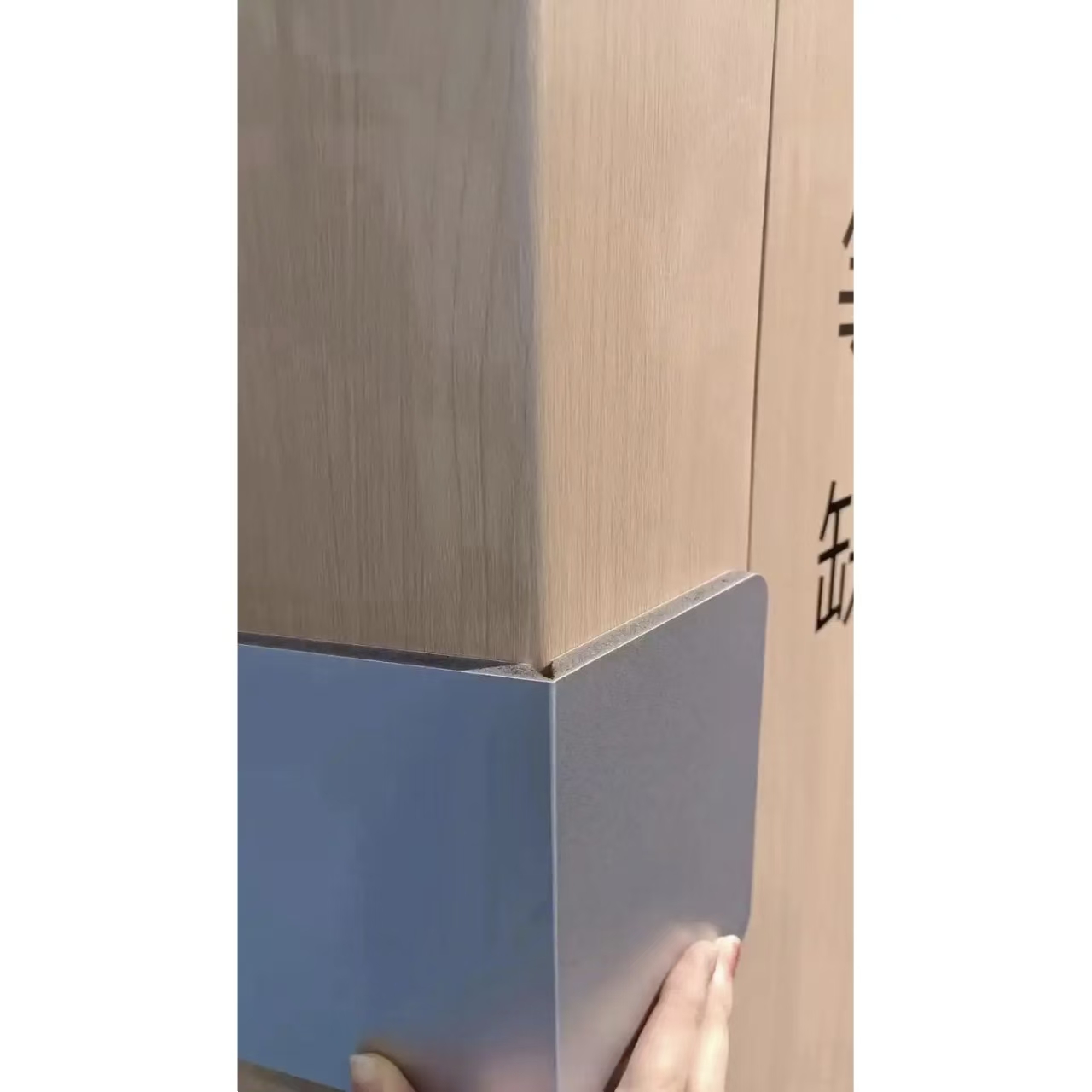
You need to curve a large Alucobond panel. Column cladding. A curved facade. A sweeping architectural feature.
You try bending it in one pass. The panel cracks. The aluminum skin tears. The core wrinkles.
Large-format panels behave differently than small ones. More material means more stress. More stress means more risk.
The solution is the 15° Per Pass Rule. Bend in small increments. Release stress between passes. Let the material relax. This guide explains the technique step by step.
Why Large-Format Panels Need Special Treatment
Large Alucobond panels have more surface area. When you bend them, the outer skin stretches across a longer distance. The stress concentrates at the bend line. The material cannot absorb it all at once.
A 3mm panel handles a 100mm cold bend radius. A 4mm panel needs at least 80mm. But large panels create additional challenges:
- More material to stretch – The outer skin travels a greater distance around the curve
- Higher total stress – The sandwich structure experiences greater internal forces
- Greater springback – Large panels want to return to their original shape
When you buy from an Alucobond supplier, ask about their large-panel bending experience. Not every fabricator understands the unique challenges.
What Is the 15° Per Pass Rule?
The 15° Per Pass Rule is simple: each bending pass should not exceed 15 degrees of curvature.
Instead of bending the panel to its final shape in one motion, you bend it in stages. Each stage adds no more than 15 degrees. Between stages, you let the panel rest.
This gives the material time to release internal stress. The aluminum relaxes. The core settles. The panel becomes more stable for the next pass.
A trusted manufacturer of Alucobond will recommend this technique for curved panels. The method reduces cracking and improves final panel quality.
The Science of Stress Relief
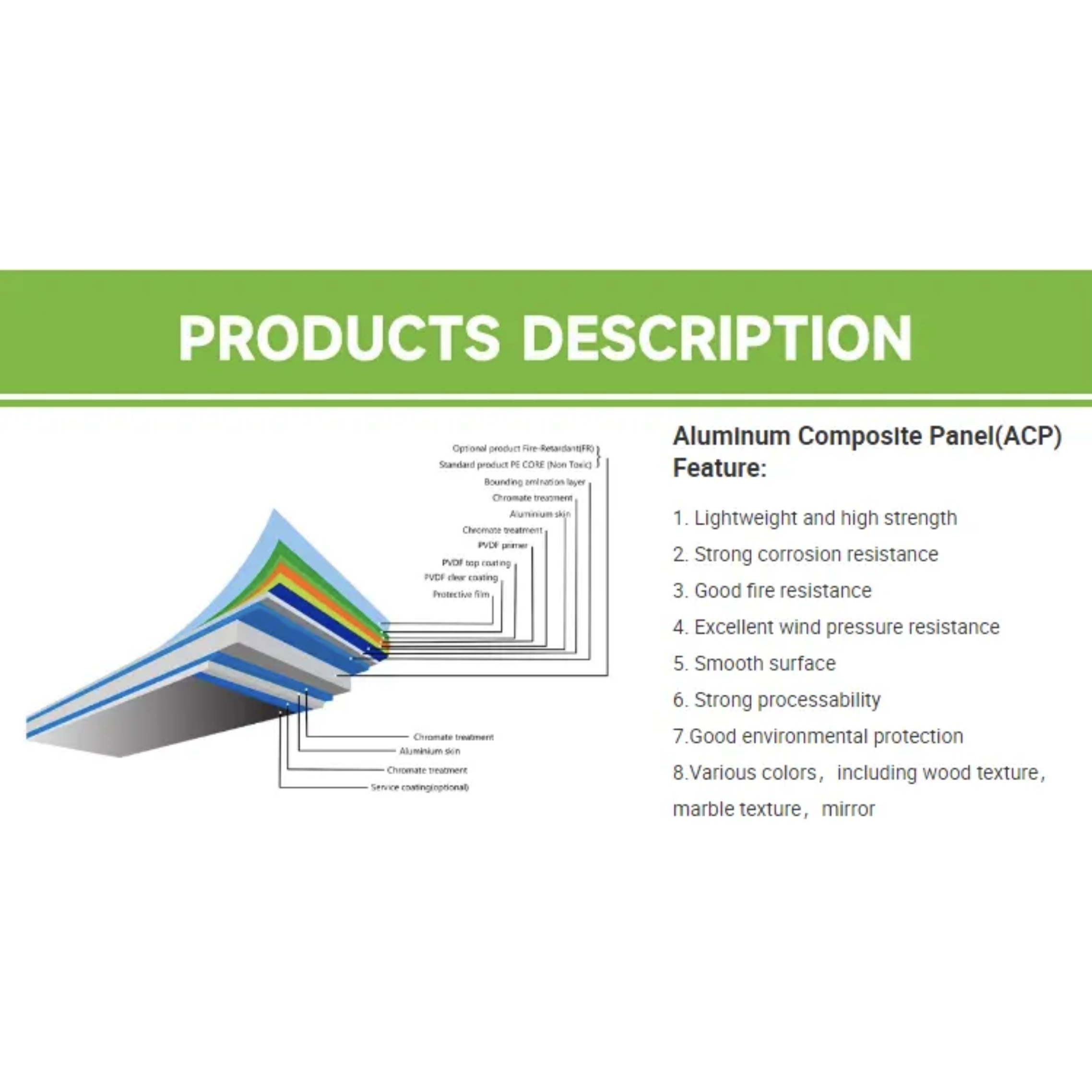
Alucobond is a sandwich: two aluminum skins bonded to a core. When you bend the panel, the outer skin stretches. The inner skin compresses. The core transfers stress between them.
Bend too fast, and the outer skin exceeds its elastic limit. It cracks. Bend too much at once, and the core wrinkles. The panel fails.
Stress relief works because the material needs time to adapt. The aluminum skin can only stretch so far before it tears. By bending in small increments, you keep the skin within its elastic limit. The rest periods allow internal stresses to dissipate.
Think of it like stretching a rubber band. Pull it a little, and it springs back. Pull it all the way, and it snaps. The same principle applies to Alucobond.
The 3-Pressure Method: Step by Step
The 15° Per Pass Rule works best with a three-roll plate bending machine. Here is the sequence:
Pass | Pressure | Maximum Bend Angle | Action |
Pass 1 | 0.5 MPa | 15° | Initial forming |
Pass 2 | 0.8 MPa | 15° | Progressive curve |
Pass 3 | 1.2 MPa | 15° | Completion pass |
Caption: The 3-pressure method for large-format Alucobond bending. Source: Industry fabrication standards.
Alt text: Table showing three bending passes with increasing pressure from 0.5 MPa to 0.8 MPa to 1.2 MPa, each limited to 15 degrees maximum.
Step 1: Pass 1 – Initial Forming
Set the roller pressure to 0.5 MPa. Pass the panel through the rollers. The panel bends no more than 15 degrees.
Do not force the panel. Let the rollers do the work.
Step 2: Rest – Stress Release
Leave the panel for 2 hours. During this time, internal stress dissipates. The aluminum relaxes. The core stabilizes.
This step is critical. Skipping it causes cracks.
Step 3: Pass 2 – Progressive Curve
Increase pressure to 0.8 MPa. Pass the panel through the rollers again. The bend angle increases by another 15 degrees.
The panel now shows a noticeable curve. Inspect for any signs of cracking or wrinkling.
Step 4: Rest – Second Stress Release
Another 2-hour rest. The panel needs time to adapt to its new shape.
Step 5: Pass 3 – Completion Pass
Increase pressure to 1.2 MPa. Make the final pass through the rollers. The panel reaches its required curve.
Inspect the finished curve. Check the radius. Look for cracks, wrinkles, or surface damage.
The Process Flowchart
Start
│
▼
Determine required curve radius
│
▼
Set up three-roll bending machine
│
▼
Pass 1: 0.5 MPa pressure, ≤15° bend
│
▼
Rest 2 hours (stress release)
│
▼
Pass 2: 0.8 MPa pressure, ≤15° bend
│
▼
Rest 2 hours (stress release)
│
▼
Pass 3: 1.2 MPa pressure, final angle
│
▼
Inspect curve for cracks or wrinkles
│
▼
Done
Caption: Flowchart of the 15° per-pass stress relief bending process for large-format Alucobond panels.
Alt text: Step-by-step flowchart showing three bending passes with 2-hour stress relief periods between each pass.
Minimum Bend Radius Guidelines
The 15° Per Pass Rule works within specific radius limits. For 4mm panels without routing, the minimum cold bend radius is 15 times the thickness – about 60mm. For gradual curves using a roll bender, the minimum radius is 2.36 inches.
Panel Thickness | Minimum Cold Bend Radius (Roll Bender) |
3mm | 45mm (1.8 inches) |
4mm | 60mm (2.36 inches) |
6mm | 90mm (3.5 inches) |
Caption: Minimum bend radius guidelines for large-format Alucobond panels. Source: Industry specifications.
Alt text: Table showing minimum cold bend radius for 3mm, 4mm, and 6mm Alucobond panels using a roll bender.
Do not go below these values. Tighter radii require different techniques, such as V-grooving or heat-assisted bending.
Common Mistakes to Avoid
Mistake 1: Skipping the Rest Periods
Some fabricators try to save time by bending all three passes in one session. This traps stress in the panel. The aluminum cannot relax. It cracks.
Fix: Follow the 2-hour rest period between passes. No shortcuts.
Mistake 2: Exceeding 15 Degrees Per Pass
Bending more than 15 degrees in a single pass over-stretches the aluminum skin. It cracks.
Fix: Keep each pass at 15 degrees or less.
Mistake 3: Using the Wrong Equipment
Press brakes apply sudden, concentrated force. Roller machines apply gradual, distributed pressure.
Fix: Use a three-roll or four-roll plate bending machine for gradual curves.
Mistake 4: Bending Below the Minimum Radius
For 4mm panels, the minimum cold bend radius is 60mm. Go below that, and the panel cracks.
Fix: Calculate the minimum radius before starting. Use 3mm panels for tighter curves.
When to Use the 15° Per Pass Rule
This technique works best for:
- Column covers and wrapped columns
- Curved facade panels
- Rounded architectural features
- Curved shopfronts
- Interior feature walls with sweeping curves
For sharp 90-degree folds, use V-grooving instead.
What to Ask Your Alucobond Supplier
When you work with an Alucobond supplier, ask these questions:
1. What is your minimum bend radius for curved panels? The answer should match industry standards – 60mm for 4mm panels.
2. Do you use the 15° Per Pass method? A knowledgeable wholesale supplier of Alucobond will know this technique.
3. What equipment do you use for curves? The answer should be a three-roll or four-roll bending machine.
4. Do you allow stress release time between passes? The answer should be yes – 2 hours minimum.
5. Can you provide samples of curved panels? A reliable distributor of Alucobond panels will show you their work.
Choose an authorized Alucobond dealer that understands curved fabrication. Work with an OEM manufacturer of Alucobond that has in-house roll bending capability. A good supplier will walk you through the process and recommend the right thickness and radius for your project.
The Bottom Line
The 15° Per Pass Rule is not optional for large-format curved panels. It is the difference between a clean curve and a cracked panel.
Three passes. Each pass at 15 degrees or less. Two hours of rest between passes.
The numbers are clear: 0.5 MPa → 0.8 MPa → 1.2 MPa. Each pass at 15° maximum. Stress release every 2 hours.
Skip any step, and the panel cracks. Follow the method, and your curved panels will look perfect.
Curved Alucobond does not have to be risky. Use the right method. Use the right equipment. And choose a supplier who knows how to do it right.