Welcome to Vbond
The 50°C Daily Temperature Swing: Why Your Alucobond Panels Are Buckling
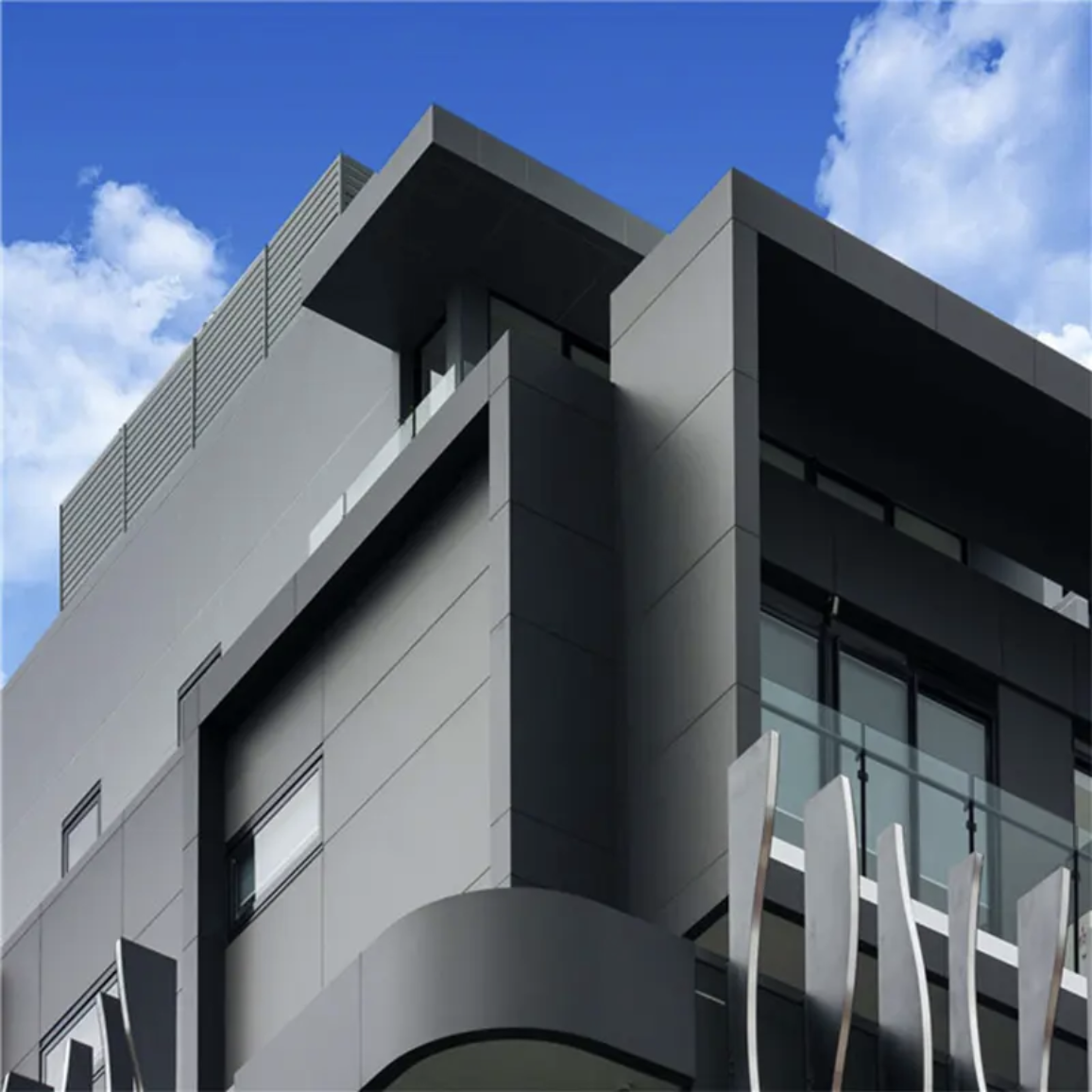
You install a beautiful Alucobond facade. The panels line up perfectly. The joints are tight. The client approves the work.
Then summer arrives. The sun hits the building. You see waves, ripples, and buckled edges. The flawless surface now looks distorted.
What happened? Your panels moved. They expanded. And nobody made room for that movement.
This guide explains why a 50°C daily temperature swing causes Alucobond panels to buckle. You will learn the physics behind thermal expansion. You will understand how much your panels actually move. And you will know exactly how to prevent buckling.
The 50°C Swing: What It Means for Your Panels
Alucobond panels experience daily temperature swings far larger than most people realize. On a sunny facade, panel surface temperatures can rise dramatically.
A typical summer day:
- Morning panel temperature: 20°C (68°F)
- Afternoon panel temperature in direct sun: 70°C (158°F) or higher
- Total daily swing: 50°C (90°F)
When you place a large order from an Alucobond supplier, they will provide technical data on thermal expansion. But understanding the physics yourself is essential.
Dark-colored panels absorb more heat. South-facing facades get more direct sunlight. Both factors increase the temperature swing. In extreme cases, panel surfaces can exceed 80°C (176°F).
The Expansion Coefficient: 2.4 mm/m/100°C
Alucobond has a linear thermal expansion coefficient of **2.4 mm per meter of panel length for every 100°C temperature difference**. This applies to the entire ALUCOBOND product family—PLUS, A2, and standard panels alike.
In plain English:
A 1-meter-long panel expands by 2.4 mm when its temperature rises by 100°C. A 4-meter panel expands by 9.6 mm. A 6-meter panel expands by 14.4 mm.
For a 50°C temperature swing:
Panel Length | Expansion at 50°C ΔT |
2 meters | 2.4 mm |
4 meters | 4.8 mm |
6 meters | 7.2 mm |
Caption: Thermal expansion of Alucobond panels at a 50°C temperature difference.
Alt text: Table showing thermal expansion in millimeters for 2m, 4m, and 6m Alucobond panels at a 50°C temperature difference.
The core makes it worse.
The aluminum skins expand at the standard rate. But the polyethylene core expands at approximately 1.5×10⁻⁴/°C—nearly six times more than the aluminum. This mismatch creates internal stress. The core wants to expand more than the skins allow. That stress concentrates at the bond line.
The Physics of Buckling
When your panels cannot expand freely, the stress has nowhere to go. The panel buckles.
The mechanism:
1. The sun heats the panel. The aluminum skins expand. The PE core expands even faster.
2. If the panel is locked down at too many points, it cannot move outward. Stress builds inside the panel.
3. The panel has two choices: stretch the aluminum beyond its limit, or buckle. Aluminum is strong in tension but weak in compression. It buckles.
4. The panel bulges outward between the fixed points. You see waves, ripples, and distortion.
5. Over time, repeated expansion and contraction cycles weaken the adhesive bond. Blisters form. The panel fails.
The "oil canning" effect:
When panels are installed without allowance for thermal movement, the metal warps—pillow or oil-cans—as it heats up and expands. This visible waviness ruins the facade's appearance.
The ALUCOBOND specification explicitly requires that "the cladding be fabricated and installed to allow for all expansion and contraction of the components". When panels are fixed too rigidly, buckling follows.
How Much Movement Must You Allow?
The formula:
ΔL = 2.4 × L × (ΔT ÷ 100)**
Where:
- ΔL = change in length (mm)
- L = initial panel length (meters)
- ΔT = temperature change (°C)
For a 4-meter panel with a 50°C swing:
- Total expansion: 4.8 mm
- Required gap per edge: 2.4 mm**
For a 6-meter panel with a 50°C swing:
- Total expansion: 7.2 mm
- Required gap per edge: 3.6 mm
For a 3-meter panel over a seasonal cycle with a 50°C swing:
- The panel will expand and contract by approximately 5.5 mm to 5.8 mm
The Buckling Flowchart
Start
│
▼
Sun heats the Alucobond panel
│
▼
Panel temperature rises 50°C (20°C → 70°C)
│
▼
Panel wants to expand (2.4 mm per meter)
│
├─── Room to move? ─── Yes ───► Panel expands freely ───► No buckling
│
└─── No room to move ───► Panel is locked down
│
▼
Stress builds inside the panel
│
▼
Panel buckles between fixed points
│
▼
Waves and ripples appear on the surface
│
▼
Facade appearance is compromised
How to Prevent Buckling
1. Allow for thermal movement.
This is the most critical prevention measure. The cladding must be fabricated and installed to allow for all expansion and contraction of the components.
Expansion gap guidelines:
- Leave 3–5 mm gaps between panels
- For panel runs exceeding 6 meters, physical expansion joints are required
- Horizontal joint width: 4–6 mm
- Vertical joint width: 3–5 mm
2. Use oversized fastener holes.
The hole in the panel must be large enough to allow for expansion. With the shaft of the rivet fitting closely to the edge of the hole, the attachment head must cover 1 mm of the area surrounding the hole.
If fastener holes are too small, the panel cannot move. The stress transfers to the fasteners. The panel buckles.
3. Use sliding fastening systems.
Do not lock the panel down rigidly at every attachment point. Use slotted holes or sliding clips that allow the panel to expand and contract freely. Floating connection systems allow exterior aluminum cladding panels to expand and contract without stress buildup.
4. Consider installation temperature.
Installation temperature affects how much the panel will expand and contract. If you install panels on a hot day, they will contract in winter, potentially opening gaps. If you install them on a cold day, they will expand in summer, potentially buckling.
5. Choose the right core material.
Premium panels with mineral-filled cores provide enhanced stability and flexural rigidity. Standard PE cores are more susceptible to thermal stress.
A reputable Alucobond supplier large orders will offer mineral-filled core options. A manufacturer of Alucobond can provide technical documentation on core performance.
The Prevention Flowchart
Start
│
▼
Calculate expected thermal expansion for your project
│
▼
Design expansion gaps (3-5 mm per panel edge)
│
▼
Use oversized fastener holes (1 mm larger than rivet shank)
│
▼
Use sliding fastening systems (not rigid lock-down)
│
▼
Consider installation temperature
│
▼
Choose mineral-filled core panels for large facades
│
▼
Inspect for early signs of buckling
│
▼
Done
What to Ask Your Alucobond Supplier for a Large Order
When you work with an Alucobond supplier for a large order, ask these questions:
1. What is your panel's linear thermal expansion coefficient? The answer should be 2.4 mm/m/100°C.
2. What expansion joint spacing do you recommend? A knowledgeable manufacturer of Alucobond will specify joints for runs exceeding 6 meters.
3. What fastener hole size do you recommend? The hole must allow for expansion—the attachment head must cover 1 mm of the surrounding area.
4. What core material do you use? Mineral-filled cores (PLUS or A2) provide better thermal stability than standard PE cores.
5. Do you provide installation guidelines for thermal movement? A wholesale supplier of Alucobond should have documented procedures.
The Bottom Line
A 50°C daily temperature swing is not extreme. It happens every summer on facades around the world. But without proper allowance for thermal movement, that 50°C swing will buckle your panels.
The physics is clear: Alucobond expands at 2.4 mm per meter for every 100°C. A 4-meter panel in a 50°C swing moves nearly 5 mm. Without room to move, that force causes buckling, oil canning, and blistering.
Prevention is straightforward:
- Calculate the expected movement for your project
- Design expansion gaps (3-5 mm per panel edge)
- Use oversized fastener holes
- Use sliding fastening systems
- Choose mineral-filled core panels
A reliable Alucobond supplier for large orders provides the technical data. Your design and installation must accommodate the movement. Get it right, and your facade stays flat for decades. Get it wrong, and the buckling appears on the first hot summer day.