Welcome to Vbond
The Core Contaminant Problem: How Unmelted Particles Cause Alucobond Surface Blisters
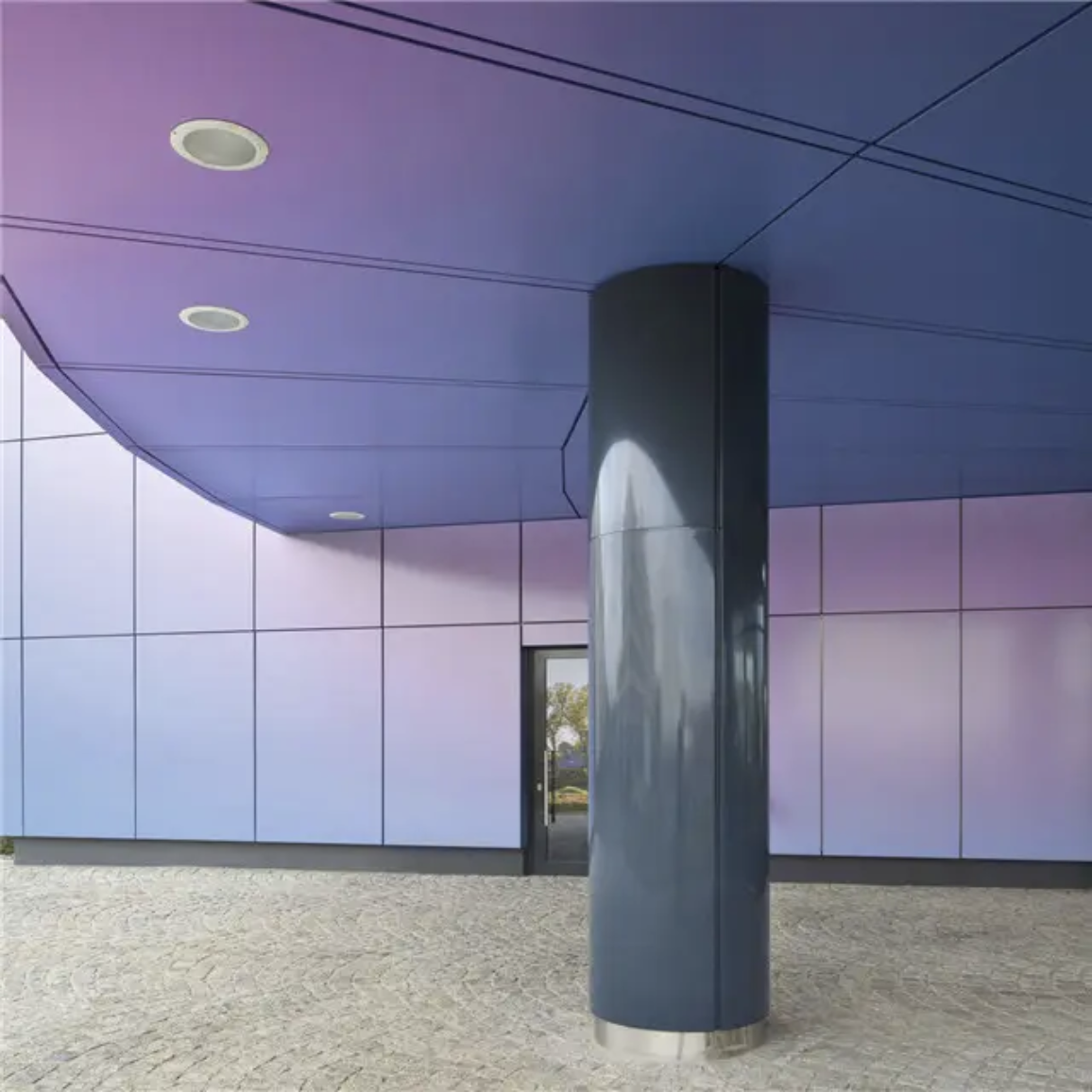
You inspect the finished facade. The panels look flawless. The client approves the work.
Six months later, you see them. Raised bumps on the panel surface. Blisters. They ruin the sleek appearance. The client demands answers.
What caused them? The material? The weather? The installation?
The answer often starts in the factory. Specifically, it starts with unmelted plastic particles trapped inside the core.
This guide explains the core contaminant problem and six scientific causes of Alucobond blistering. You will learn how unmelted particles create hidden defects. You will understand the mechanisms behind each cause. And you will know how to prevent blisters from forming.
What Is a Blister?
A blister is a localized separation between the aluminum skin and the core material. The raised area indicates that the adhesive bond holding the two layers together has failed, creating a void filled with air, gas, or moisture vapor.
When you press on a blister, you may feel:
- Hollow emptiness – an air-filled void
- Spongy resistance – a moisture-saturated core
- Crunching – core material breaking down
Each tactile signature points to a different root cause.
The Core Contaminant Problem: Unmelted Particles
This is the most common hidden defect in low-quality Alucobond panels.
What are unmelted particles?
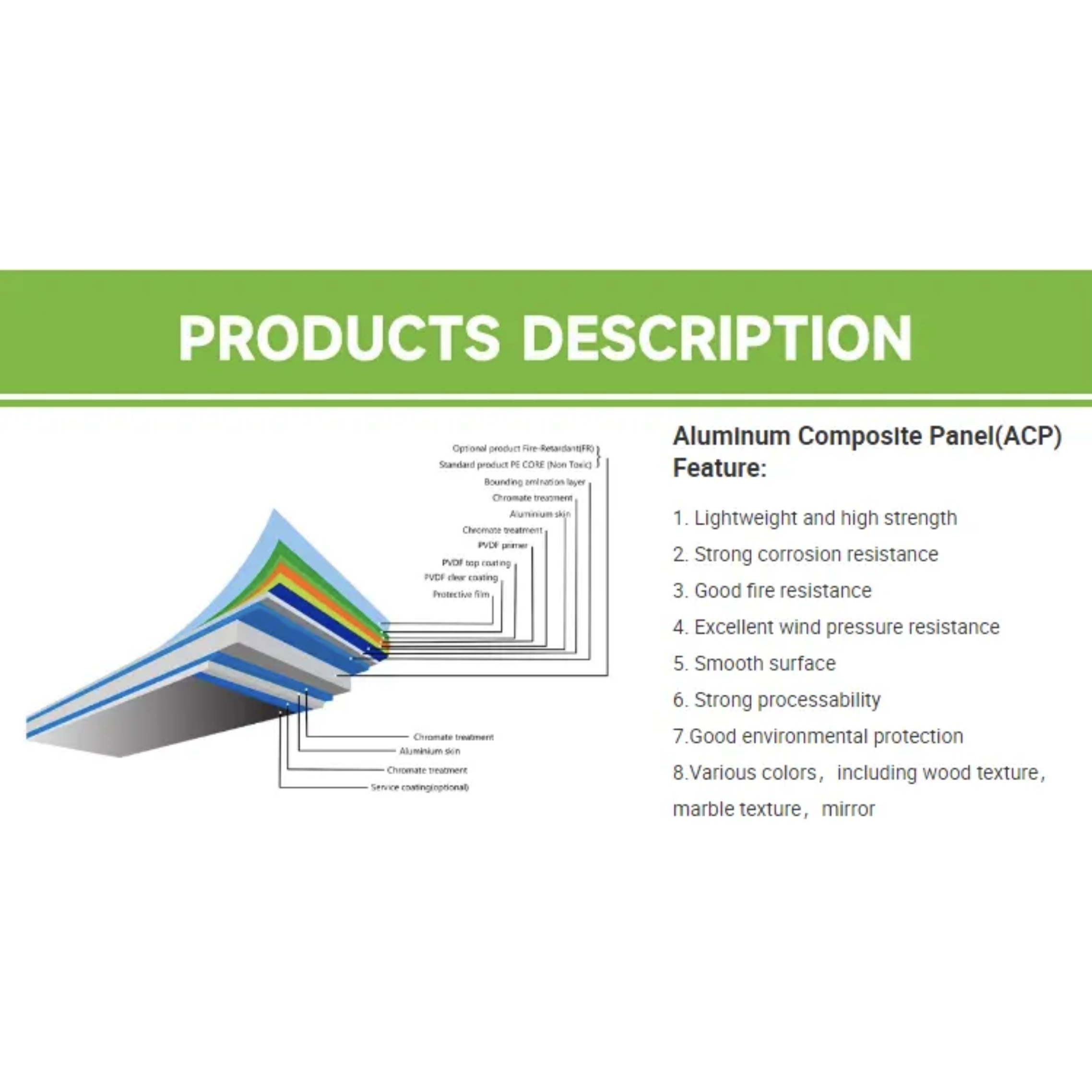
During core extrusion, plastic pellets must melt completely. When heating is insufficient, some particles do not melt. These unmelted materials may be plastic particles mixed with other impurities. Their melting point is far higher than polyethylene, so they cannot melt in the extruder barrel.
How they cause blisters:
When these unmelted particles reach a certain size, they protrude from the core surface. During lamination, air gets trapped around these protruding particles. The aluminum skin cannot bond properly in those areas. The result is a blister.
The problem gets worse. If unmelted particles accumulate, they raise extrusion back pressure. They can even break through the filter screen and get extruded together with the core material. If the particle size is too large, it may get stuck in the die, leaving deep imprints on the core surface.
Why it matters:
A panel with subsurface voids may pass visual inspection at the factory. But under thermal stress, wind load, or even normal handling, these voids become blistering, delamination, or structural failure.
Premium manufacturers use virgin LDPE with stabilized additives and rigorous cleaning protocols. Low-quality manufacturers skip the cleaning and use industrial waste.
Six Scientific Causes of Alucobond Blistering
Cause 1: Unmelted Plastic Particles in the Core
This is the core contaminant problem described above. Insufficient heating during extrusion leaves unmelted particles in the core. These particles create voids and air pockets that are invisible once the aluminum skin is laminated. Under stress, these voids become blisters.
How to identify it:
Unmelted particles appear as small, hard, translucent, or white particles scattered throughout the core. They may look like "fish eyes" or tiny lumps when you run your hand over the core surface.
Who is liable: The manufacturer.
Cause 2: Contamination from Foreign Particles
Foreign particles trapped between the aluminum and the core during bonding create weak points. These contaminants prevent proper adhesion. The bond fails. Blisters form.
What it looks like:
Smooth, rounded blisters that feel hollow when pressed. They appear randomly across the panel surface, not concentrated at edges.
Who is liable: The manufacturer.
Cause 3: Thermal Expansion Mismatch
Aluminum and polyethylene expand at different rates. Aluminum expands at 0.000023 per °C. Polyethylene expands at 0.00015 per °C. The core expands almost seven times faster than the aluminum skins.
When the PE core expands at a different rate than the aluminum skins, the adhesive bond is stressed beyond its limit. The bond fails, creating raised blisters where the aluminum separates from the core. On a dark-colored facade in summer, surface temperatures can easily exceed 80°C.
Who is liable: The manufacturer (incompatible core material) or the designer (inadequate expansion gaps).
Cause 4: Moisture Ingress Through Unsealed Edges
Water vapor penetrates through unsealed cut edges, micro-cracks in the coating, or failed sealant joints. The core material absorbs moisture. Solar heating turns trapped moisture into steam. Water expands approximately 1,600 times in volume when converting to vapor. The expanding vapor pressure forces the aluminum skin away from the core, creating visible blisters.
The timeline:
Inferior core materials—contaminated polyethylene, recycled plastic with unmelted particles, or improperly formulated fire-retardant compounds—absorb moisture and begin to fail within weeks, not years. In laboratory humidity testing, panels with inferior cores often show visible blistering within 500-1000 hours of accelerated testing—equivalent to approximately 3 months of real-world humid climate exposure.
Who is liable: The installer (if edges were not sealed) or the manufacturer (if the core absorbs moisture too readily).
Cause 5: Chemical Additives and Gas Formation
This is where low-quality LDPE fails catastrophically. Cheap manufacturers use recycled or impure LDPE granules. These materials contain chemical additives—antioxidants, slip agents, and plasticizers.
When these additives segregate to the surface (a process called "blooming"), they react with moisture and the aluminum primer. Materials science research confirms that segregated antioxidant components can trap moisture, leading to "ultra-giant blistering" with bubble diameters exceeding one millimeter within minutes of exposure to humidity.
The reaction sequence:
1. Contamination: Cheap LDPE contains unregulated additives like phosphite antioxidants
2. Moisture ingress: Humidity penetrates the panel edges or micro-cracks in the coating
3. Gas formation: Trapped moisture reacts with chemical agents and the adhesive interface
4. Blistering: The reaction creates gaseous by-products. Pressure builds, forcing the aluminum skin away from the core
Who is liable: The manufacturer.
Cause 6: UV Degradation of Low-Quality Cores
Standard LDPE degrades under UV exposure. As the core breaks down, it loses volume, creating voids that allow the aluminum skins to separate and blister. In high-temperature regions, counterfeit panels may blister due to poor adhesive bonding between the aluminum skins and the core.
The timeline:
Low-quality PE-core panels can show massive blistering within six months of installation. This is not bad luck. It is chemistry. Specifically, the predictable failure of low-quality LDPE cores.
Who is liable: The manufacturer.
Blister Type Reference Table
Blister Type | Root Cause | Visual Signature | Tactile Feel | Who Is Liable |
Unmelted particles | Insufficient heating during extrusion | Small, hard particles in core | Crunchy or hollow | Manufacturer |
Contamination | Foreign particles trapped during bonding | Smooth, rounded, irregular shape | Hollow or empty | Manufacturer |
Thermal expansion | Core/skin expansion mismatch | Raised blisters along stress points | Firm, tension | Manufacturer or designer |
Moisture ingress | Unsealed edges / coating defects | Edge bubbling, spreading inward | Spongy resistance | Installer or manufacturer |
Chemical reaction | Additive blooming / gas formation | Ultra-giant blisters (>1mm) | Crunching or hollow | Manufacturer |
UV degradation | Core breakdown from UV exposure | Widespread blistering | Crunchy, brittle | Manufacturer |
Caption: Six types of Alucobond blisters with root causes, visual signatures, tactile feel, and liable parties. Source: Industry quality control data.
Alt text: Table showing six blister types with root causes, visual signatures, tactile feel, and who is liable for each.
How to Detect Core Contamination Before Installation
Visual inspection of the core edge:
Look at the cut edge of a sample panel. Unmelted particles appear as small, hard, translucent, or white particles scattered throughout the core.
The bend test:
Take a sample of the core sheet and bend it sharply. Unmelted particles will create visible stress marks or cause the core to crack unevenly.
The backlight test:
Hold the core sheet up to a strong backlight or shine a bright flashlight through it. Voids will appear as bright spots where the light passes through more easily.
The tap test:
Tap each panel with the handle of a screwdriver. A solid panel produces a sharp, consistent sound. A panel with core defects produces a dull, hollow sound.
The Blistering Process Flowchart
Start
│
▼
Panel manufactured with core defects
│
├─── Unmelted particles in core
├─── Foreign particle contamination
├─── Incompatible core material
├─── Chemical additives in LDPE
└─── Low-quality UV-unstable core
│
▼
Panel installed on facade
│
▼
Environmental exposure begins (heat, UV, moisture)
│
▼
┌─────────────────────────────────────────────────┐
│ Six Failure Pathways │
├─────────────────────────────────────────────────┤
│ 1. Unmelted particles create voids │
│ 2. Contamination prevents adhesive bonding │
│ 3. Thermal expansion stresses the bond │
│ 4. Moisture enters through unsealed edges │
│ 5. Chemical additives react with moisture │
│ 6. UV exposure degrades low-quality core │
└─────────────────────────────────────────────────┘
│
▼
Adhesive bond fails
│
▼
Void forms between aluminum skin and core
│
▼
Void fills with air, gas, or moisture vapor
│
▼
Pressure builds → blister rises on surface
│
▼
Blister visible to the naked eye
│
▼
Investigate root cause → assign responsibility → replace panels
Prevention Checklist
Prevention Measure | Why It Works |
Specify mineral-filled core (A2 or PLUS) | Resists UV degradation and thermal mismatch |
Source from a certified manufacturer | Ensures proper extrusion temperatures and filtration |
Request melt flow index (MFI) test results | Verifies core material quality |
Seal all cut edges during fabrication | Prevents moisture ingress |
Use proper expansion gaps (2.4mm/m/100°C) | Allows thermal movement |
Choose PVDF coatings | Resists UV and corrosionResists UV and corrosion |
Inspect core edges on sample panels | Catches unmelted particles before installation |
Store panels flat, protected from moisture | Prevents pre-installation damage |
What to Ask Your Commercial Alucobond Supplier
When you work with a commercial Alucobond supplier, ask these questions:
1. What is your core material? A reputable manufacturer of Alucobond will specify mineral-filled or PE with clear technical data.
2. What is your extrusion temperature control? Proper heating prevents unmelted particles. A quality wholesale supplier of Alucobond will have documented temperature logs.
3. Do you use virgin or recycled LDPE? Virgin LDPE with stabilized additives performs better. Recycled materials contain contaminants.
4. What is your filter screen maintenance schedule? Regular filter changes prevent unmelted particles from breaking through.
5. Do you provide melt flow index (MFI) test results? Acceptable MFI should be within the supplier's specified range.
6. What is your warranty coverage for blistering? A distributor of Alucobond panels should stand behind their material.
An authorized Alucobond dealer provides genuine material with full traceability. An OEM manufacturer of Alucobond controls quality from raw material to finished panel. Choose a commercial Alucobond supplier who provides technical documentation and stands behind their product.
The Bottom Line
Blistering is not random. It is the result of specific, identifiable mechanisms—and most start with core contamination.
Unmelted plastic particles create voids that become blisters. Foreign particles prevent proper bonding. Thermal expansion stresses the adhesive. Moisture enters through unsealed edges. Chemical additives react with humidity. UV exposure degrades low-quality cores.
Each cause has a different root mechanism. Each points to a different liable party. Understanding the science helps you prevent failures and assign responsibility when they occur.
Prevention is cheaper than replacement. Specify mineral-filled cores. Source from a certified manufacturer. Seal all cut edges. Allow for thermal expansion. Inspect core samples before installation.
A commercial Alucobond supplier that provides quality documentation and traceability is a supplier you can trust. A supplier that cannot answer these questions is hiding something.
Your facade will stay flat. Your client will stay happy. Your reputation will stay intact.