Welcome to Vbond
The Installer's Checklist for Crack-Free Alucobond Edge Folding
You arrive on site with a truckload of Alucobond panels. The facade looks stunning in the renderings. The client expects perfection.
You start folding. Cracks appear along the edges. Panels get scrapped. The schedule slips. The client gets angry.
This scenario happens more often than it should. But it does not have to happen to you.
This guide gives you a practical checklist for crack-free edge folding. Follow these steps on every project. Your panels will fold cleanly. Every time.
Before You Start: The Material Checklist
1. Verify panel thickness with a caliper
Measure the panel thickness at three locations. A 4mm panel should measure 4 mm ± 0.1 mm. Thinner panels need shallower grooves. Thicker panels need deeper grooves.
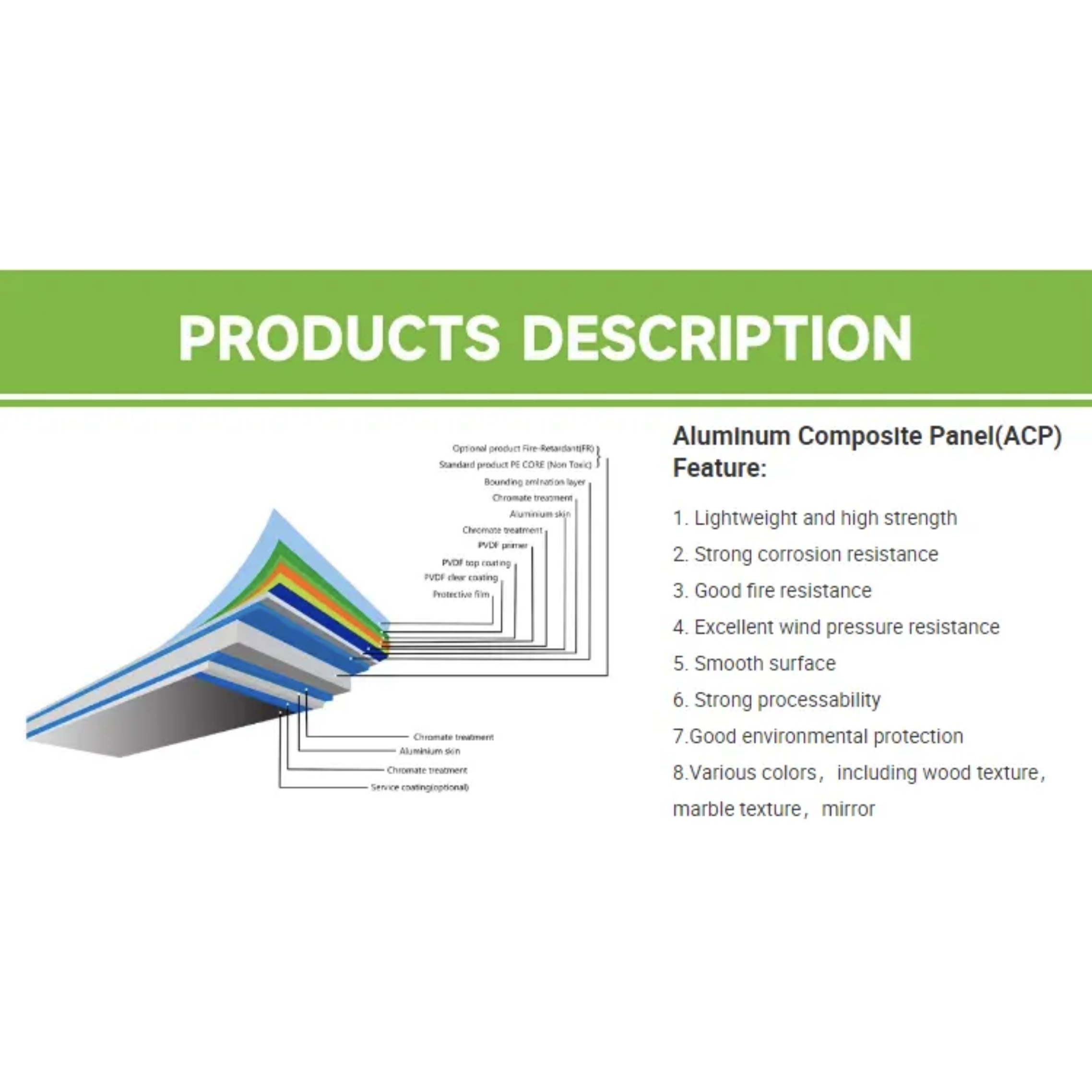
2. Check the aluminum skin thickness
Use a micrometer on a cut edge. The skin should measure 0.3mm to 0.5mm. Below 0.3mm, the skin cracks during bending.
3. Inspect the panel surface
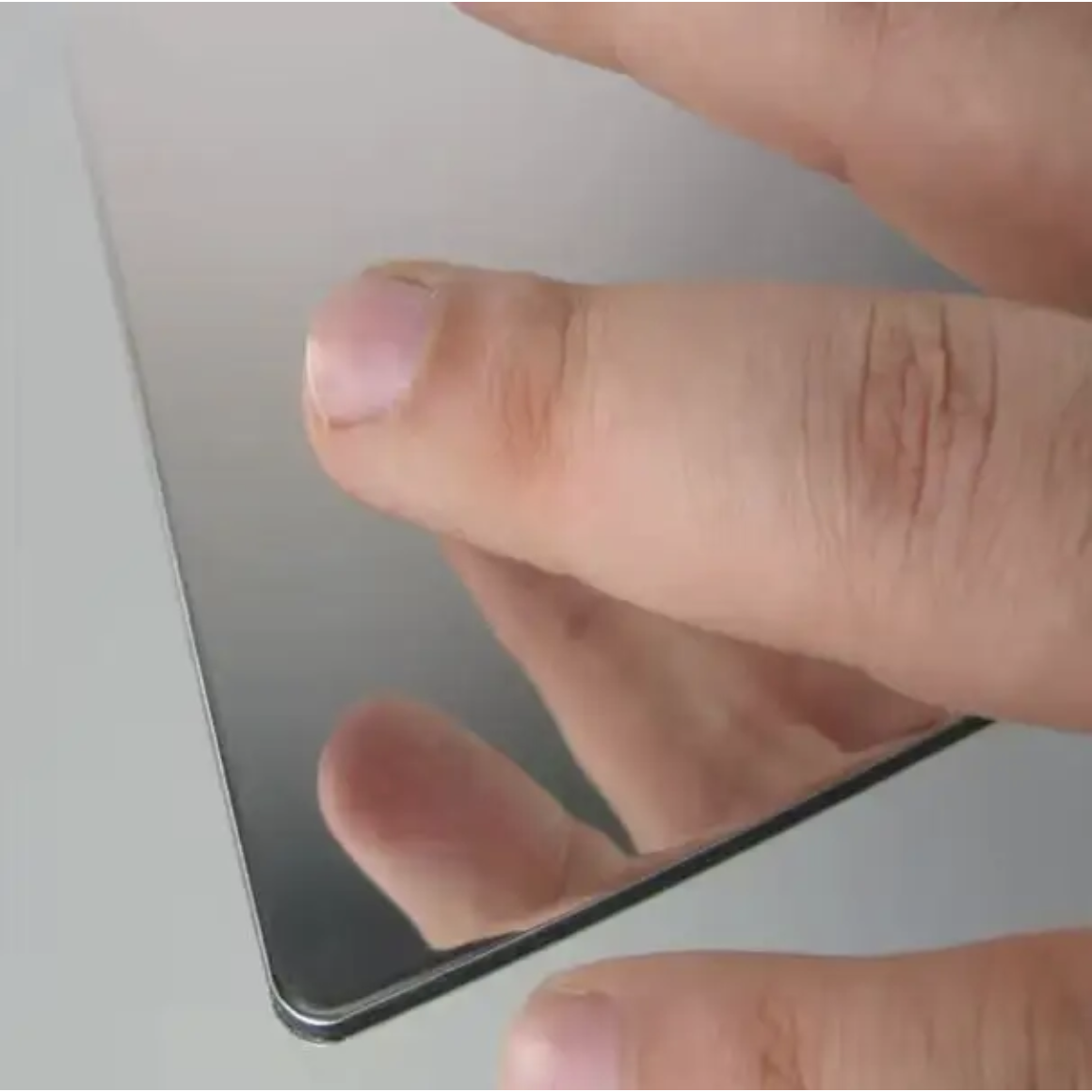
Hold the panel at a low angle under bright light. Look for scratches, dents, or coating defects. Any surface defect becomes a stress riser during folding.
4. Examine the core at the panel edge
Look for voids, bubbles, or separation between core and skin. A consistent core bends cleanly. A defective core causes cracks.
5. Verify the panel temper
The aluminum alloy should be H22 or H42 temper. Harder tempers are more brittle. Softer tempers bend more easily.
A reliable Alucobond panel supplier for facades will provide material certifications. Review them before you start fabrication.
The Grooving Checklist
6. Use a specialized router bit
Standard woodworking bits cause cracking. Use bits specifically designed for ACM — carbide-tipped with flat-bottom or U-shaped geometry.
7. Match the bit angle to the fold angle
For a 90-degree fold, use a 90-degree V-groove bit. For other applications, use 108-degree or 135-degree bits.
8. Set the correct groove depth
The groove must remove the rear aluminum skin and most of the core. Leave 0.3mm to 0.5mm of core material at the bottom of the groove. This is the residual thickness.
9. Test on a sample strip before production
Cut a test strip. Route a groove. Measure residual thickness. Fold the strip. Inspect for cracks. Adjust settings if needed.
10. Measure residual thickness with a micrometer
Place the test strip on a flat surface. Measure the material at the groove bottom. The reading should be 0.3mm minimum. Below 0.3mm, the panel will crack.
11. Recalibrate after bit changes
Changing a router bit changes the groove depth. Run a new sample test after every bit change.
Caption: Checking residual thickness at the groove bottom with a digital micrometer.
Alt text: Hand holding a digital micrometer measuring the residual core thickness at the bottom of a V-groove in an Alucobond test strip.
The Folding Checklist
12. Warm the panel before bending
Cold aluminum is brittle. Do not bend panels below 50°F (10°C). Warm the bend area to 65°F (18°C) minimum. For best results, heat to 120°F to 180°F (50°C to 80°C).
13. Keep the protective film on during bending
The film prevents scratches and surface damage. Remove it only after the panel reaches its final shape.
14. Bend in one smooth motion
Do not bend, check, and bend again. Re-bending work-hardens the aluminum. It creates micro-cracks. The second bend causes failure.
15. Use consistent pressure across the bend
Apply uniform pressure along the entire bend length. Uneven pressure creates stress points.
16. Bend perpendicular to the rolling direction
Aluminum has a grain direction. Bending parallel to the grain reduces ductility. Cracks form more easily.
17. Do not exceed the minimum bend radius
For 4mm panels, the minimum bend radius is 60mm. Tighter radii cause cracking. If you need tighter bends, use 3mm panels or adjust the grooving depth.
Caption: Folding Alucobond in one smooth motion on a press brake.
Alt text: Press brake operator folding an Alucobond panel in a single, continuous motion with protective film intact.
The Inspection Checklist
18. Inspect every folded panel
Check each panel before it leaves the fabrication area. Look for hairline cracks along the fold line.
19. Use magnification for hairline cracks
Some cracks are invisible to the naked eye. Use a magnifying glass or jeweler's loupe. Run a fingernail along the edge—you will feel tiny cracks.
20. Verify the bend radius
Use a radius gauge. For a 4mm panel, the inside radius should be 60mm minimum.
21. Check the fold angle
The angle should be clean and consistent. Uneven folds indicate inconsistent grooving or bending.
22. Inspect the coating at the bend
The paint film should not crack or split. Coating cracking indicates the bend radius is too tight or the panel is too cold.
The Complete Checklist Table
Phase | Item | Action | Pass/Fail |
Material | Panel thickness | Measure with caliper (4 mm ± 0.1 mm) | ☐ |
Material | Skin thickness | Measure with micrometer (> 0.3 mm) | ☐ |
Material | Surface condition | Visual inspection, no scratches/dents | ☐ |
Material | Core condition | Edge inspection, no voids/separation | ☐ |
Material | Panel temper | Verify H22/H42 on certification | ☐ |
Grooving | Router bit | Specialized ACM bit, not woodworking | ☐ |
Grooving | Bit angle | Match fold angle (90°, 108°, 135°) | ☐ |
Grooving | Residual thickness | Measure 0.3mm minimum | ☐ |
Grooving | Sample test | Route and fold test strip | ☐ |
Folding | Panel temperature | Warm to 65°F minimum | ☐ |
Folding | Protective film | Keep on during bending | ☐ |
Folding | Bending motion | One smooth pass, no re-bending | ☐ |
Folding | Pressure | Uniform across the bend | ☐ |
Folding | Grain direction | Perpendicular to rolling direction | ☐ |
Folding | Bend radius | 60mm minimum for 4mm | ☐ |
Inspection | Crack check | Visual + magnification on every panel | ☐ |
Inspection | Radius verification | Radius gauge on folded edge | ☐ |
Inspection | Fold angle | Clean, consistent angle | ☐ |
Inspection | Coating check | No cracking or splitting | ☐ |
Caption: Complete installer's checklist for crack-free Alucobond edge folding.
Alt text: Checklist table showing 19 items across material, grooving, folding, and inspection phases with pass/fail columns.
The Process Flowchart
Start
│
▼
Material inspection (thickness, skin, surface, core, temper)
│
├─── All pass? ─── No ───► Reject or reroute
│
Yes
│
▼
Grooving setup (specialized bit, correct angle, depth setting)
│
▼
Sample test (route, measure residual, fold, inspect)
│
├─── Clean fold? ─── No ───► Adjust settings ───► Retest
│
Yes
│
▼
Production folding (warm panel, one smooth pass, even pressure)
│
▼
Inspect every folded panel (cracks, radius, angle, coating)
│
├─── Pass? ─── No ───► Reject panel
│
Yes
│
▼
Install panel on facade
│
▼
Done
What to Ask Your Alucobond Panel Supplier for Facade
When you work with an Alucobond panel supplier for a facade, ask these questions:
1. What thickness do you recommend for this project? A knowledgeable manufacturer of Alucobond will consider wind load, span, and fabrication requirements.
2. What is your panel thickness tolerance? The answer should be ±0.1mm.
3. What is the aluminum skin thickness? The answer should be 0.3mm minimum.
4. Do you provide pre-grooved panels?*An OEM manufacturer Alucobond, can deliver panels already grooved to specification.
5. What is your warranty coverage for fabrication issues? A reliable wholesale supplier of Alucobond stands behind their material.
A good distributor of Alucobond panels will provide technical documentation. An authorized Alucobond dealer will guide you on fabrication best practices. Choose a supplier who backs their material with support.
The Bottom Line
Crack-free folding is not luck. It is a process. Follow the checklist on every project.
Inspect the material before you start. Set up the grooving correctly. Test on a sample strip. Fold in one smooth motion. Inspect every finished panel.
The checklist takes thirty minutes per batch. It saves thousands in scrap. It protects your reputation. It keeps the client happy.
Print this checklist. Keep it in the shop. Use it on every project.
Your panels will fold cleanly. Every time.