Welcome to Vbond
Thermal Expansion and Oil Canning: Why Your Alucobond Facade Looks Wavy
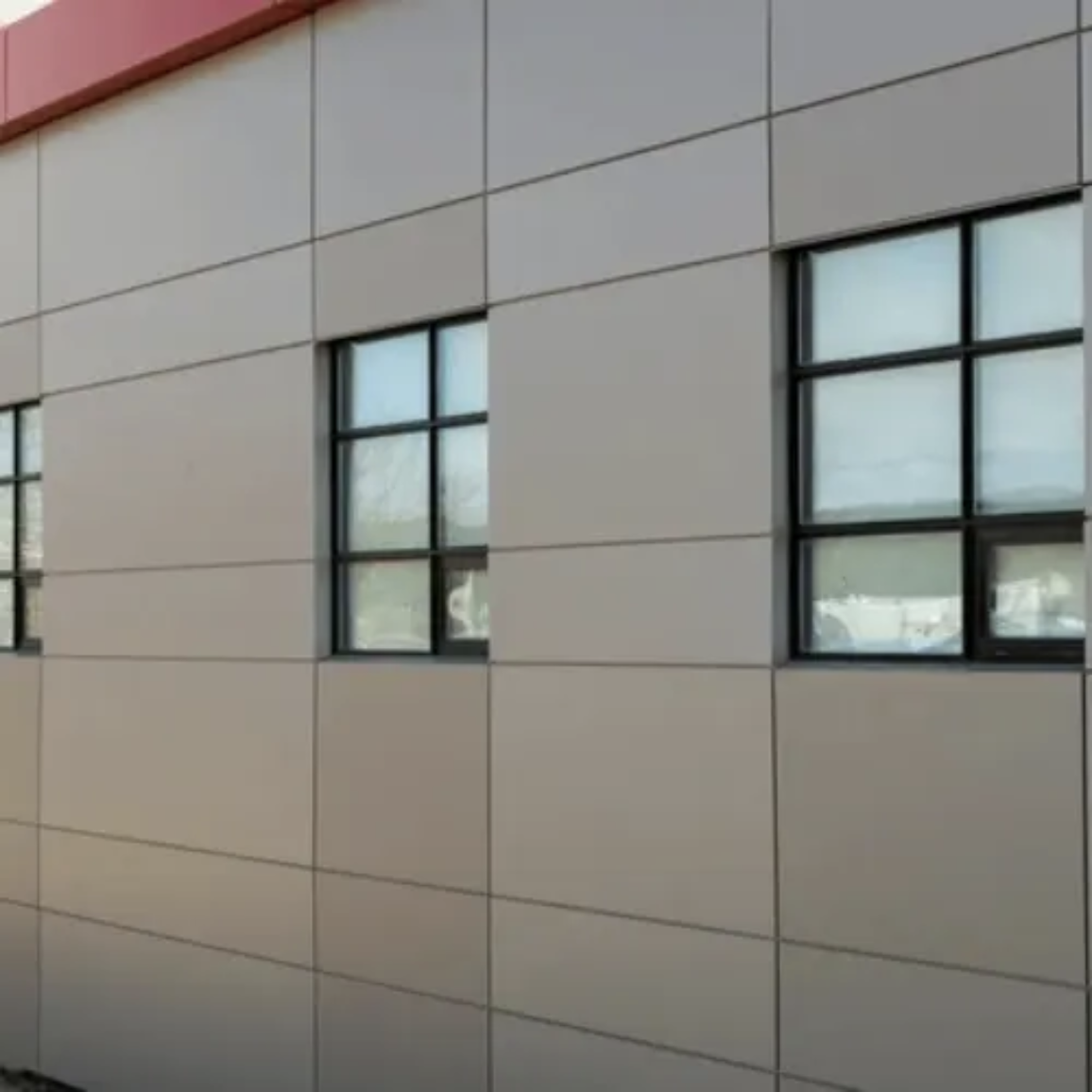
You invested in a premium facade. The design is striking. The color is perfect. The installation is complete.
Then the sun hits the building at a certain angle. You see them. Waves. Ripples. Distortions. The flawless flat surface you expected looks uneven and wavy.
This phenomenon is called oil canning. It is one of the most frustrating risks in aluminum composite panel installations. Oil canning does not compromise structural integrity—but it destroys visual perfection.
This guide explains why oil canning happens. You will learn the science of thermal expansion. You will understand what causes the wavy appearance. And you will know exactly how to prevent it.
What Is Oil Canning?
Oil canning, also known as elastic buckling or stress wrinkling, refers to the visible waviness or rippling that can occur on the surface of flat metal panels. The term comes from the visual similarity to the bottom of an old-fashioned oil can, which pops in and out.
Key characteristics:
- Subtle waves, shadows, or ripples across flat panel surfaces
- More noticeable at certain viewing angles and under specific lighting conditions
- Cosmetic only—does not compromise panel strength or weather resistance
- Generally not reversible after installation
Oil canning is more noticeable when panels are large, the surface has a smooth finish, the color is reflective, sunlight hits the facade at an angle, or the viewer looks along the panel surface.
The Science of Thermal Expansion
Aluminum expands and contracts with temperature changes. Alucobond panels have a linear thermal expansion rate of 2.4 mm per meter of panel length for every 100°C temperature difference.
A 10-foot panel experiences significant thermal expansion. In practical terms, a 4,000 mm panel in a region with a 60°C seasonal swing will expand and contract by roughly 2.4 mm in each direction.
What this means for your facade:
Panel Length | Expansion at 50°C ΔT | Expansion at 100°C ΔT |
2 meters | 1.2 mm | 2.4 mm |
4 meters | 2.4 mm | 4.8 mm |
6 meters | 3.6 mm | 7.2 mm |
Caption: Thermal expansion of Alucobond panels at different temperature differences. Source: ALUCOBOND technical data.
Alt text: Table showing thermal expansion in millimeters for 2m, 4m, and 6m Alucobond panels at 50°C and 100°C temperature differences.
To calculate the expansion for your specific project, use this formula:
ΔL = 2.4 mm × L (meters) × (ΔT ÷ 100°C)
For a 3-meter panel with a 50°C temperature difference: 2.4 mm × 3 × 0.5 = 3.6 mm total expansion.
Without room to move, that force transfers directly to fasteners, substructure, and adjacent panels. The panels begin to show wrinkles, ripples, or "waffling" on the exposed surface.
How Thermal Expansion Creates Oil Canning
Oil canning is rarely caused by a single factor. It typically results from a combination of material, design, fabrication, and installation issues.
1. Restricted Thermal Movement
When panels are installed without allowance for thermal expansion—often pushed tight against each other—the results are predictable. Thermal expansion causes bending at the weakest parts of the panel. Repeated expansion and contraction cycles open and close the fold repeatedly, potentially weakening the fold.
If panels are "locked down" rigidly at all attachment points, the metal will warp—pillow or oil-can—as it heats up and expands.
2. Unbalanced Internal Stress
Metal has a "memory." During manufacturing, stresses are induced into the material. The metal naturally wants to revert to its original shape. When these internal stresses are not perfectly balanced, the panel buckles outward into visible waves.
In a high-quality ACP, the aluminum skins are bonded to the core under precisely controlled tension. This creates a "balanced panel" where the internal forces cancel each other out. When oil canning occurs, it indicates that this balanced tension has been compromised.
3. Inconsistent Panel Flatness from Manufacturing
Not all aluminum composite panels are manufactured with the same precision. A professional manufacturer controls cooling rates, lamination pressure, and material tension to produce panels with exceptional flatness. Lower-quality manufacturers may produce panels with residual stresses that manifest as waves after installation.
4. Low Core Rigidity
The core material's stiffness directly affects the panel's resistance to oil canning. Panels lacking sufficient rigidity are more susceptible to elastic buckling. ALUCOBOND panels utilize a mineral-filled core that provides enhanced stability and flexural rigidity.
5. Uneven Subframe Alignment
A flat facade starts with a straight subframe. The aluminum composite panel follows the surface behind it. If the subframe is uneven, twisted, or poorly aligned, the panel may show visual distortion after installation.
The Warning Signs
Oil canning develops gradually. Watch for these signs:
Sign | What It Looks Like | When It Appears |
Subtle ripples | Soft waves across the panel surface | Within weeks or months of installation |
Visible shadows | Distortions visible at certain angles | Under direct sunlight | |
Popping sound | Panels make a popping noise when heating | On hot days during expansion |
Edge buckling | Panels push against each other at joints | After significant temperature swings |
Caption: Warning signs of oil canning in Alucobond facades.
Alt text: Table showing four warning signs of oil canning with descriptions and timing of appearance.
How to Prevent Oil Canning
1. Allow for Thermal Movement
This is the most critical prevention measure. The cladding must be fabricated and installed to allow for all expansion and contraction of the components.
Expansion gap guidelines:
- For panel runs exceeding 6 meters, physical expansion joints are required
- Open joint systems are recommended: horizontal joint width 4- 6 mm, vertical joint width 3- 5 mm
- Use oversized holes for fasteners—the hole in the panel must be large enough to allow for expansion
- With the shaft of the rivet fitting closely to the edge of the hole, the attachment head must cover 1mm of the area surrounding the hole
2. Choose the Right Core Material
The core material's stiffness directly affects oil canning resistance. Premium panels with mineral-filled cores provide enhanced stability and flexural rigidity. Standard PE cores are more susceptible to elastic buckling.
3. Specify Panels from a Quality Manufacturer
A professional manufacturer controls cooling rates, lamination pressure, and material tension to produce panels with exceptional flatness. ALUCOBOND panels are manufactured with precisely controlled tension, creating a "balanced panel" where internal forces cancel each other out.
When sourcing from an Alucobond supplier, verify their quality control processes. A reliable manufacturer of Alucobond will provide technical documentation on manufacturing standards. A wholesale supplier of Alucobond should be able to demonstrate consistent panel flatness.
4. Limit Panel Width and Size
Large panels can create a clean and modern look. However, very large panels may also increase the risk of visible waviness. For large, flat areas, consider incorporating reveals that interrupt the visual expanse.
5. Use Proper Fastening Systems
Do not over-tighten fasteners. Over-tightening restricts movement. It forces the panel to absorb stress at the attachment points. Use slotted holes or clip systems that allow the panel to expand and contract freely.
6. Start with a Straight and Stable Subframe
Before fixing panels, installers should check that the subframe is straight, stable, properly aligned, and free from unnecessary movement. Even a small misalignment can become visible once smooth panels are installed across a large elevation.
7. Install Panels at the Right Temperature
Installation temperature affects how much the panel will expand and contract. If you install panels on a hot day, they will contract in winter, potentially opening gaps. If you install them on a cold day, they will expand in summer, potentially buckling.
The Prevention Flowchart
Start
│
▼
Select panels with mineral-filled core (higher rigidity)
│
▼
Source from a quality manufacturer with controlled production
│
▼
Design facade with proper expansion gaps (4- 6 mm horizontal, 3- 5 mm vertical)
│
▼
Use oversized fastener holes (larger than rivet shank)
│
▼
Install with sliding fasteners (not rigid lock-down)
│
▼
Consider panel width limitations for large flat areas
│
▼
Install at moderate temperatures (avoid extremes)
│
▼
Inspect for early signs of oil canning
│
▼
Done
Common Mistakes to Avoid
Mistake 1: Installing Panels Tight Against Each Other
Some installers push panels together for a tight look. The panels cannot expand. They buckle.
Fix: Leave 4-6 mm gaps between panels. Use expansion joints for runs exceeding 6 meters.
Mistake 2: Over-Tightening Fasteners
Over-tightened fasteners lock the panel in place. It cannot move. It warps.
Fix: Use slotted holes. Tighten fasteners enough to hold the panel—not enough to lock it.
Mistake 3: Ignoring Core Material Quality
Standard PE cores are more prone to oil canning. Mineral-filled cores provide superior flatness.
Fix: Specify mineral-filled cores for large, flat facade areas.
Mistake 4: Using Panels from Low-Quality Suppliers
Inconsistent manufacturing creates residual stress. That stress becomes visible waves after installation.
Fix: Source from a reputable Alucobond supplier export with documented quality control.
What to Ask Your Alucobond Supplier Export
When you work with an Alucobond supplier for export, ask these questions:
1. What is your panel flatness tolerance? A quality manufacturer of Alucobond will have tight tolerances.
2. What core material do you use? Mineral-filled cores provide better resistance to oil canning.
3. Do you control tension during lamination? Balanced tension prevents residual stress.
4. What are your expansion joint recommendations? A wholesale supplier of Alucobond should provide installation guidelines.
5. Can you provide technical documentation on thermal expansion? A distributor of Alucobond panels should have this data.
An OEM manufacturer of Alucobond controls quality from raw material to finished panel. Choose an Alucobond supplier who provides technical documentation and stands behind their product.
The Bottom Line
Oil canning is not a mystery. It is a mechanical problem of unbalanced tension and restricted thermal movement.
Alucobond panels expand at 2.4 mm per meter for every 100°C temperature change. Without room to move, that expansion creates stress. That stress creates waves. Those waves ruin the facade's appearance.
Prevention is straightforward:
- Allow for thermal movement
- Choose mineral-filled cores
- Source from a quality manufacturer
- Use proper fastening systems
- Start with a straight subframe
- Install at the right temperature
Do these things, and your facade will stay flat. Your client will stay happy. Your reputation will stay intact.
A reliable Alucobond supplier will support your prevention efforts. They will provide technical documentation. They will guide you on expansion joints and fastening systems. They will help you get it right.