Welcome to Vbond
Training Your Crew: The Most Common Alucobond Folding Mistakes and How to Avoid Them
You watch a new operator set up the press brake. He routes the groove. He folds the panel. It cracks. He looks confused. "I did everything right," he says.
He made a mistake. He just does not know which one.
Alucobond folding is not complicated. But it requires discipline. Small errors cause big problems. Cracks appear along the fold line. Panels get scrapped. The project falls behind.
This guide covers the most common folding mistakes. You will learn what goes wrong. You will understand why it happens. And you will know exactly how to train your crew to avoid each one.
Mistake 1: Bending Without Grooving
The mistake: The operator skips the V-groove. They think the press brake can handle it. They bend the panel cold. The aluminum tears. The coating cracks.
Why it happens: Inexperience. The operator does not understand the sandwich structure. They treat Alucobond like solid aluminum.
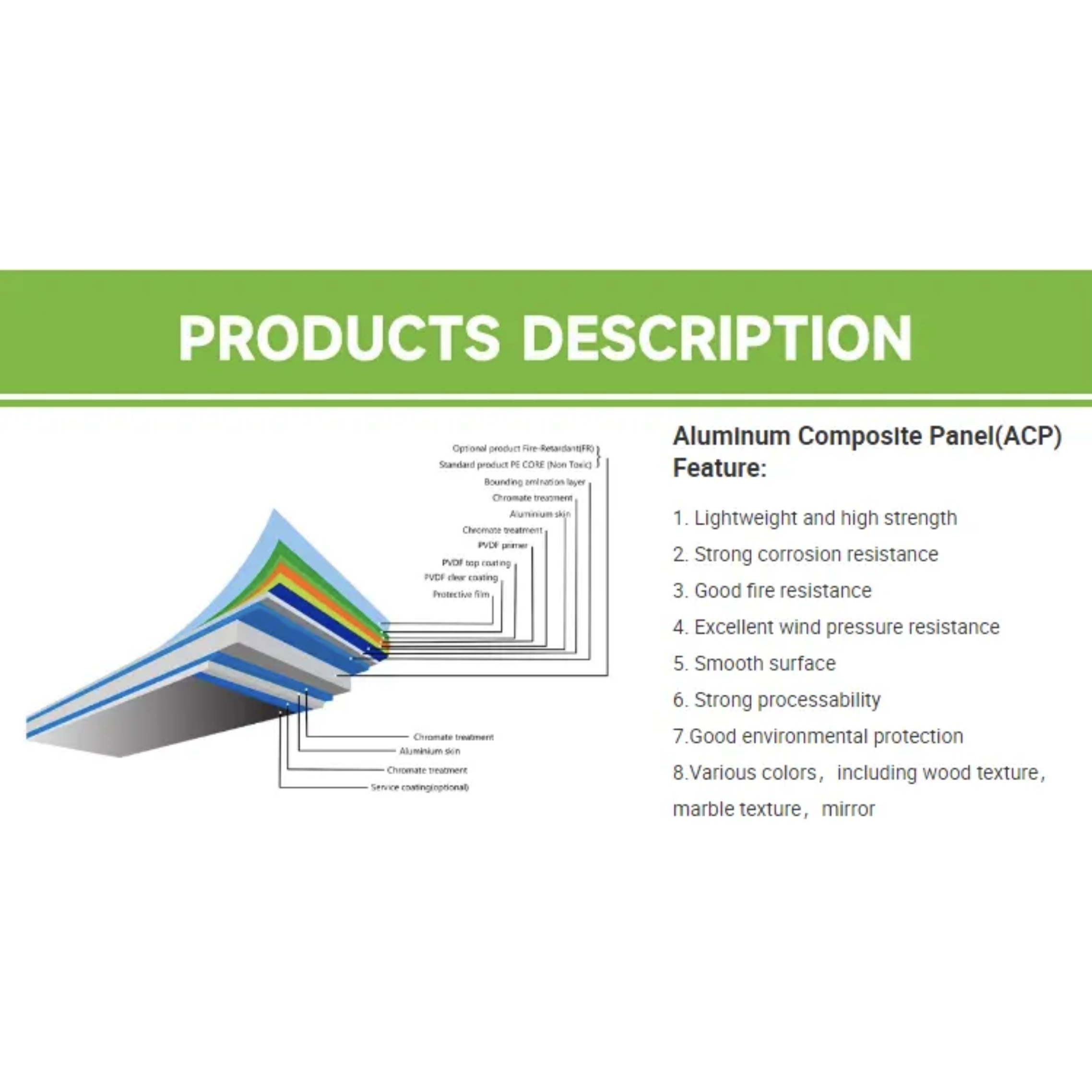
The fix: Train every operator on the "routing and folding" method. The V-groove is not optional. It removes the rear skin and core. It creates a hinge for the front skin. Bending without it causes immediate failure.
If a Alucobond supplier for signage provides pre-grooved panels, the risk is lower. But many fabricators still try to bend without grooving. Do not let your crew make this mistake.
Mistake 2: Routing Too Deep
The mistake: The router cuts through the front aluminum skin. The groove is too deep. The residual thickness drops below 0.3mm. The front skin loses support. It cracks.
Why it happens: The operator sets the router depth incorrectly. They do not measure residual thickness. They guess.
The fix: Measure residual thickness with a micrometer on every batch. The industry standard is 0.3mm minimum. Below 0.3mm, the panel will crack. Above 0.5mm, the bend becomes stiff.
Residual Thickness | Fold Result |
0.5mm or more | Clean, strong fold |
0.3mm to 0.5mm | Clean, acceptable fold |
0.2mm to 0.3mm | Marginal, moderate risk |
Below 0.2mm | Cracks likely |
Caption: Residual thickness determines fold quality. Source: Industry fabrication standards.
Alt text: Table showing residual thickness ranges from 0.5mm and above down to below 0.2mm with corresponding fold results.
Mistake 3: Routing Too Shallow
The mistake: The router does not remove enough material. The groove is too shallow. The panel resists bending. The aluminum tears from excess stress.
Why it happens: The operator is cautious. They do not want to over-route. They leave too much material.
The fix: Route the groove to 60% to 70% of the panel thickness. For a 4mm panel, this means a groove depth of 2.4mm to 2.8mm. Test on a sample strip before production.
Mistake 4: Using the Wrong Router Bit
The mistake: The operator uses a standard woodworking V-groove bit. The bit has a sharp point. It creates a stress riser. The panel cracks.
Why it happens: The operator does not know the difference. A bit is a bit, they think. They are wrong.
The fix: Use bits specifically designed for ACM. Look for carbide-tipped construction with flat-bottom or U-shaped geometry. A flat-bottom bit has a tip width of 2- 3 mm. It distributes stress evenly. No single point bears the full load.
Mistake 5: Bending Cold
The mistake: The operator folds the panel in a cold shop. The aluminum is brittle. The coating is rigid. The panel cracks.
Why it happens: The operator does not check the panel temperature. They assume room temperature is fine. It is not.
The fix: Do not bend panels below 50°F (10°C). Warm the bend area to 65°F (18°C) minimum. For best results, heat to 120°F to 180°F (50°C to 80°C). Use heat guns or strip heaters. Warm the panel evenly.
Caption: Warming the Alucobond panel before bending prevents cold-bending cracks.
Alt text: Worker applying heat to an Alucobond panel bend line using a heat gun before folding.
Mistake 6: Re-Bending
The mistake: The operator bends the panel halfway. They check the angle. It is wrong. They bend it again. The panel cracks.
Why it happens: The operator lacks confidence. They bend incrementally to "get it right." Each bend work-hardens the aluminum. The second bend exceeds the reduced elastic limit.
The fix: Bend in one smooth motion. If the angle is wrong, scrap the panel and start over. Do not re-bend. The cost of a new panel is small compared to the cost of a failed facade.
Ductility After Multiple Bends:
Number of Bends | Ductility Remaining | Crack Risk |
1 | ~70% | Low |
2 | ~40% | High |
3 | ~20% | High |
Caption: Each additional bend reduces ductility and increases crack risk.
Alt text: Table showing ductility decreasing from 70% after one bend to 20% after three bends, with crack risk increasing from low to very high.
Mistake 7: Bending Too Tight
The mistake: The operator tries to create a sharp corner. They use a tight bend radius. The panel cracks.
Why it happens: The design calls for sharp corners. The operator wants to deliver. But Alucobond has limits.
The fix: Do not exceed the minimum bend radius. For a 4mm panel, the minimum is 60mm. Tighter radii cause cracking. If you need tighter bends, use 3mm panels or adjust the grooving depth.
Mistake 8: Ignoring the Grain Direction
The mistake: The operator bends parallel to the rolling direction. The panel cracks.
Why it happens: The operator does not know about grain direction. They do not check the panel orientation.
The fix: Bend perpendicular to the rolling direction. Aluminum has a grain from the rolling mill. Bending parallel to the grain reduces ductility. Cracks form more easily.
Mistake 9: Skipping the Sample Test
The mistake: The operator starts production without testing a sample. The settings are wrong. Panels crack.
Why it happens: The operator is in a hurry. They assume the settings are correct. They are not.
The fix: Test on a sample strip before production. Route a groove. Measure residual thickness. Fold the strip. Inspect for cracks. Adjust settings if needed.
The Complete Training Checklist
Mistake | Why It Happens | The Fix |
1. Bending without grooving | Operator does not understand sandwich structure | Train on routing and folding method |
2. Routing too deep | Operator guesses depth | Measure residual thickness (> 0.3 mm) |
3. Routing too shallow | Operator leaves too much material | Route 60-70% of panel thickness |
4. Using the wrong bit | Operator uses a woodworking bit | Use ACM-specific carbide bit |
5. Bending cold | Operator ignores temperature | Warm panel to 65°F minimum |
6. Re-bending | Operator bends incrementally | One smooth motion, scrap if wrong |
7. Bending too tight | Operator creates sharp corners | Minimum bend radius 60mm |
8. Ignoring grain direction | Operator does not check orientation | Bend perpendicular to rolling |
9. Skipping sample test | Operator is in a hurry | Test every batch before production |
Caption: Complete training checklist for Alucobond folding operators.
Alt text: Table listing nine common mistakes with causes and fixes for each.
What to Ask Your Alucobond Supplier for Signage
When you work with an Alucobond supplier for signage, ask these questions:
1. What thickness do you recommend for signage applications? Signage often uses 3mm or 4mm panels.
2. What is your recommended bend radius? A knowledgeable manufacturer of Alucobond will provide technical data.
3. Do you offer pre-grooved panels? An OEM manufacturer of Alucobond can deliver panels already grooved, reducing on-site mistakes.
4. Can you provide training materials? A reliable wholesale supplier of Alucobond will have documentation.
5. What is your warranty coverage? A distributor of Alucobond panels should stand behind their material.
An authorized Alucobond dealer understands signage applications. They can guide you on fabrication best practices. Choose an Alucobond supplier for signage who backs their material with support.
The Training Flowchart
Start
│
▼
Train operator on sandwich structure and routing method
│
▼
Demonstrate proper grooving (depth, bit selection, residual thickness)
│
▼
Supervise sample test (route, measure, fold, inspect)
│
▼
Observe production folding (temperature, one-pass, radius)
│
▼
Inspect every folded panel with the operator
│
▼
Document results and provide feedback
│
▼
Retrain on specific mistakes as needed
The Bottom Line
Most folding mistakes are preventable. They happen because operators lack training. They happen because operators guess instead of measure. They happen because operators take shortcuts.
Train your crew. Teach them the sandwich structure. Show them how to set groove depth. Demonstrate the sample test. Explain why temperature matters.
The training takes one day. It saves thousands in scrap. It protects your reputation. It keeps the client happy.
A good Alucobond supplier for signage will support your training efforts. They will provide technical documentation. They will answer questions. They will help you get it right.
Do not let your crew make these mistakes. Train them. Watch them. Correct them. Your panels will fold cleanly. Every time.