Welcome to Vbond
Using Nano-Magnesium Hydroxide: New Material Science for Crack-Resistant Alucobond
You know the problem. You order Alucobond panels. They look perfect on delivery. Your fabricator bends them. Cracks appear along the fold lines. Panels get scrapped.
The core material is the culprit.
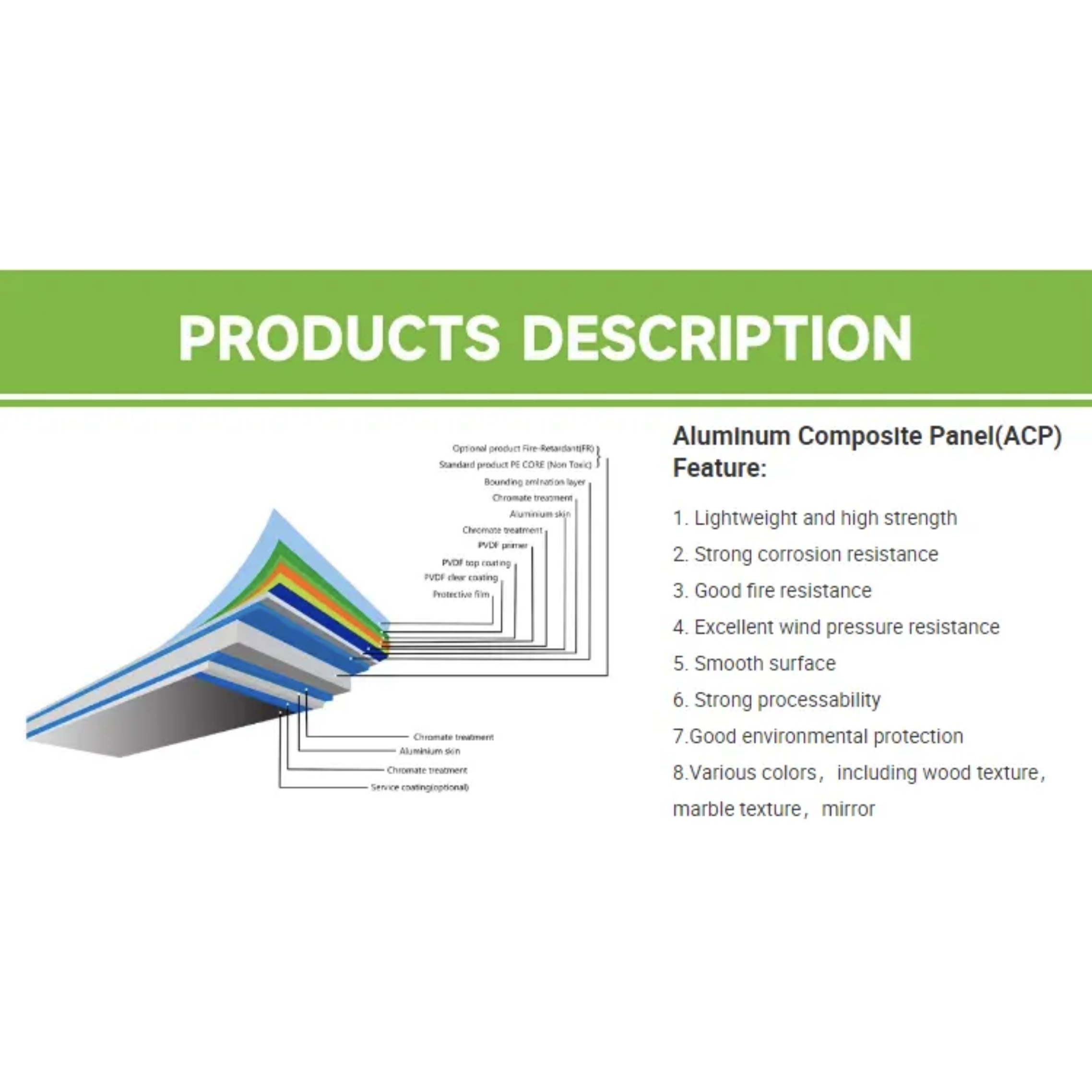
Traditional Alucobond uses a polyethylene (PE) core. PE is flexible but brittle under stress. When you bend the panel, stress concentrates at the fold. The core cannot handle the strain. It separates from the aluminum skins. The aluminum tears.
Now there is a better solution. Nano-magnesium hydroxide.
This guide explains the new material science. You will learn how nano-magnesium hydroxide transforms Alucobond performance. You will understand why it prevents cracking. And you will know exactly what to look for when you buy.
What Is Nano-Magnesium Hydroxide?
Nano-magnesium hydroxide is magnesium hydroxide (Mg(OH)₂) ground into nano-scale particles. The particle size ranges from 20 to 100 nanometers.
At this size, the material behaves differently. It has a massive surface area — 50 times larger than conventional magnesium hydroxide. It disperses evenly in the core material. It interacts with the polymer at the molecular level.
The result is a core that does more than just fill space. It actively strengthens the panel.
How It Prevents Cracking
Cracking happens when stress concentrates at the fold line. The core cannot absorb the stress. The aluminum skin tears.
Nano-magnesium hydroxide solves this in four ways:
1. Stress Distribution
Nano-particles disperse evenly throughout the core. When you bend the panel, these particles act as stress buffers. They absorb and distribute force across a wider area. No single point bears the full load.
2. Enhanced Ductility
The nanoparticles modify the polymer's crystal structure. They lower the glass transition temperature — the point where the material becomes brittle. The core stays flexible even in cold weather.
3. Stronger Interface Bonding
Surface treatment (silane coupling agents) helps the nanoparticles bond firmly to both the polymer and the aluminum skins. The interface between layers becomes stronger. The layers do not separate during bending.
4. Crack Propagation Resistance
When a micro-crack starts, the nano-particles block its growth. The crack cannot travel through the core.
The Numbers: What the Research Shows
Property | Traditional PE Core | Nano-Mg(OH)₂ Core | Improvement |
Impact strength retention | 65% | 85% | +20% |
Flame retardancy efficiency | Baseline | +30% | +30% |
Smoke density | ≥75 | ≤15 | -80% |
Processing temperature stability | 180-220°C | 180-220°C | Same |
Core shrinkage | Baseline | -40% to -60% | Significant |
Caption: Performance comparison of traditional PE core versus nano-magnesium hydroxide core in Alucobond panels. Source: Industry research data.
Alt text: Table comparing traditional PE core and nano-magnesium hydroxide core across impact strength, flame retardancy, smoke density, processing temperature, and core shrinkage.
The numbers tell a clear story. Nano-magnesium hydroxide makes the core stronger, more flexible, and more stable.
The Fire Safety Bonus
Nano-magnesium hydroxide does more than prevent cracks. It also makes Alucobond fire-safe.
When exposed to high temperatures (above 340°C), magnesium hydroxide decomposes. It releases water vapor. This absorbs heat and cools the panel. The remaining magnesium oxide forms a protective ceramic layer. This layer stops flames from spreading.
Alucobond A2 uses a mineral-filled core with over 90% inorganic content. That mineral is mostly magnesium hydroxide. The panel meets A2 fire safety standards. It does not burn.
You get crack resistance and fire safety in one package.
What This Means for Bending
Panels with nano-magnesium hydroxide cores bend differently.
The core stays flexible. It absorbs stress. It does not crack. You can use tighter bend radii without worrying about failure.
The material also handles cold weather better. Traditional PE cores become brittle below freezing. Nano-magnesium hydroxide cores retain their flexibility. You can bend panels in winter conditions with less risk.
What to Ask Your Alucobond Supplier
When you work with an Alucobond supplier, ask these questions:
1. What is your core material? Look for "mineral-filled core" or "nano-magnesium hydroxide core." Avoid standard PE cores for exterior applications.
2. What is your fire rating? A2 is the highest standard. B1 is acceptable for many applications.
3. What is your minimum bend radius? Panels with nano-magnesium hydroxide cores allow tighter radii than standard PE cores.
4. Do you have test data on crack resistance? A reliable manufacturer of Alucobond will provide documentation.
5. What is your cold-weather bending recommendation? The answer should acknowledge the improved low-temperature performance of mineral-filled cores.
Choose a wholesale supplier of Alucobond that understands material science. Work with an authorized Alucobond dealer who can explain the core composition. Buy from a distributor of Alucobond panels that provides technical documentation.
For large projects, work with an OEM manufacturer of Alucobond that controls the entire production process. They understand the material better than anyone.
The Bottom Line
Nano-magnesium hydroxide changes the game. It turns a brittle core into a tough, flexible one. It distributes stress. It prevents cracks. It handles cold weather. And it makes the panel fire-safe.
Traditional PE cores crack under stress. Nano-magnesium hydroxide cores bend without breaking.
The science is clear. The numbers prove it. The panels perform better.
Specify nano-magnesium hydroxide cores for your next project. Your panels will bend cleanly. They will resist cracking. And they will meet the highest fire safety standards.