Welcome to Vbond
Why Missing Edge Ribs Lead to "Drumhead" Blistering in Alucobond Curtain Walls
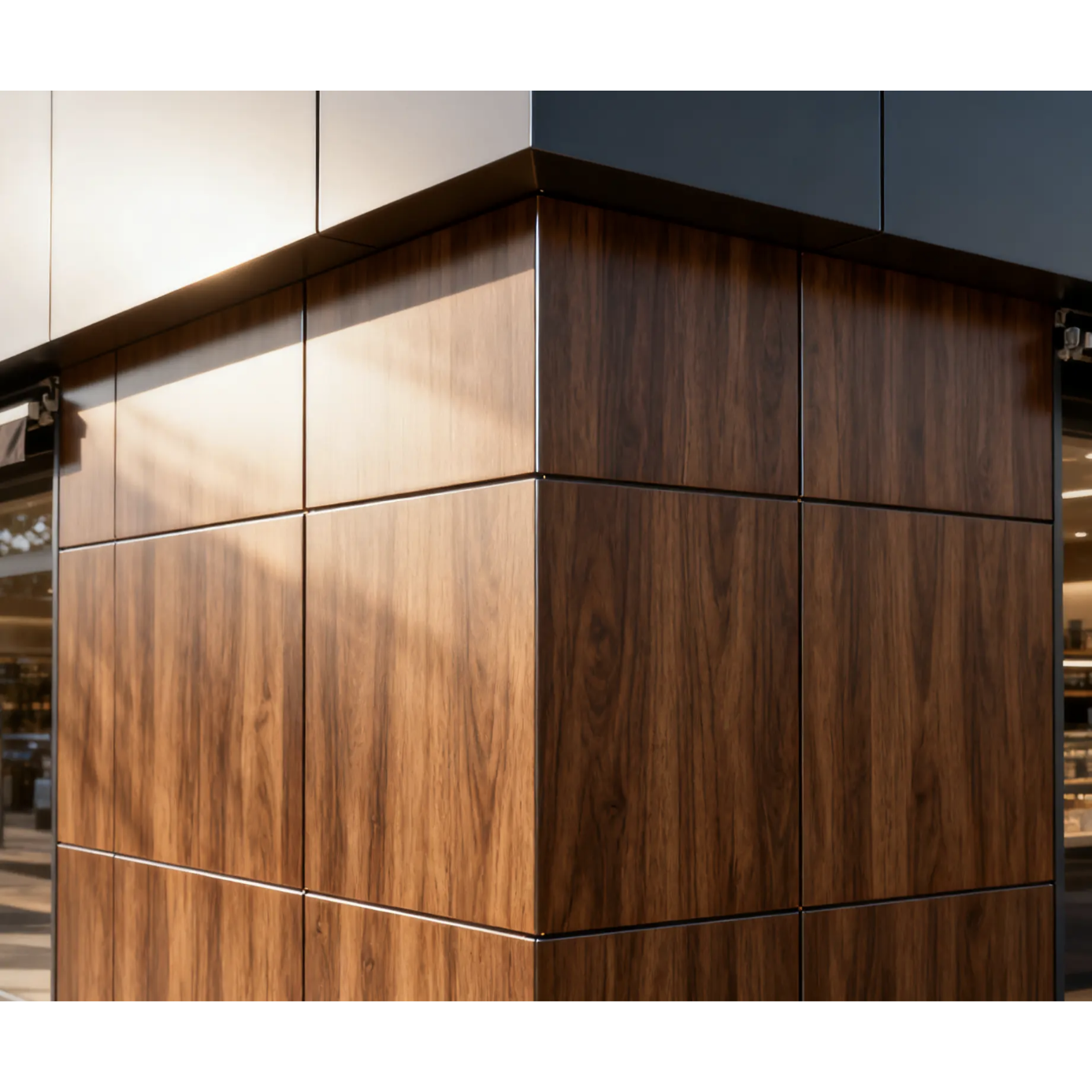
You walk the finished facade. The panels look flawless from a distance. Up close, you see them. Raised bumps across the panel surface. They look like a drumhead stretched too tight. Tap one, and it sounds hollow.
This is drumhead blistering. It ruins the sleek appearance. The client demands answers. The panel manufacturer blames the installation. The installer blames the material.
The real culprit is often missing edge ribs. Those folded edges at the perimeter of each panel are not just for looks. They provide structural stiffness. Without them, the panel becomes a drum. Wind and thermal stress make it bulge.
What Are Edge Ribs?
Edge ribs are the folded edges that run along the perimeter of an Alucobond panel. The fabricator routes a V-groove on the back side and folds the edge upward at a 90-degree angle. This creates a stiffened rim around the panel.
Why edge ribs matter:
The folded edge increases the panel's stiffness dramatically. It creates an "I-beam" effect. The flat panel alone has limited rigidity. The folded edge adds strength without adding much weight.
When you use Alucobond for exterior wall cladding, the edge ribs are not optional. Technical standards mandate that "for aluminum-plastic composite panels, edge ribs should be set at the folded edges". The Chinese standard JGJ 255-2012 specifically requires that "aluminum-plastic composite panels should have edge ribs at the folded edges".
The Structural Role of Edge Ribs
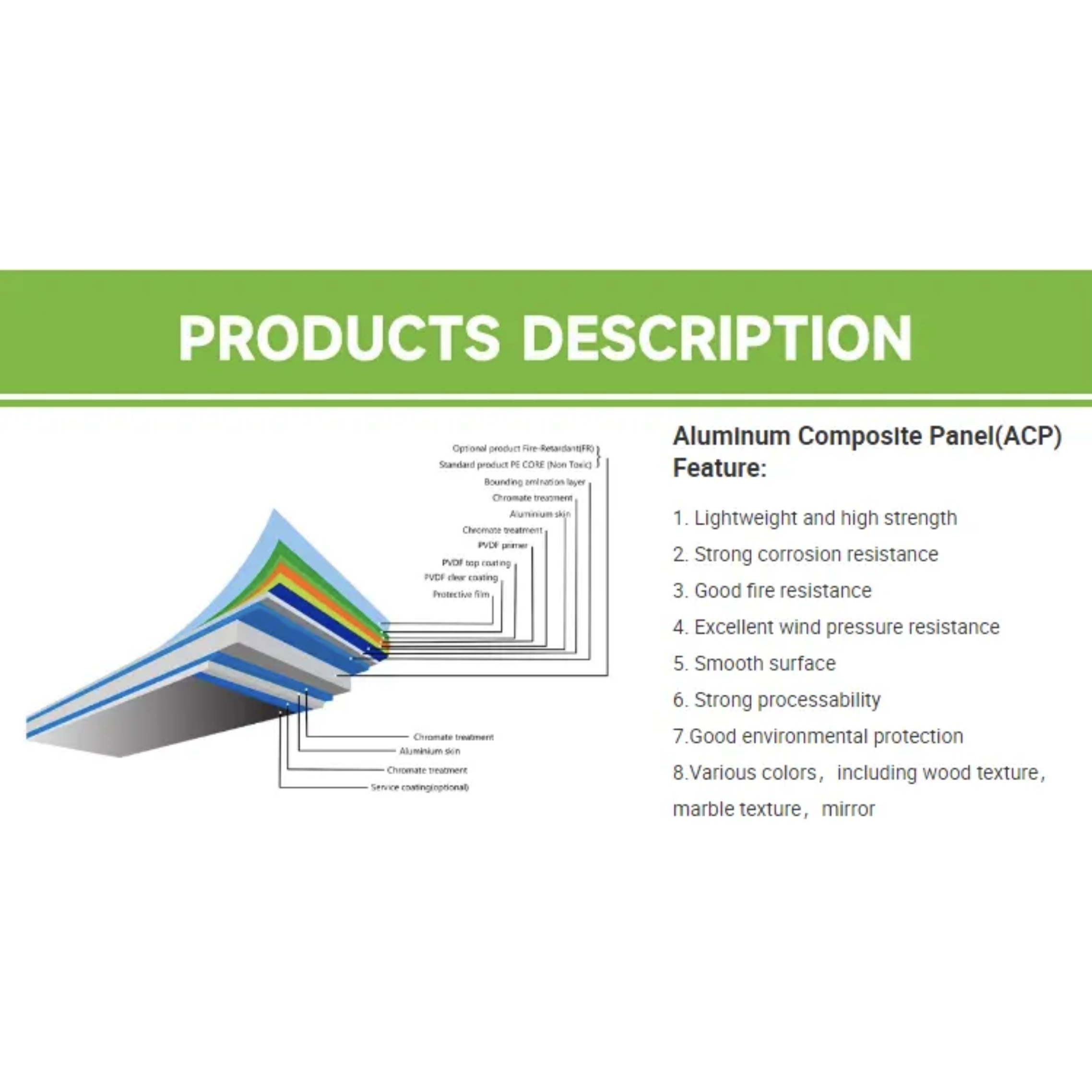
Alucobond is a sandwich panel. Two thin aluminum skins (typically 0.3- 0.5 mm each) bond to a polyethylene core. This sandwich structure provides a high stiffness-to-weight ratio. But the flat panel alone has limits.
Without edge ribs:
The panel relies entirely on the core and aluminum skins for stiffness. The skins are thin—only 0.3 to 0.5mm. The core provides some rigidity but can deform under pressure. The panel flexes like a drumhead.
With edge ribs:
The folded edge creates a box-like structure. The panel becomes self-stiffening. It resists bending and deflection. It holds its flat shape under wind load and thermal stress. The panel can span greater distances between supports.
The manufacturer generally increases the stiffness of the panel by folding the edges around it. This folded edge also prevents moisture from entering the exposed core.
What Happens When Edge Ribs Are Missing
Some fabricators skip the edge ribs to save time or material. They cut the panel to size, route the groove, and stop. They do not fold the edges. The panel goes on the wall as a flat sheet.
The results are predictable.
1. Reduced stiffness
The panel loses its structural rigidity. It cannot resist wind pressure. It cannot handle thermal expansion. It flexes under load.
2. Drumhead effect
When wind hits the facade, the panel deflects inward. When the wind stops, it springs back. This repeated flexing creates a drumming sound and visible movement. The panel behaves as a drumhead stretched over a frame.
3. Stress concentration at fasteners
Without edge ribs, the panel transfers all stress to the fasteners. The fasteners pull against the thin aluminum skin. The skin tears. The panel fails.
4. Blistering and delamination
The repeated flexing stresses the adhesive bond between the aluminum skins and the core. The bond fails. Voids form. Those voids become visible blisters.
The evidence is clear:
Panels without edge ribs and middle ribs deform under wind pressure and air expansion. This "blistering" phenomenon commonly appears on curtain walls using aluminum composite panels. Some manufacturers save costs by omitting the edge ribs and simply screwing the flat panel to the frame. The panel lacks sufficient strength and deforms under positive and negative wind pressure.
How Missing Edge Ribs Create Drumhead Blisters
The mechanism:
1. The panel is installed without folded edges. The perimeter is flat.
2. Wind pressure pushes the panel inward. The panel flexes.
3. The flexing creates tension in the aluminum skins and stress in the adhesive bond.
4. The core cannot absorb the stress. The bond between the skin and core begins to fail.
5. A void forms between the aluminum skin and the core. That void is a blister.
6. Over time, the blister grows. The panel loses flatness. It looks damaged.
Why it sounds like a drum:
When you tap a panel without edge ribs, the sound is hollow. The panel is not rigidly supported. It vibrates like a drumhead. When you tap a panel with proper edge ribs, the sound is solid. The panel is stiff. It does not vibrate.
The Design and Installation Requirements
What the standards say:
JGJ 255-2012 specifies that "metal panels should have edge ribs and middle ribs as needed. Aluminum-plastic composite panels should have edge ribs at the folded edges".
The reinforcing ribs can use metal square tubes, channel sections, or angle profiles. The rib section thickness must not be less than 1.5mm.
What this means for your project:
Every Alucobond panel in a curtain wall system needs folded edges. The edge ribs are not decorative. They are structural. They maintain flatness and prevent blistering.
The Consequences of Skipping Edge Ribs
Consequence | What Happens | Why It Matters |
Reduced stiffness | Panel flexes under wind load | Visible deflection, drumming sound |
Drumhead blistering | Voids form between skin and core | Surface defects, aesthetic failure |
Fastener failure | Stress concentrates at attachment points | Panels detach from the building |
Core exposure | Moisture enters unsealed edges | Delamination, corrosion |
Warranty denial | Manufacturer rejects claims | You pay for replacement |
How to Prevent Drumhead Blistering
1. Specify edge ribs in your design
Every Alucobond panel for exterior wall cladding must have folded edges. This is not optional. It is a structural requirement.
2. Ensure proper folding technique
Route the V-groove correctly. Leave 0.3mm minimum residual thickness. Fold the edge at 90 degrees. The folded edge must be clean and consistent.
3. Use proper fastening systems
Connect the frame and the folded edge using aluminum rivets. The connection must meet the requirements for reliable force transmission. Do not rely on adhesive alone.
4. Install middle ribs for large panels
For large panels, add middle ribs as supports. The middle ribs must have sufficient stiffness and be securely connected to the edge ribs or folded edges of the panel.
5. Choose a quality supplier
Work with an Alucobond supplier for exterior walls that understands these requirements. A reputable manufacturer of Alucobond will provide fabrication guidelines. A wholesale supplier of Alucobond should be able to demonstrate proper edge folding techniques.
What to Ask Your Alucobond Supplier for Exterior Wall
When you work with an Alucobond supplier for exterior wall, ask these questions:
1. Do you include edge ribs in your panel fabrication? The answer should be yes. Every panel for exterior use needs folded edges.
2. What is your edge folding process? A knowledgeable manufacturer of Alucobond will have documented procedures.
3. Do you use middle ribs for large panels? For panels over a certain size, middle ribs are required.
4. What fasteners do you recommend for connecting edge ribs? Aluminum rivets are the standard for reliable force transmission.
5. Can you provide examples of proper edge folding? A distributor of Alucobond panels should be able to show you fabricated samples.
The Bottom Line
Missing edge ribs cause drumhead blistering. The panel loses stiffness. It flexes under wind and thermal stress. The adhesive bond fails. Voids form. Blisters appear.
The solution is simple: fold the edges. Every Alucobond panel in a curtain wall system needs edge ribs. Technical standards require it. Engineering principles demand it. Good fabrication practice includes it.
Do not let a fabricator skip this step to save time or money. The cost of rework and replacement far exceeds the cost of proper edge folding. A reliable Alucobond supplier for exterior walls will ensure every panel has proper edge ribs.
Your facade will stay flat. Your client will stay happy. Your reputation will stay intact.