Welcome to Vbond
Why Panels Larger Than 900mm Need Mid-Ribs to Prevent Alucobond Blistering
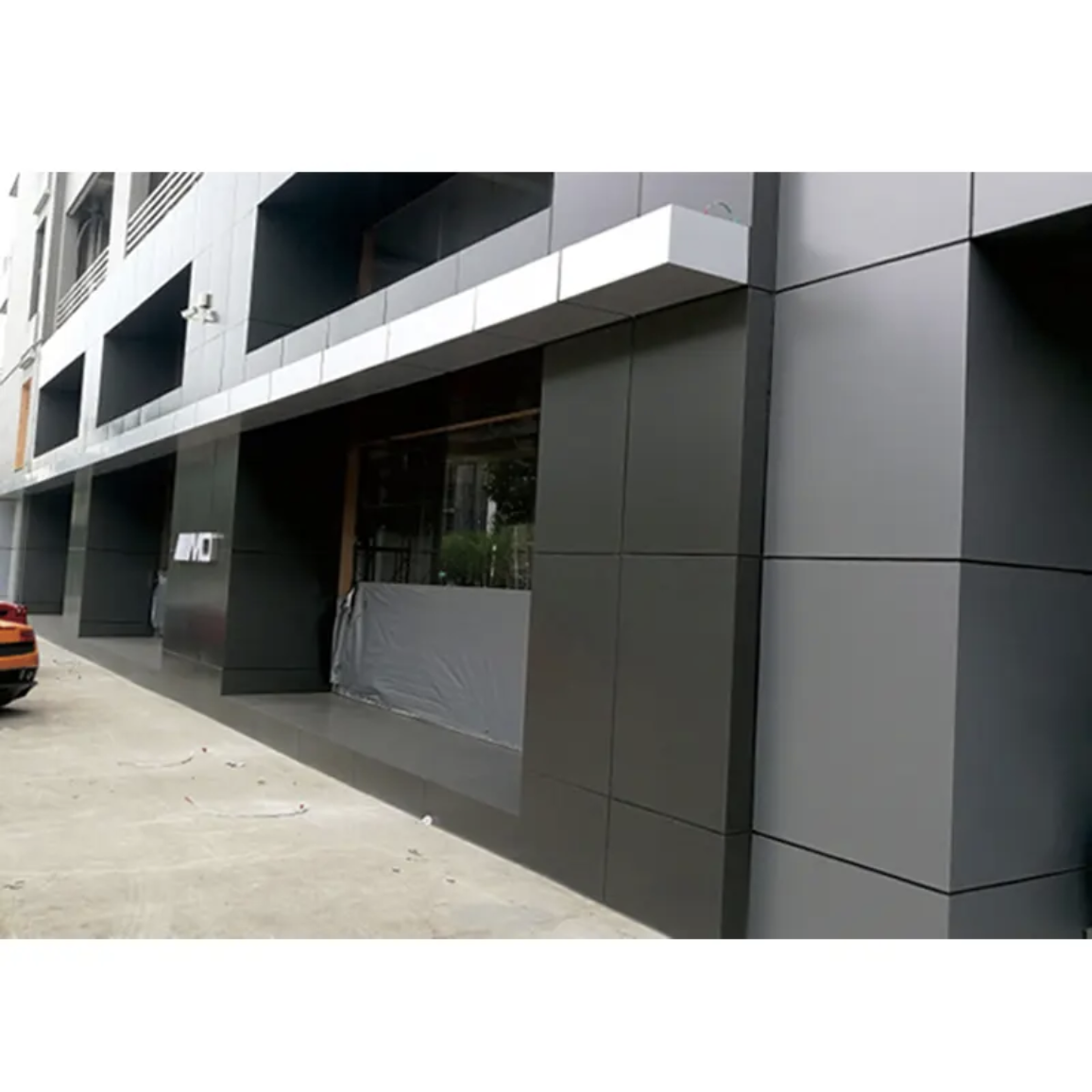
You specify a beautiful Alucobond facade. The panels are large. The design is clean. The installation looks perfect.
Six months later, you see them. Bubbles. Raised bumps across the panel surface. The client demands answers.
What went wrong? The panels were too large without enough support.
This guide explains why panels larger than 900mm need mid-ribs. You will learn the physics behind panel deflection. You will understand how mid-ribs prevent blistering. And you will know exactly how to specify proper reinforcement.
What Are Mid-Ribs?
Mid-ribs are stiffening members attached to the back of Alucobond panels. They run across the panel width, providing structural support between the folded edges (edge ribs).
The three types of reinforcement:
- Edge ribs – folded edges along the panel perimeter. Aluminum composite panels should have edge ribs at the folded edges. The fold height should be no less than 20mm.
- Mid-ribs – internal stiffeners that support the panel face. They prevent the flat panel from deflecting under wind load.
- Cross-ribs – ribs that intersect mid-ribs, creating a grid of support.
Mid-ribs can be metal square tubes, channel sections, or angle profiles. The rib section thickness must not be less than 1.5mm.
A reputable budget Alucobond supplier will offer panels with pre-installed mid-ribs for large formats. A manufacturer of Alucobond provides technical documentation on rib spacing requirements.
The Physics: Why Large Panels Deflect
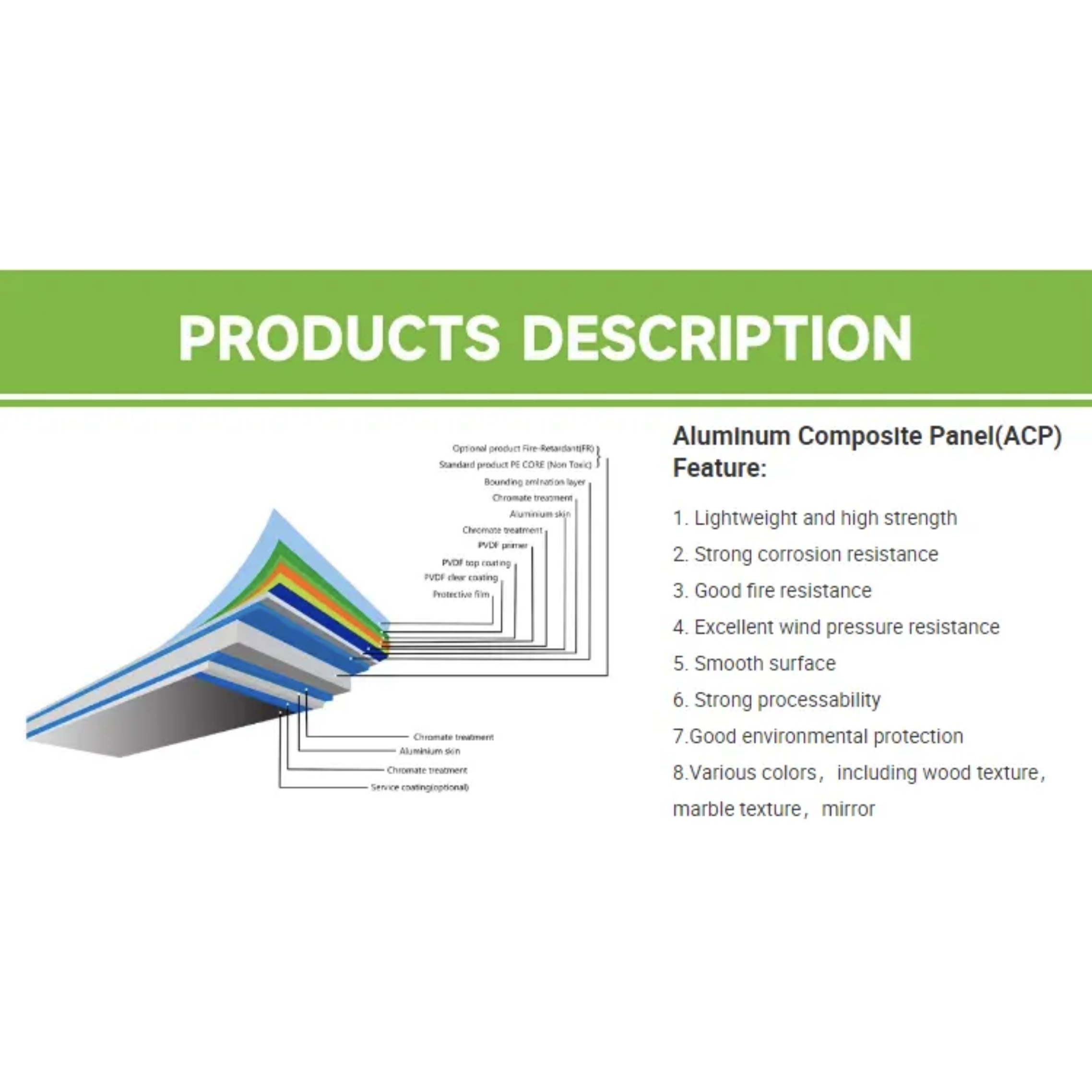
Alucobond is a sandwich panel. Two thin aluminum skins (0.3- 0.5 mm each) bond to a core. This structure provides a high stiffness-to-weight ratio. But the flat panel alone has limits.
What happens to a large panel without mid-ribs:
- Wind pressure pushes the panel inward. The panel deflects.
- The deflection creates stress in the aluminum skins and the adhesive bond.
- The adhesive bond fails under repeated stress. A void forms between the aluminum skin and the core.
- That void becomes a visible blister.
The numbers:
The technical standard JGJ 255-2012 specifies that "when necessary, stiffening ribs should be added to increase their stiffness and maintain the flatness of the board".
The standard also requires that "metal panels should have edge ribs and middle ribs as needed".
Why 900mm is the threshold:
Panels wider than 900mm have a longer unsupported span. The deflection under wind load increases with the square of the span length. A small increase in width creates a large increase in deflection.
The panel's stiffness (E·J) for a 4mm Alucobond panel is 2400 kNcm²/m. While this is high for its weight (5.4 kg/m²), a wide panel still flexes significantly under design wind loads of 2.0 to 5.0 kPa.
Industry practice and technical standards recognize that panels exceeding approximately 900mm in width require mid-rib reinforcement to maintain flatness and prevent blistering.
How Mid-Ribs Prevent Blistering
Mid-ribs work by reducing the unsupported span of the panel face. Instead of one large panel area flexing under wind load, the mid-ribs divide the panel into smaller, stiffer zones.
The mechanism:
1. The mid-rib attaches to the back of the panel. It creates a fixed support line across the panel width.
2. Wind pressure hits the panel. The panel wants to deflect. The mid-rib resists that deflection.
3. The deflection is reduced. The stress on the adhesive bond is reduced. The bond holds.
4. No voids form. No blisters appear.
What the standards require:
- "Mid-ribs should have sufficient stiffness".
- "The deflection of the mid-rib should not exceed 1/300 of the rib span".
- "The rib section thickness should not be less than 1.5mm".
- "The middle rib support line can be considered as a fixed edge".
This means a mid-rib spanning 1200mm can deflect no more than 4mm under load. That is a tight tolerance. It prevents the panel from flexing enough to cause blistering.
Consequences of Skipping Mid-Ribs
Consequence 1: Panel deflection
Without mid-ribs, the panel flexes under wind load. The deflection exceeds acceptable limits. The panel loses flatness.
Consequence 2: Blistering and delamination
The repeated flexing stresses the adhesive bond. The bond fails. Voids form. Those voids become visible blisters.
Consequence 3: Fastener stress
Without mid-ribs, all the load transfers to the fasteners. The fasteners pull against the thin aluminum skin. The skin tears. The panel detaches.
Consequence 4: Warranty denial
Manufacturers require proper reinforcement. If you skip mid-ribs, the warranty is void. You pay for replacement.
Mid-Rib Requirements by Panel Width
Panel Width | Mid-Rib Requirement | Why |
Up to 900mm | Optional | Deflection is within acceptable limits |
900mm to 1500mm | Required |
Deflection exceeds limits without support |
1500mm to 2000mm | Multiple mid-ribs required | Large panel needs multiple support lines |
2000mm+ | Engineering design required | Custom reinforcement needed |
Caption: Mid-rib requirements for Alucobond panels by width. Source: JGJ 255-2012 and industry practice.
Alt text: Table showing mid-rib requirements for Alucobond panels from up to 900mm to 2000mm+ with reasons for each.
Additional factors that affect mid-rib requirements:
- Wind load – higher wind loads require more reinforcement
- Panel height – taller panels need more support
- Panel thickness – thinner panels (3mm) need more reinforcement than 4mm panels
- Building height – high-rise buildings face higher wind loads
- Location – corner zones and parapet edges face higher suction forces
The Prevention Flowchart
Start
│
▼
Determine panel width
│
├─── Width ≤ 900mm ───► Edge ribs only ───► Proceed
│
└─── Width > 900mm ───► Mid-ribs required
│
▼
Select mid-rib material (metal square tube, channel, or angle)
│
▼
Verify rib section thickness ≥ 1.5mm
│
▼
Design rib spacing to keep deflection ≤ L/300
│
▼
Connect mid-ribs securely to edge ribs
│
▼
Ensure corrosion protection on all ribs
│
▼
Inspect installation
│
▼
Done
How to Specify Mid-Ribs
When specifying Alucobond panels for a project, include these requirements:
1. Edge ribs:
"All panels shall have folded edges (edge ribs) around the entire perimeter. Fold height shall be no less than 20mm."
2. Mid-ribs:
"Panels exceeding 900mm in width shall have mid-ribs installed on the back surface. Mid-ribs shall be metal square tubes, channel sections, or angle profiles with section thickness not less than 1.5mm."
3. Connection:
"Mid-ribs shall be securely connected to edge ribs. Connections shall meet force transmission requirements."
4. Corrosion protection:
"All ribs shall have corrosion protection appropriate for the environment."
5. Deflection limits:
"Mid-rib deflection shall not exceed 1/300 of the rib span under design wind load."
Common Mistakes to Avoid
Mistake 1: Skipping mid-ribs to save cost
Some fabricators omit mid-ribs to reduce material cost. The panel costs less upfront. The blisters cost more later.
Fix: Specify mid-ribs in your procurement documents. Do not accept panels without them for widths exceeding 900mm.
Mistake 2: Using undersized mid-ribs
Thin or weak mid-ribs do not provide enough support. They deflect under load. The panel deflects. Blisters form.
Fix:
Verify rib section thickness. Require 1.5mm minimum.
Mistake 3: Poor connection between mid-rib and edge rib
The mid-rib must transfer load to the edge ribs. If the connection is weak, the mid-rib cannot do its job.
Fix: Specify secure connections. Inspect connections during fabrication.
Mistake 4: No corrosion protection
Mid-ribs exposed to moisture will corrode. Corrosion weakens the rib. The rib deflects. The panel blisters.
Fix: Require corrosion protection on all ribs.
What to Ask Your Budget Alucobond Supplier
When you work with a budget Alucobond supplier, ask these questions:
1. What mid-ribs do you include for panels over 900mm? A knowledgeable manufacturer of Alucobond will specify rib material and thickness.
2. What is your mid-rib spacing? The spacing should keep deflection within L/300.
3. What is your rib section thickness? The answer should be 1.5mm minimum.
4. How do you connect mid-ribs to edge ribs? Connections must meet force transmission requirements.
5. Do you provide corrosion protection on ribs? The answer should be yes.
6. Can you provide documentation on mid-rib design? A wholesale supplier of Alucobond should have engineering calculations.
The Bottom Line
Panels larger than 900mm need mid-ribs. The physics is clear: without mid-ribs, wide panels deflect under wind load. The deflection stresses the adhesive bond. The bond fails. Voids form. Blisters appear.
The standards are clear: JGJ 255-2012 requires mid-ribs with sufficient stiffness. Rib section thickness must not be less than 1.5mm. Mid-rib deflection must not exceed 1/300 of the rib span.
Prevention is straightforward:
- Specify edge ribs on all panels
- Specify mid-ribs on panels exceeding 900mm width
- Verify rib section thickness (1.5mm minimum)
- Ensure secure connections between mid-ribs and edge ribs
- Require corrosion protection
A reliable budget Alucobond supplier will provide panels with proper mid-ribs. A manufacturer of Alucobond will have engineering documentation. Choose a supplier who understands the requirements.
Your facade will stay flat. Your client will stay happy. Your reputation will stay intact.