Welcome to Vbond
Why You Should Never Bend Alucobond Without Proper Grooving First
You have a job to finish. The Alucobond panels are on site. The press brake is ready. You think, "Why bother with grooving? I will just bend it."
That decision will cost you.
Bending Alucobond without a V-groove creates cracks. The aluminum skin tears. The coating splits. The panel fails.
This guide explains why grooving is not optional. You will learn the science behind the V-groove. You will understand what happens when you skip it. And you will know exactly what to demand from your fabricator.
What Is V-Grooving, and Why Does It Matter?
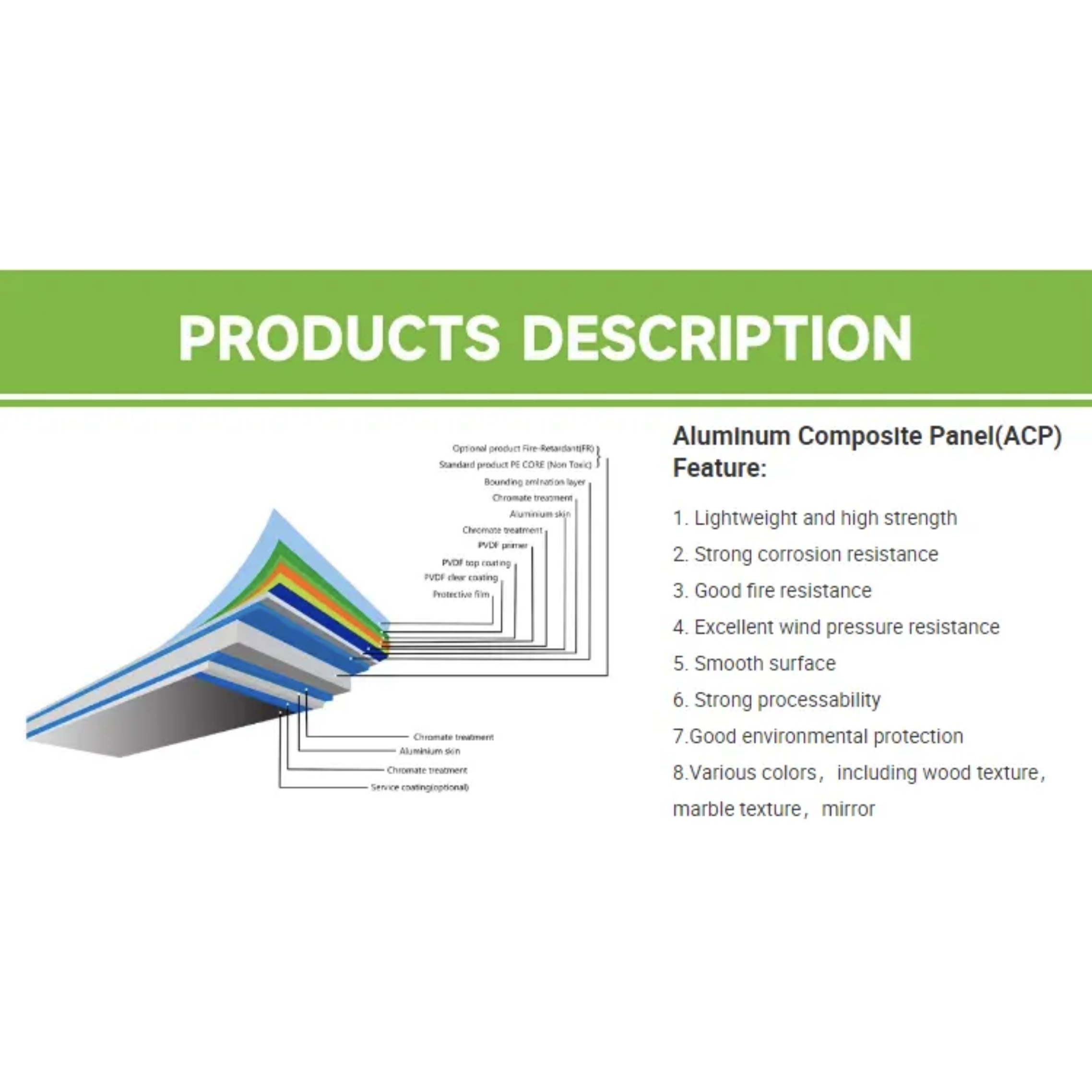
Alucobond is a sandwich panel. Two thin aluminum skins bond to a core. When you fold it, the outer skin stretches. The inner skin compresses.
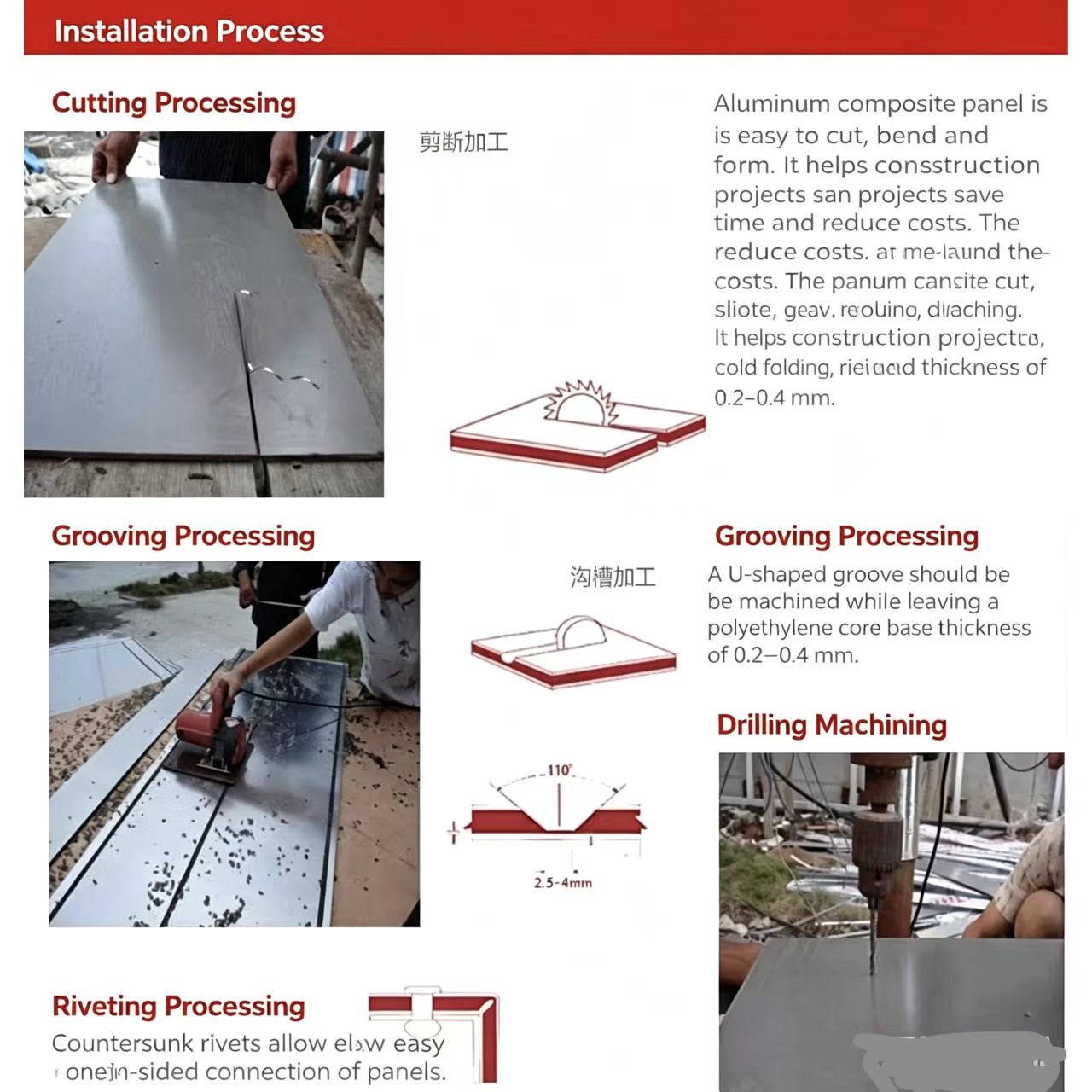
A V-groove solves the problem. You route a V-shaped groove into the back of the panel. This removes the rear aluminum skin and most of the core. The untouched outer cover sheet bends along the groove, giving an exact and clean fold line.
The technique is called the "routing and folding method". It enables a fabricator to produce clean, precise folds without cracking the material.
Without grooving, the panel resists bending. The aluminum stretches beyond its limit. It tears.
What Happens When You Skip the Groove?
Cracking of the aluminum skin
The aluminum skin can only stretch so far. Bend it without grooving, and you exceed its elastic limit. The metal tears. Hairline cracks appear along the fold line.
Wrinkling of the core material
The plastic core cannot handle the compression. It wrinkles and buckles. The panel loses its flatness. It looks unprofessional.
Coating failure
The PVDF or polyester coating stretches with the metal. Bend it too tightly, and the coating cracks. Moisture enters. Corrosion starts. The paint warranty is voided.
Structural compromise
A cracked fold is a weak fold. The panel cannot handle wind loads. It cannot handle thermal movement. It fails prematurely.
The numbers are clear. For a 4mm Alucobond panel without routing, the minimum bend radius is 15 times the thickness — that is 60mm. Try to bend tighter than that, and the panel cracks. With proper grooving, you can achieve much tighter radii.
How V-Grooving Works
The groove removes material from the back of the panel. What remains is the front aluminum skin and a thin layer of core material. This layer acts as a hinge.
The outer cover sheet remains intact. When you bend the panel, the hinge flexes. The aluminum stretches within its elastic limit. No cracks.
The groove depth determines the bend radius. Route too shallow, and the panel resists bending. Route too deep, and the hinge becomes too thin. It tears.
The Critical Numbers: Residual Thickness
The material left at the bottom of the groove is called residual thickness. It determines bending strength. Get this number wrong, and the panel fails.
The industry standard: Leave 0.3mm to 0.5mm of core material at the bottom of the groove.
A reliable Alucobond supplier will specify this in their technical documentation. Below 0.3mm, the hinge is too thin. The skin tears.
Residual Thickness Guide
Residual Thickness | Fold Result | Risk Level |
0.5mm or more | Clean, strong fold | Very low risk |
0.3mm to 0.5mm | Clean, acceptable fold | Low risk |
0.2mm to 0.3mm | Acceptable but marginal | Moderate risk |
Below 0.2mm | Cracks likely | High risk |
Caption: Residual thickness determines fold quality. Never go below 0.3mm. Source: Industry fabrication standards.
Alt text: Table showing residual thickness ranges from 0.5mm and above down to below 0.2mm with corresponding fold results and risk levels.
The Correct Grooving Process
1. Choose the right equipment
A reputable manufacturer of Alucobond recommends using a CNC machining center, a vertical panel saw with grooving accessories, a portable sheet milling machine, or a handheld router.
2. Select the correct router bit
Use a V-groove router bit. The angle of the groove determines the fold angle. For a 90-degree fold, use a 90-degree V-groove.
3. Set the correct routing depth
The groove must be routed to a consistent depth. Variations as small as 0.1mm change the outcome.
4. Leave the front skin intact
Do not cut through the front aluminum skin. Leave it intact to serve as a hinge for folding.
5. Bend the panel
Fold the return leg back in one smooth movement. Do not bend, check, and bend again. Re-bending creates micro-cracks.
The Grooving Flowchart
Start
│
▼
Select panel thickness (3mm, 4mm, or 6mm)
│
▼
Choose the correct router bit (90° for a 90° fold)
│
▼
Set routing depth to leave 0.3 mm- 0.5 mm residual
│
▼
Route V-groove on back side of panel
│
▼
Measure residual thickness with micrometer
│
├─── Reading 0.3- 0.5 mm? ─── No ───► Adjust depth ───► Retest
│
Yes
│
▼
Bend panel in one smooth motion
│
▼
Inspect fold for cracks
│
▼
Done
Caption: Flowchart for proper Alucobond V-grooving and folding process.
Alt text: Step-by-step flowchart showing panel selection, router bit selection, depth setting, routing, measurement, bending, and inspection.
What to Ask Your Alucobond Supplier
When you work with an Alucobond supplier, ask these questions:
1. What is your recommended residual thickness? The answer should be 0.3mm minimum.
2. Do you provide grooving guidelines? A knowledgeable wholesale supplier of Alucobond will provide technical documentation.
3. What is your minimum bend radius with grooving? The answer should be significantly tighter than without grooving.
4. Can you recommend router bit specifications? A reliable distributor of Alucobond panels will guide you on tooling.
5. Do you offer pre-grooved panels? An OEM manufacturer of Alucobond can deliver panels already grooved to specification.
Choose an authorized Alucobond dealer that understands fabrication requirements. Work with a supplier who provides technical support. A good supplier will help you get the settings right from the start.
Common Mistakes to Avoid
Mistake 1: Bending without grooving
This is the most common mistake. The panel cracks. The coating fails.
Fix: Always route a V-groove before bending.
Mistake 2: Routing too deep
Over-grooving reduces the residual thickness. The hinge becomes too thin. It tears.
Fix: Measure residual thickness with a micrometer. Keep it at 0.3mm minimum.
Mistake 3: Routing too shallow
The panel resists bending. The aluminum tears from excess stress.
Fix: Test a sample panel. Adjust depth until you get a clean fold.
Mistake 4: Re-bending
Each bend work-hardens the aluminum. The second bend exceeds the reduced elastic limit. Cracks form.
Fix: Bend once. If the angle is wrong, scrap the panel and start over.
Mistake 5: Bending in cold temperatures
Aluminum becomes brittle below 50°F (10°C). Cold bending causes immediate failure.
Fix: Warm the panel to 65°F (18°C) minimum before bending.
The Cost of Skipping Grooving
Consequence | Cost |
Scrapped panels | Material cost + fabrication time |
Rework | Labor + schedule delays |
Warranty claims | Replacement panels + installation |
Failed facade | Reputation damage + legal liability |
Caption: The true cost of bending Alucobond without proper grooving.
Alt text: Table showing consequences of skipping grooving, including scrapped panels, rework, warranty claims, and failed facade with associated costs.
The cost of grooving is negligible. The cost of not grooving is enormous.
The Bottom Line
Bending Alucobond without proper grooving is a gamble you will lose.
The V-groove is not optional. It removes the rear aluminum skin and core material. It leaves a thin hinge of front skin and core. The panel bends cleanly along that hinge.
Without the groove, the aluminum tears. The coating cracks. The panel fails.
The numbers are simple: residual thickness of 0.3mm to 0.5mm. A clean V-groove. One smooth bending motion.
Do these things, and your panels will fold cleanly. Every time.
Skip them, and you will be explaining to the client why their new facade already has cracks.
Choose the right Alucobond supplier. Follow the grooving process. Bend with confidence.